What It Is and Key Specs
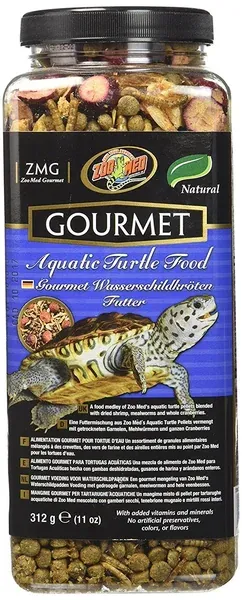
Zoo Med Gourmet Aquatic Turtle Food is an 11 oz. Blended food medley combining Zoo Med's aquatic turtle pellets with dried shrimp, mealworms, and whole cranberries. According to the manufacturer, it is scientifically formulated to meet the dietary needs of growing aquatic turtles with a shell length of 2 to 6 inches. The formula includes added vitamins and minerals and contains no artificial preservatives, colors, or flavors.
The cranberry inclusion is not purely a marketing flourish — Zoo Med notes that whole cranberries are a natural food item for many North American species of aquatic turtles, making this ingredient choice grounded in the natural diet of common pet species like red-eared sliders and painted turtles.
Build Quality and Ingredient Integrity
The product is positioned as a high-protein treat-oriented staple, with dried shrimp and mealworms providing the primary protein boost beyond the base pellets. The absence of artificial preservatives, colors, and flavors is a meaningful distinction in a category where synthetic additives are common. Zoo Med's manufacturer page confirms the food is formulated for aquatic turtles with a minimum shell length of 2 inches (5 cm) or larger, consistent with the Amazon listing's 2–6 inch target range.
Feeding guidance from Zoo Med specifies one level teaspoon of food per turtle per feeding, with an explicit caution not to overfeed — a practical note worth heeding, as overfeeding aquatic turtles is a common husbandry mistake that can foul tank water quickly.
Real-World Fit: Who It Suits, Who Should Skip
This formula slots into the middle of Zoo Med's aquatic turtle food lineup, sitting between two other purpose-built products. The manufacturer is explicit: hatchling turtles (under 2 inches) should use Zoo Med's Natural Aquatic Turtle Food Hatchling Formula, while adult turtles 7 inches and larger are better served by supplementing with Zoo Med's Maintenance Formula. Buyers with very young hatchlings or large adult turtles should take that sizing guidance seriously rather than defaulting to the Gourmet formula.
For the target demographic — juvenile to sub-adult aquatic turtles in the 2–6 inch shell-length range — the variety of textures and protein sources in the medley appears well-suited. Reviewer commentary aggregated on Influenster notes that turtles are drawn to the mealworms in the mix, with some owners reporting more consistent feeding behavior after introducing the food.
Honest Limitations
A few practical constraints are worth noting for prospective buyers:
- Scope is narrow by design. This is not a universal turtle food. The manufacturer's own staging guidance carves out both the smallest hatchlings and the largest adults, meaning households with turtles at either size extreme will need additional products.
- Treat-oriented protein profile. The listing frames the shrimp and mealworm content as a "high protein treat" addition, suggesting the Gourmet formula is best understood as an enrichment food or complement rather than a sole dietary staple for all life stages.
- Overfeeding risk. Zoo Med's own feeding instructions flag the overfeed concern directly. In aquatic turtle setups, uneaten food degrades water quality rapidly, so portion discipline is essential regardless of how appealing the medley proves to be.
- Packaging size vs. Feeding rate. At one teaspoon per turtle per feeding, the 11 oz. Container offers a reasonable supply for a single turtle, but multi-turtle households may find the format less economical over time.
What Owners Say
Published reviews aggregated on Influenster reflect generally positive reception, with owners noting turtles appear more active and eat consistently with this food. The mealworm component is specifically called out as a driver of engagement. These are reader-reported observations, not editorial testing results, but they align with the manufacturer's intent to use varied protein sources to encourage natural foraging behavior.