LuvemPets

Expert Pet Product Reviews

​
​
LuvemPets

Expert pet product reviews for dogs, cats, birds, fish, and more

Company
AboutPrivacy PolicyTerms of UseAffiliate Disclosure
Pet Products
All ReviewsNew ReleasesTop Rated
Explore
DogsCatsBirdsFishSmall Pets
Our Network
LuvemPets
LuvemBooks
LuvemHome

© 2026 LuvemPets. All rights reserved.

Built by capNotion

  1. Home
  2. Product Reviews
  3. Reptiles & Amphibians
  4. Exo Terra Coco Husk Brick

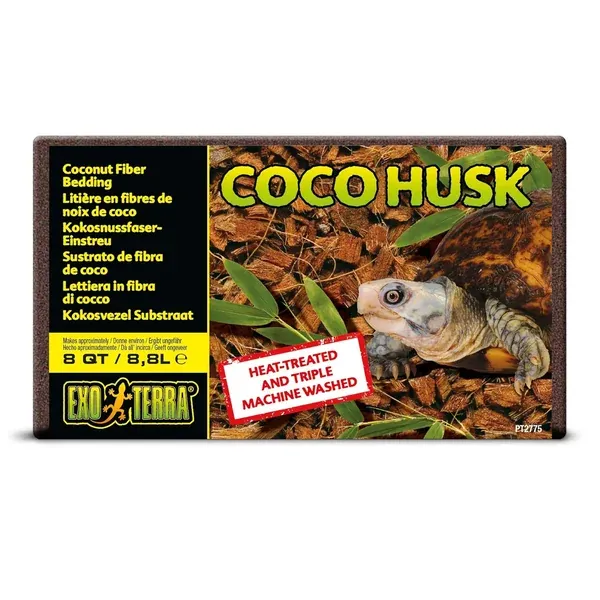
Exo Terra Coco Husk Brick, 8 QT (8.8 L) – Natural Coconut Fiber Terrarium Substrate for Reptiles, Amphibians & Tropical Enclosures by Exo
PETS

Exo Terra Coco Husk Review: Top Reptile Substrate

4.2

·

9 min read

$4.99 on Amazon
Reviewed by

LuvemPets

·

May 20, 2026

The Exo Terra Coco Husk Brick is a reliable, chemical-free coconut fiber substrate that excels at moisture retention and odor control in tropical and humid reptile or amphibian enclosures. It's best suited for small-to-medium setups, as larger terrariums will require multiple bricks — a cost that adds up quickly. Not appropriate for desert species or very young reptiles with loose substrate sensitivity.

Our Review

In This Review
  • What We Love & Watch Out For
  • What You're Getting: Key Features and Specs
  • Humidity and Substrate Performance
  • Who This Substrate Is Best For
  • Where It Falls Short
  • Value Assessment: Is Exo Terra Coco Husk Brick Worth It?

What We Love & Watch Out For

What We Love
  • Expands reliably from a compact brick to approximately 8 quarts of usable substrate
  • Excellent humidity retention for tropical enclosures targeting 60–80% relative humidity
  • Free from added dyes, synthetic pesticides, and chemicals — safe for skin-contact use with reptiles and amphibians
  • Natural coconut coir is a renewable resource and biodegradable
  • Works well as a base layer in bioactive vivarium builds mixed with topsoil and drainage material
Watch Out For
  • 8 QT volume only covers small enclosures (roughly 20 gallons at 2-inch depth); larger setups require multiple bricks
  • Not suitable for desert-dwelling species — excess moisture can cause skin and respiratory issues in arid-environment reptiles
  • Expansion process can be messy if over-watered; requires patience to prepare correctly
Ready to buy?
$4.99 - Amazon
---
Exo Terra Coco Husk Brick, 8 QT (8.8 L) – Natural _main_0
Should you choose Exo Terra Coco Husk Brick as your reptile's substrate? If you're setting up a tropical or humid terrarium for snakes, geckos, frogs, or other moisture-loving species, substrate choice is one of the most consequential decisions you'll make. The wrong bedding can tank your humidity levels, harbor mold, or irritate your animal's respiratory system. The right one does the opposite — stabilizing moisture, supporting natural behaviors, and staying clean longer between full changes.
The Exo Terra Coco Husk Brick is one of the most recognizable coconut fiber substrates on the market, and for good reason. Here's an honest breakdown of what it delivers and where it falls short.
---

What You're Getting: Key Features and Specs

The Exo Terra Coco Husk Brick comes compressed into a solid block that expands significantly once hydrated. The 8 QT (8.8 L) brick is designed to be rehydrated with warm water — typically around 1 to 1.5 liters — and expands to fill a useful volume of loose, fibrous substrate in roughly 30 to 60 minutes.
The material itself is derived from the husks of coconuts, making it a renewable byproduct rather than a virgin-harvested resource. It's free from added chemicals, dyes, and synthetic pesticides, which matters enormously when you have animals that burrow, ingest substrate particles, or press their skin directly against the bedding throughout the day.
Key specs at a glance: - Expanded volume: approximately 8 quarts (8.8 liters) - Material: natural coconut fiber (coir) - Suitable species: tropical reptiles, amphibians, invertebrates, and small animals in humid setups - Primary function: moisture retention, burrowing substrate, odor absorption
The texture is soft and fibrous rather than chunky or bark-like, which makes it particularly well-suited for species that burrow — ball pythons, blue-tongued skinks, and dart frogs among them. It also packs loosely enough to avoid compaction issues in the short term.
---

Humidity and Substrate Performance

Where this substrate truly earns its reputation is humidity retention. Coconut coir is hygroscopic by nature — it absorbs and releases moisture gradually rather than drying out in a single day. For tropical and rainforest enclosures targeting 60–80%+ relative humidity, that slow-release quality is genuinely difficult to replicate with wood shavings or paper-based alternatives.
Once expanded and placed in the enclosure, the substrate holds moisture evenly throughout its depth rather than just at the surface. This creates a more stable microclimate, which is especially important for amphibians like dart frogs, White's tree frogs, and axolotl setups, as well as tropical reptiles such as crested geckos and emerald tree boas.
It also performs reasonably well for odor control. The natural fiber structure binds some ammonia from waste, slowing odor development between spot-cleans. It's not a miracle worker — you still need to spot-clean regularly and replace the full substrate every 3 to 4 months depending on enclosure size and animal load — but it holds its own better than many synthetic alternatives.
---

Who This Substrate Is Best For

Ideal for humid and tropical terrarium setups, the Exo Terra Coco Husk Brick performs best in enclosures housing:
- Ball pythons and boa constrictors that benefit from burrowing opportunities and stable humidity - Tropical geckos (crested, tokay, day geckos) requiring consistent moisture without pooling - Dart frogs, tree frogs, and other amphibians in bioactive or semi-bioactive setups - Tarantulas and invertebrates that prefer a soft, burrowing-friendly medium - Chameleons when used as a drainage layer in bioactive enclosures
It's also a solid choice for anyone building a bioactive vivarium. Coconut coir serves well as a base layer mixed with organic topsoil and drainage material — it holds plant roots effectively while resisting compaction over longer periods.*
*Results vary based on plant root density, drainage layer depth, and how frequently you mist the enclosure.
---

Where It Falls Short

No substrate is perfect for every situation, and the Coco Husk Brick has a few genuine limitations worth knowing before you buy.
The expansion process takes patience. The brick needs time to fully hydrate, and some keepers find the process messier than expected — particularly if they add too much water too quickly and end up with a soggy clump. Start with less water than you think you need and add gradually.
The 8 QT volume, while marketed as a full-enclosure substrate solution, is genuinely only sufficient for smaller enclosures — think a 20-gallon tank filled to a 2-inch depth. Keepers with 40-gallon breeders or larger setups will need multiple bricks, which raises the per-use cost noticeably. Buying in multi-pack quantities helps offset this.
It's also worth noting that loose particulate substrates are not suitable for very young or sick reptiles with compromised feeding responses, as accidental ingestion can occur. The Association of Reptilian and Amphibian Veterinarians (ARAV) generally advises using paper towels or tile for juvenile reptiles until they are feeding reliably, then transitioning to loose substrates. Always check with your reptile vet if your animal has a history of ingesting substrate.
Finally, this substrate is not appropriate for desert species — bearded dragons, leopard geckos, or uromastyx — where a moist, fiber-based substrate can cause respiratory issues and skin infections from excess humidity.
---

Value Assessment: Is Exo Terra Coco Husk Brick Worth It?

At its typical price point of around $5–$8 per brick (single purchase), the Exo Terra Coco Husk Brick is competitively priced against alternatives like Zoo Med Eco Earth and Josh's Frogs Coco Cradle. The Exo Terra version expands reliably, smells clean out of the packaging, and performs consistently — which is more than can be said for some budget coconut coir products that arrive with inconsistent moisture content or an earthy, mildew-adjacent smell straight from the bag.
The bottom line: for tropical and humid enclosures in the 10- to 20-gallon range, one brick covers a standard setup adequately. It's a dependable, natural, and reasonably priced substrate option that earns its place among the better products in this category. Larger enclosure keepers should buy multi-packs and factor the volume requirements into their cost comparison.
---

This post contains affiliate links. We may earn a commission if you purchase through these links at no additional cost to you.

Share This Review
Browse Categories

Reptiles & Amphibians

Popular Reviews
POPULAR
RECENT
TRENDY

THAIN Leather Cat Collar Review: Safe & Retro

5/20/2026

Marshall Select Ferret Diet Review: Top Pick?

5/19/2026

Lyric Supreme Bird Seed: Songbird Magnet?

5/19/2026