What It Is and Key Specs
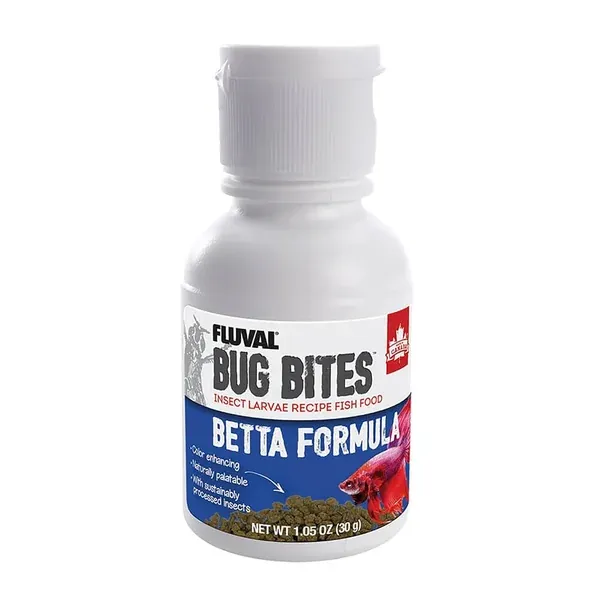
Fluval Bug Bites Betta Micro Granules are a 1.05 oz (30 g) fish food designed specifically for bettas and other small to medium sized fish. According to Fluval's manufacturer listing, Black Soldier Fly Larvae make up to 40% of the formula and occupy the first ingredient position — a meaningful distinction in a category where cheaper fillers often lead. The full ingredient panel, as published on Fluval's own product page, includes black soldier fly larvae, salmon, fish protein concentrate, wheat, potato, shrimp meal, dicalcium phosphate, calcium carbonate, DL-methionine, lecithin, choline chloride, L-lysine, and a vitamin E supplement, among others.
The granules are sized at 0.25–1.0 mm (micro granule format) and are slow-sinking, which the manufacturer states allows fish to feed at their preferred depth. Fluval recommends feeding as much as fish can consume in two minutes, two or three times daily. The formula is described as appropriate for all life stages.
Ingredient Quality and Nutrition
The protein sourcing stands out in this price tier. Beyond insect larvae, whole salmon contributes Omega-3 and Omega-6 fatty acids, which the manufacturer associates with healthy skin, scales, and fins. The formula is also fortified with essential vitamins, amino acids — including DL-methionine and L-lysine — and minerals for what Fluval describes as a balanced daily diet. A review published at
boxednature.com characterizes the ingredients as "the best part" of the formula, noting that insects are a primary food source for bettas in the wild, making an insect-forward protein a logically sound choice.
Fluval states the product is sustainably processed in small batches for quality control and maximum freshness, though independent verification of those production claims is not available through published sources reviewed here.
Build Quality and Safety
No specific CPSC recall or safety notice was identified in the sources reviewed for this product. Fluval is an established aquatics brand, and the Bug Bites line is broadly stocked by major pet retailers and specialty aquarium suppliers, which generally indicates baseline compliance with standard pet food safety expectations.
Real-World Fit: Who It Suits, Who Should Skip
Community discussions on
fishlore.com and
bettafish.com indicate that bettas generally accept the food readily, with multiple hobbyists reporting their fish "love" the smallest Bug Bites granule size. The micro granule format (0.25–1.0 mm) is appropriate for a betta's small mouth and feeding style.
That said, this food is best positioned as a high-quality staple component of a varied diet rather than a sole source of nutrition. A forum contributor on
fishlore.com rated the line 8/10 overall but noted they would not rely on it as a fish's only food. Hobbyists on
bettafish.com describe rotating Bug Bites with other foods such as Cicada Bites and Ocean Nutrition Betta food — an approach consistent with general best practices for betta husbandry.
Honest Limitations
The most consistently raised concern in community coverage is digestive sensitivity. A thread on
plantedtank.net specifically links exclusive feeding of Fluval Bug Bites to constipation and bloat in bettas. While a separate
fishlore.com discussion notes that Bug Bites granules — unlike freeze-dried foods — do not require rehydration and are generally considered safe, the bloat concern surfaces often enough across forums to warrant attention. Betta keepers who have fish prone to digestive issues may want to introduce the food gradually and monitor closely.
Additionally, the 1.05 oz container is a modest size. For hobbyists with multiple bettas or those who prefer buying in bulk, it may not be the most economical option per feeding — though the live price on the listing page reflects current market conditions.
Readers should also note that Fluval produces a separate Bug Bites Betta Color Enhancing Flakes formula with a different ingredient lineup (including krill meal, dried kelp, and betaine anhydrous), so buyers should confirm they are selecting the granule format reviewed here if that is their preference.