What It Is and Key Specs
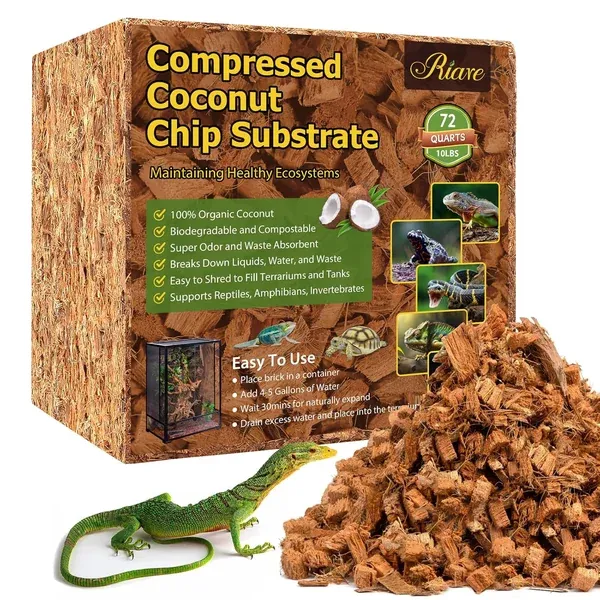
The Riare Coconut Chip Substrate arrives as a single compressed brick measuring 11.81 x 11.81 x 5.12 inches and weighing 10 lb. According to the manufacturer's listing, the brick expands to 72 quarts of usable substrate once hydrated — a substantial yield from a single unit. The material is derived from the outer husk of coconut shells, processed into chunky chips rather than fine coir fiber, giving it a coarser, more textured profile than powdery coconut fiber alternatives.
The listing describes the substrate as biodegradable, renewable, soft, and odorless in its dry state, with a loose and textured surface intended to encourage digging and burrowing behavior in reptiles and amphibians.
Build Quality and Material
According to the manufacturer, the chips are extracted from natural coconut shells without synthetic additives, and the product is described as clean and odorless. The coarse chip structure is specifically highlighted as a feature that supports natural behaviors — burrowing, nesting, and exploration — rather than the fine-particle consistency of standard coco coir. The listing also notes the substrate is safe for animals and compostable after use, positioning it as an environmentally conscious choice.
No third-party laboratory testing data or independent safety certifications are referenced in the available product information, so buyers who prioritize verified safety documentation may want to seek that information directly from the manufacturer before use.
Moisture and Heat Retention
A primary selling point according to the listing is the substrate's moisture and heat retention. The manufacturer states it has "remarkable water absorption and moisture retention capabilities," making it suitable for maintaining proper terrarium humidity and temperature — qualities that are particularly relevant for tropical and semi-tropical species. The listing also positions it as suitable for hibernation and egg hatching scenarios, where stable humidity is critical.
Coconut husk chip substrates, as a category, are generally recognized by reptile keepers for holding moisture well without rapidly souring, though individual results vary with tank size, ventilation, and animal species. This product's specific performance in those conditions is based solely on the manufacturer's claims and is not independently verified here.
Real-World Fit: Who It Suits, Who Should Skip
Based on the listing, the Riare substrate is intended for a broad range of species: snakes, ball pythons, tortoises, bearded dragons, geckos, lizards, frogs, salamanders, and invertebrates. The large expansion volume (72 quarts from one brick) makes it practical for medium-to-large enclosures or keepers who maintain multiple habitats.
Preparation requires hydration — the manufacturer instructs users to add water, allow expansion, and squeeze out excess moisture before use. This adds a preparation step that instant-use substrates do not require, which may matter to keepers looking for convenience.
The chunky chip format may not be ideal for very small reptiles or hatchlings that could ingest larger substrate pieces. Keepers of fine-burrowing species that prefer a finer particulate substrate — such as certain sand boa setups — may also find the chip size less suitable than alternatives.
Ease of Use and Disposal
The listing emphasizes a straightforward usage cycle: hydrate, expand, squeeze, and lay. The substrate's odor and waste-absorbing properties are cited by the manufacturer as effective at breaking down odors, reducing the frequency of full enclosure cleanouts. After its useful life in the terrarium, the listing notes it can be composted directly into a garden, supporting flowers, vegetables, and fruit — a genuine sustainability advantage over synthetic bedding options.
Honest Limitations
- No independent certification or third-party safety testing data is referenced in the available product information.
- Hydration is required before use, adding preparation time compared to ready-to-use alternatives.
- The chunky chip format may pose ingestion concerns for very small or juvenile animals.
- The 72-quart yield claim is based solely on manufacturer information and has not been independently verified.
- Web sources retrieved for this review did not include independent editorial coverage or verified buyer aggregate data specific to this product's performance.