What It Is and Key Specs
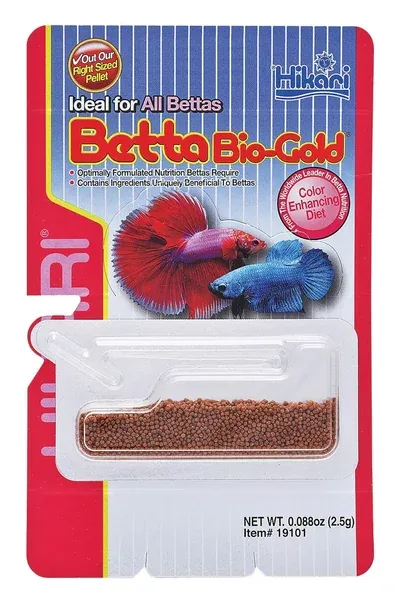
Hikari Betta Bio-Gold Baby Pellets is a micro-pellet daily staple diet designed specifically for betta fish. The 0.088 oz (roughly 2.5 g) container is among the smallest package sizes Hikari offers, making it a low-commitment entry point for new betta keepers or those who want to trial the formula before committing to a larger size.
According to Hikari's product page, the formula centers on premium-select fish meal as its primary protein source, Astaxanthin for active color enhancement, and Grape Seed Extract (a polyphenol) that the manufacturer states has been shown to reduce the impacts of aging. Immune system support is also listed as a formulation goal.
Build Quality and Pellet Construction
Published coverage from Boxed Nature notes that the pellets in the Bio-Gold line are notably uniform in size and float well at the surface — a relevant practical detail, since bettas are surface-oriented feeders that can struggle with sinking foods. The same source observes that the pellet size is not too large for most bettas, distinguishing it from some competing brands whose pellets run oversized. The "Baby" designation suggests the pellets are sized toward smaller or younger fish, which the Boxed Nature reviewer corroborates by noting that smaller pellets may only be necessary for baby bettas specifically — implying the standard Bio-Gold is already on the more appropriately sized end of the market.
Real-World Fit: Who It Suits, Who Should Skip
This pellet is positioned as an everyday diet rather than a supplement or treat. For betta keepers managing one or a small number of fish, the tiny package size helps ensure freshness — pellet foods can degrade in quality over time once opened, and a 0.088 oz container will cycle through relatively quickly.
One published account from a keeper managing approximately 50 bettas describes switching to Hikari Bio-Gold pellets after experiencing constipation and swim bladder issues with frozen live foods. That keeper reported feeding three pellets once daily to larger fish and two pellets to smaller fish — a useful real-world reference for portioning, though individual fish needs will vary. This anecdote is a single account and should not be read as a universal outcome.
For keepers of very young fry or micro-sized bettas, it is worth confirming that even the "Baby" pellet size is appropriate, as fry at the earliest life stages may require live or finely powdered foods before transitioning to any pellet.
Key Ingredients and Manufacturer Claims
Per Hikari's own product page, the three highlighted functional ingredients are:
- Premium-select fish meal — positioned as a high-quality protein source suited to the carnivorous dietary profile of betta fish.
- Astaxanthin — a carotenoid widely associated with color enhancement in ornamental fish.
- Grape Seed Extract (polyphenol) — cited by the manufacturer for its antioxidant properties and potential to reduce aging impacts.
These claims originate from Hikari's marketing materials. Independent long-term studies specific to this formula are not cited in available sources, and buyers should weigh ingredient-level claims accordingly.
Honest Limitations
- Very small package: The 0.088 oz size is practical for freshness but will not suit multi-tank households or breeders managing large numbers of fish — a larger size would be more economical in those cases.
- Once-daily, pellet-only feeding: Some betta enthusiasts prefer a varied diet that includes frozen or live foods alongside pellets. This product is designed as a staple, not a complete variety strategy on its own.
- Manufacturer-sourced claims: Benefits such as aging reduction and immune support are stated by Hikari and are not independently verified through sources available for this review.
- Pellet size suitability: While the "Baby" format addresses smaller fish, keepers with fry at the earliest developmental stages may still need to start with finer food formats before introducing any pellet.