What It Is and Key Specs
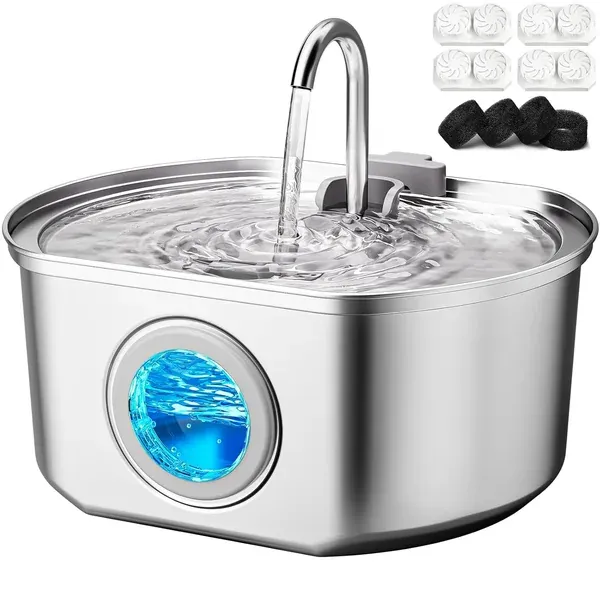
The LuvemPets Cat Water Fountain is a 108oz (3.2L) automatic pet drinking dispenser built from 304 stainless steel. According to the manufacturer, the steel is corrosion-resistant and rated for high-temperature cleaning — a practical detail for owners who prefer sanitizing with hot water or a dishwasher cycle. The unit ships with four replacement filters and four sponges in the box, which represents a meaningful head start on consumables.
Key specs from the listing:
- Capacity: 108oz / 3.2L
- Pump: 5V, ≤28 dB rated noise output
- Filtration: Quadruple system — activated carbon filter with cotton layer, plus filter sponges
- Included accessories: 4 filters, 4 sponges
- Notable feature: External water level window (no lid removal required)
The water level window is a genuine quality-of-life addition. Being able to check the reservoir at a glance, without disturbing a drinking pet or disassembling the fountain, is the kind of small design decision that owners tend to appreciate over months of daily use.
Build Quality and Materials
The use of food-grade 304 stainless steel is the fountain's clearest differentiator from plastic alternatives. Published coverage of the stainless steel fountain category, including community discussions at Bogleheads.org, notes that stainless steel construction is generally easier to keep clean and less prone to harboring bacteria in surface scratches compared to plastic. The manufacturer states the material can withstand high-temperature cleaning, which aligns with what category reviewers broadly recommend for thorough sanitation.
The pump operates at a manufacturer-rated ≤28 dB — roughly the level of a quiet library — which is designed to avoid startling noise-sensitive pets and to keep nighttime disruptions minimal.
Filtration System
The four-stage filtration setup combines activated carbon (for odor reduction and water softening) with a cotton pre-filter layer and sponge stages that are intended to catch pet hair, food particles, and debris. The inclusion of four filters and four sponges at purchase gives most households several months of replacements before a separate order is needed. Category-level coverage at Cats.com notes that, across fountains of this type, carbon filters seated near the waterfall outlet can accumulate visible grime more quickly than filters positioned elsewhere — a general pattern worth monitoring, though individual results will vary based on household pet count and water quality.
Manufacturers in this category typically recommend filter replacement every two to four weeks, and a full disassembly cleaning every one to two weeks. The Bogleheads.org forum discussion of stainless steel cat fountains echoes a two-week cleaning cadence as the practical standard.
Real-World Fit: Who This Suits, Who Should Skip
Good fit for:- Single-cat or multi-cat households wanting a low-maintenance, hygienic material that doesn't trap odors the way plastic can
- Owners who travel or work long hours — the 3.2L capacity is manufacturer-stated to support up to seven days of hydration, reducing daily refill pressure
- Pet owners in quieter homes or with skittish animals who would be deterred by pump noise
- Buyers who want a meaningful filter supply included rather than paying separately upfront
Consider skipping if:- You need a completely wireless or cordless fountain — the listing describes a 5V pump, and corded operation is the norm for this fountain style
- Your household has multiple large dogs with high water consumption, where the 108oz capacity may turn over more quickly than the stated seven-day estimate
- You strongly prefer fountains that have been independently lab-tested and editorially ranked — major roundups like Wirecutter's and Catster's category guides do not currently feature this specific model in their top picks
Honest Limitations
Every fountain in this category carries a few recurring friction points, and the LuvemPets is unlikely to be exempt:
- Filter maintenance is ongoing. Activated carbon filters have a finite lifespan, and in multi-pet households or areas with harder water, replacement intervals may run shorter than the manufacturer's general guidance.
- Pump longevity is an open variable. Category troubleshooting guides (uahpet.com) note that reduced flow or unexpected noise over time are common signals to clean or replace the pump — a consideration for any electric fountain.
- No independent editorial ranking available. This review is based on the manufacturer listing and category-level published sources. Buyers seeking head-to-head laboratory comparisons should note this model has not appeared in major 2026 editorial roundups reviewed for this piece.
Bottom Line
The LuvemPets 108oz Stainless Steel Cat Water Fountain addresses the two most common complaints about budget-tier plastic fountains — hygiene concerns and noise — through its 304 stainless steel construction and sub-28 dB pump. The water level window and bundled filter supply add genuine convenience. As with any fountain in this category, consistent cleaning and timely filter replacement are the primary factors that determine long-term performance. Buyers comfortable with that maintenance rhythm will find the core feature set competitive for the price shown on the product page.