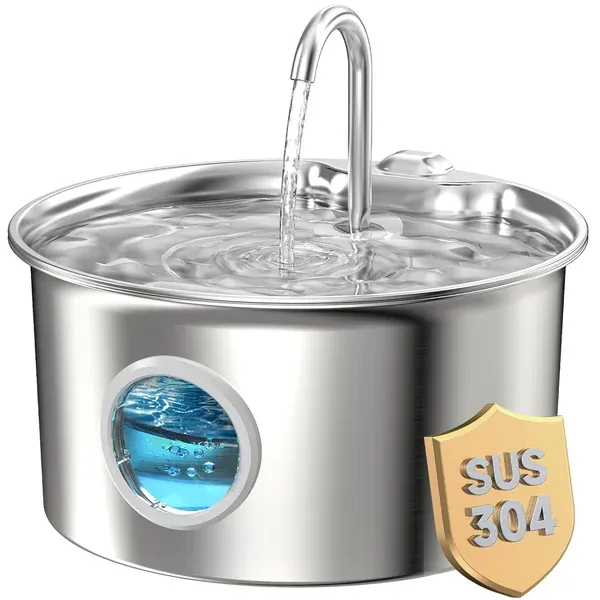
What It Is and Key Specs
The ATMZIQXR cat water fountain is a circulating water dispenser built for cats and small animals kept indoors. According to the manufacturer listing, the key specifications are:
- Capacity: 2.6L (88oz), described as sufficient for 7–9 days of unattended hydration
- Material: 304 stainless steel — rust-proof and described as easy to clean
- Pump: 0.8W ultra-low-power motor rated at ≤25dB during operation
- Filtration: Four-stage system comprising activated carbon (odor removal), ion exchange resin (water softening), multi-layered non-woven fabric (hair and debris trapping), and a high-density sponge (fine particle filtration)
- Visibility: Transparent water-level window for at-a-glance monitoring without opening the lid
- Design: Matte finish with smooth body lines, positioned by the brand as adaptable to various home décors
The brand, ATMZIQXR, frames its philosophy as "Smarter care for pets, simpler life for owners," and this fountain is clearly designed around that goal — minimizing owner intervention while maximizing pet hydration.
Build Quality and Material Safety
The use of 304 stainless steel is a meaningful differentiator in this product category. Published category guides note that stainless steel is generally easier to sanitize than plastic and resists bacterial biofilm buildup that can accumulate in scratched plastic surfaces. The manufacturer describes the surface as rust-proof and durable, and the matte texture finish is intended to integrate naturally into home environments rather than stand out as utilitarian equipment.
The four-stage filtration system is notably detailed compared to single-filter competitors in the value tier. Ion exchange resin for water softening is a feature more commonly seen in mid-to-premium segment fountains, so its inclusion here is worth noting — though real-world filter longevity will depend on local water hardness and how many animals share the fountain.
Regarding product safety: No CPSC recall or safety notice was identified in the sources reviewed for this product at the time of writing. Consumers can verify current status at cpsc.gov.
Real-World Fit: Who It Suits, Who Should Skip
Based on the listing and category-level coverage, this fountain is likely a strong fit for:
- Single-cat or small-animal households where the 2.6L capacity genuinely covers multiple days between refills
- Light-sleeping owners — the ≤25dB noise rating and the manufacturer's explicit mention of bedroom placement suggest the pump is designed for quiet environments; published category coverage from consumerability.com similarly highlights quiet, smooth pump operation as a top-rated feature in fountains of this type
- Cat owners focused on hydration health — industry coverage consistently notes that cats are naturally drawn to moving water, and running-water fountains can support hydration habits, particularly for cats prone to urinary or kidney issues (Catster, uahpet.com)
- Those who want stainless over plastic for easier cleaning and hygiene
It may be less ideal for:
- Multi-cat households where the 2.6L capacity could be depleted in under a day, negating the low-maintenance premise
- Owners who dislike recurring filter costs — the manufacturer recommends filter replacement every two weeks, and pump cleaning every two weeks as well; those consumable costs should factor into the total ownership calculation
- Buyers seeking a fully cordless design — Forbes' 2026 roundup highlighted wireless/cordless operation as a standout feature in the category's top-rated overall pick; this fountain uses a wired 0.8W pump
Category Context
Forbes' tested 2026 cat water fountain roundup named the Petlibro Dockstream Cordless as best overall and the Pioneer Pet Raindrop as a leader specifically in the stainless steel category — neither of which is this product. That context is useful: the stainless steel segment is competitive, and shoppers comparing options should weigh cordless convenience, filtration depth, and capacity side by side. The ATMZIQXR's four-stage filtration and 304 steel construction position it as a capable contender, but independent head-to-head testing of this specific unit has not been identified in the sources available for this review.
Honest Limitations
No product is without trade-offs, and several are apparent here:
1. Filter and pump maintenance cadence is demanding. The manufacturer recommends cleaning the pump every two weeks and replacing filters every two weeks. For owners seeking a genuinely low-touch setup, this schedule may feel burdensome.
2. Replacement part availability depends on search discoverability. The brand directs buyers to search specific ASINs and keyword strings for filters and pumps — a practical workaround, but less reassuring than an established brick-and-mortar or brand-direct supply chain.
3. No independent lab or third-party test data for the filtration performance, noise levels, or pump longevity was surfaced in available sources. The ≤25dB and four-stage claims originate entirely from the manufacturer.
4. Capacity ceiling for multi-pet use. At 2.6L, the fountain suits one small cat comfortably but may require more frequent refilling in households with multiple or larger animals.