What It Is and Key Specs
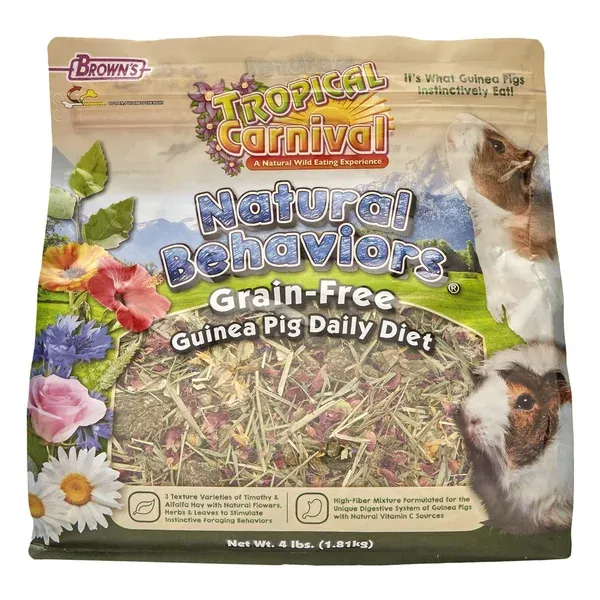
Tropical Carnival Natural Behaviors Grain-Free Guinea Pig Food comes in a 4-pound bag built around a blend of three types of high-fiber timothy hay. The formula is grain-free — meaning it excludes wheat, corn, and soy — and is supplemented with real botanical ingredients: hibiscus, rose petals, and chamomile contribute both flavor and natural sources of vitamin C. According to the manufacturer, the food contains no synthetic vitamins, artificial colors, preservatives, or unnecessary fillers.
The stated nutritional philosophy draws directly from guinea pig biology. As noted by retailer Pet Supermarket, in the wild a guinea pig's main diet consists of grasses, flowers, herbs, and roots that are naturally high in fiber. This product is positioned as a domestic approximation of that diet.
Build Quality and Ingredient Philosophy
The ingredient approach is notably restrained compared to conventional small-pet foods. State Line Pet Supply's published coverage flags a common issue with standard guinea pig diets: many contain quantities of grains such as wheat, corn, and soy that can overload the gut, creating digestive disorders and interrupting the natural digestive process. Tropical Carnival's grain-free formulation is a direct response to this concern.
The inclusion of real flowers and leaves — rather than artificial flavoring — is consistent with the no-artificial-additives claim made in the listing. The vitamin C sourcing from rose petals and other botanicals is worth noting because guinea pigs, like humans, cannot synthesize their own vitamin C and depend on dietary intake to support immune health.
Real-World Fit: Who This Suits
This food is best matched to guinea pig owners who prioritize ingredient transparency and want to avoid the grain-heavy filler blends that dominate the mainstream small-pet food aisle. The three-type timothy hay base supports both dental health — through the abrasive chewing action hay demands — and gut motility, which guinea pigs require for long-term digestive wellness.
The botanical additions (hibiscus, chamomile, rose petals) serve a secondary behavioral function: the varied textures and scents are designed to encourage natural foraging and bunching behaviors, which the manufacturer describes as important for emotional wellbeing and boredom prevention. For owners of single guinea pigs or those kept in lower-stimulation environments, this dimension of the product may carry practical value.
Owners looking for a pellet-only convenience diet, or those whose guinea pigs have already demonstrated sensitivity to high-fiber transitions, should approach with caution and ideally consult a veterinarian before switching foods abruptly.
Honest Limitations
A few limitations are worth acknowledging:
- Vitamin C quantity is unspecified. While rose petals and botanicals provide natural vitamin C, the listing does not disclose the exact milligram content per serving. Guinea pigs require approximately 10–30 mg of vitamin C daily, and it is unclear whether this food alone meets that threshold — supplementation from fresh vegetables may still be necessary.
- "Three types of timothy hay" is unspecified. The listing references a blend of three timothy hay varieties but does not name them, making it difficult to assess quality or sourcing differences between cuts.
- No independent nutritional analysis is cited. All nutritional and behavioral claims originate from the manufacturer or retailer descriptions. No third-party lab testing or veterinary endorsement is referenced in available sources.
- Grain-free is not automatically complete. Grain-free positioning addresses one dietary concern but does not guarantee the food serves as a standalone diet. Timothy hay–based foods are typically best used alongside fresh leafy greens and a measured pellet portion.
Reader Reception
Aggregate reader ratings for this product are available on the product page and reflect the experiences of verified purchasers — the best indicator of real-world satisfaction available in lieu of controlled testing.
Darrell Steward
1 Feb, 2021Brilliant
This is the best product that has ever been made. It is also one of the best items in the world right now. Definitely go for it.
Albert Flores
17 Oct, 2020Just WOW
It's good to use this product for development as it has very good performance, display quality and all other features.