What It Is and Key Specs
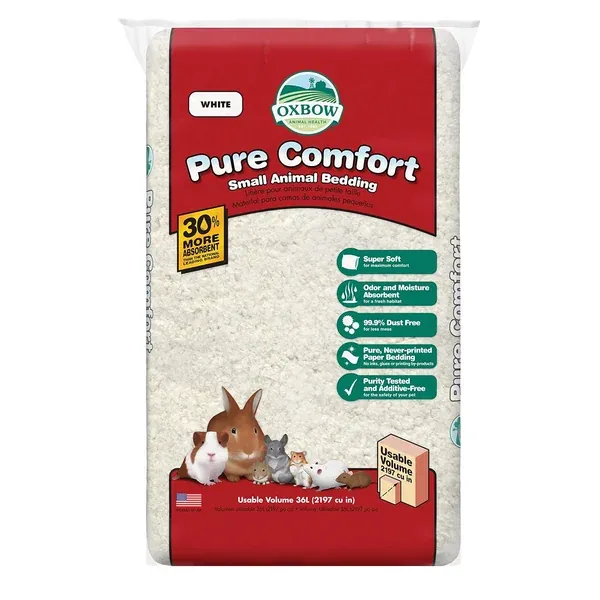
Oxbow Pure Comfort White Bedding is a paper-based small animal bedding sold in a 36-liter bag. According to the manufacturer's listing and Oxbow Animal Health's own product page, it is made from 100% pure, never-printed paper — meaning no inks, dyes, or recycled printed stock (oxbowanimalhealth.com). The white colorway is the variant reviewed here; Oxbow also offers a blended version (oxbowanimalhealth.com).
Intended species include rabbits, guinea pigs, hamsters, gerbils, rats, chinchillas, and ferrets. The listing positions the product for use as both a full-habitat bedding layer and as a dedicated litter box fill.
Build Quality and Safety
The standout safety claim from Oxbow's listing is the use of virgin, never-printed paper. Because the fiber has not been through a print process, there are no residual inks or chemical dyes that could contact a small animal's skin or be ingested during nesting. The manufacturer states the bedding is processed to remove 99.9% of dust, which is relevant for owners of respiratory-sensitive species such as rabbits and rats, and for people who manage allergies in the household.
Rosiebunnybean.com notes that odors in small-pet enclosures are "caused mainly by low-quality, soiled bedding and infrequent bedding changes" — framing that aligns with Oxbow's emphasis on clean materials over chemical odor masking (
rosiebunnybean.com).
Real-World Fit: Who It Suits, Who Should Skip
Readers have responded positively overall — the product holds a
4.6/5 aggregate from 6,305 Amazon ratings — and the Cali Cavy Collective covered Pure Comfort as a practical alternative for guinea pig owners who find fleece bedding too time-intensive (
calicavycollective.com).
The bedding is likely a good match for owners who prioritize:
- A chemical-free, dye-free substrate for sensitive or young animals
- Low airborne dust in enclosed spaces
- A soft, compliant material that supports natural burrowing behaviors in hamsters and gerbils
Owners who use a dedicated litter corner and change spot-soiled areas frequently will get more mileage from the absorbency claims than those who run a whole-cage deep-litter system and expect extended performance between full changes.
Honest Limitations
The most consistent critical note in published coverage concerns absorbency in practice. Bestviewsreviews.com aggregates reader feedback noting that "once the bedding gets wet, it stays wet for a very long time, indicating that it is not very absorbent," with some guinea pig owners reporting that it did not adequately control pig odors and may have made smells worse in their setup (
bestviewsreviews.com). That same source indicates roughly 24% of reviewers found the absorbency fell short of expectations.
This gap between the manufacturer's absorbency claims and a meaningful minority of user experiences is worth taking seriously. Paper beddings at this tier typically perform best when soiled sections are removed frequently; owners expecting a set-and-forget cycle of several days in a high-traffic enclosure may be disappointed. Oxbow itself — and independent sources like Rosie Bunny Bean — emphasize that regular changes are essential regardless of bedding type.
The 36-liter size is a practical mid-range volume, but for multi-animal households or large enclosures, the cost-per-liter math may favor purchasing a larger bag size if available.
Category Context
White paper beddings, as a category, are often chosen over wood shavings or recycled paper options specifically because the pale color makes it easier to spot urine staining, blood, or abnormal droppings — a real husbandry benefit that the listing does not explicitly call out but that published guinea pig and rabbit communities frequently cite as a reason to choose this style. Oxbow's never-printed virgin paper construction gives it a cleaner-ingredient profile than recycled-content alternatives typically carry, though owners on a tighter budget will find recycled paper options at lower price points.