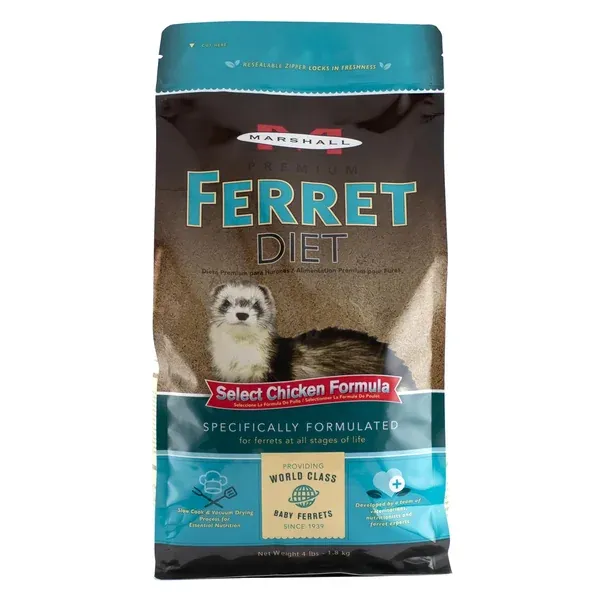
What It Is and Key Specs
Marshall Select Chicken Formula Premium Ferret Diet is positioned as a step up from the brand's original kibble line. According to the manufacturer and retailer listings, each 4 lb bag is made using 3 lbs of fresh chicken — a notably high fresh-meat ratio for a bagged ferret food. The formula is described as rich in Omega-3 fatty acids and amino acids, and is marketed as appropriate for ferrets of any age, from kits through adults.
Compared with the brand's own Senior Formula, the Select Chicken variant carries a slightly lower concentration of fruits, vegetables, grains, and starches, per a side-by-side analysis published on
ferret.love. Both the Select Chicken Formula and the Senior Formula are noted to be pea-free, which is a relevant consideration for owners tracking carbohydrate and legume content in obligate carnivore diets.
Build Quality and Nutritional Design
Marshall is one of the more established names in dedicated ferret nutrition, and the Select line reflects an intentional formulation choice: leaning heavily on fresh chicken as a primary protein and fat source rather than meal-based alternatives. The Omega-3 and amino acid emphasis aligns with general guidance around ferret dietary needs as obligate carnivores.
For context, the brand's broader diet lineup — described on
marshallpet.com — includes a Senior/Less Active formula formulated with 10% less fat and protein than the original Premium Ferret Diet, designed to help keep older or overweight ferrets "happy, slim and healthy well into their golden years." The Select Chicken Formula sits in a different lane: it is not specifically reduced in fat or protein, making it more suitable for active adults and younger ferrets than for sedentary or senior animals.
Real-World Fit: Who It Suits, Who Should Skip
The Select Chicken Formula is a reasonable candidate for:
- Active adult ferrets who need a protein- and fat-rich diet to support energy levels and lean muscle.
- Ferret owners prioritizing fresh meat content, given the 3 lbs of fresh chicken per 4 lb bag claim.
- Multi-age households, since Marshall markets it as appropriate across life stages.
Owners may want to look elsewhere if:
- Their ferret is older, less active, or overweight — Marshall's own Senior Formula, with its reduced fat and protein profile, is the brand's stated recommendation for those animals.
- They prefer a food with a higher concentration of supplemental fruits and vegetables, as the Select formula scores slightly lower on that dimension compared to the Senior Formula in published comparisons.
How It Compares in the Category
Within the Marshall lineup specifically, the Select Chicken Formula and the Senior Formula share at least one notable commonality: both are pea-free. However, the Senior Formula has a slightly shorter ingredient list — which some ferret nutrition advocates consider a positive indicator — while the Select formula offsets this with its higher fresh-chicken input and slightly lower fruit, vegetable, grain, and starch concentration, according to the
ferret.love comparison. Owners comparing the two should weigh those trade-offs against their individual ferret's life stage and activity level.
Honest Limitations
No product is without drawbacks, and a few are worth naming clearly:
- Fresh chicken can affect shelf life and storage requirements. With 3 lbs of fresh chicken in a 4 lb bag, proper storage and attention to use-by dates is more important here than with meal-based foods. The sources reviewed do not detail specific storage guidance, so owners should check the packaging directly.
- Not optimized for senior or low-activity ferrets. The manufacturer explicitly positions a separate formula for that demographic, meaning the Select Chicken Formula is not a one-size-fits-all solution despite the "any age" marketing language.
- Limited independent nutritional analysis available in public sources. The guaranteed analysis figures are not detailed in the sources reviewed here, so owners seeking precise protein, fat, and fiber percentages should consult the bag label or the manufacturer directly at marshallpet.com.