What It Is and Key Specs
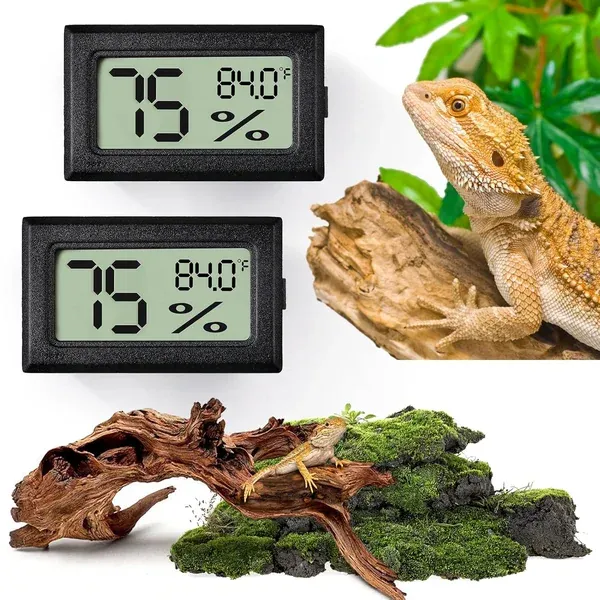
The LuvemPets Reptile Thermometer and Humidity Gauge ships as a two-piece kit — two rectangular digital units that each display both temperature and relative humidity on an LED screen. According to the manufacturer, the built-in measurement chip delivers temperature accuracy to 0.9°F, and each unit switches between Fahrenheit and Celsius via a quick-toggle function. Power comes from replaceable batteries (no USB cord or wired connection), and installation relies entirely on included double-sided adhesive tape rather than any hardware or tools. The cordless, adhesive form factor is the defining design choice of this product.
Build Quality and Ease of Use
The listing describes a "durable construction" intended for long-term stable operation, positioning the unit as an economical alternative to single-use or frequently replaced devices. The LED readout is marketed as clearly visible day or night, including in dimly lit rooms — a practical consideration given that many reptile habitats use low ambient lighting. The F/C toggle and adhesive mounting are highlighted as the primary usability features, keeping the setup process quick and tool-free. The manufacturer also notes a 24-hour customer support response commitment and includes the two units explicitly for sharing across multiple tanks or enclosures.
Real-World Fit: Who It Suits and Who Should Skip It
The two-pack format has a clear practical argument: reptile keepers managing more than one enclosure, or those who want to monitor a warm side and a cool side of a single large tank simultaneously, get redundant coverage without buying separate units. The cordless, adhesive design keeps cable clutter out of the habitat, which matters for naturalistic bioactive setups.
However, published reptile-keeping guidance is worth considering before purchasing. Coverage from sources such as
Krawlo and
The Bio Dude notes that digital hygrometers with external
probes are generally considered the more reliable choice for reptile enclosures, because a probe can be positioned precisely where the animal actually spends time — inside a hide, near a basking spot, or at substrate level — rather than measuring conditions at the wall of the enclosure. The LuvemPets units, by contrast, are adhesive-mounted directly to the tank surface with no separate probe mentioned in the listing.
Keepers with straightforward humidity requirements and moderately sized enclosures will likely find this kit sufficient. Those maintaining species with tightly controlled microclimates — or building complex bioactive setups — may want to evaluate probe-equipped alternatives reviewed at sources like
FrogPets and
The Vet Desk.
Category Context
The reptile monitoring category spans a wide range — from basic analog dials to dual-probe digital units from brands like Zoo Med, Exo Terra, and Vivarium Electronics, the latter offering a 36-inch temperature and humidity probe with a one-year replacement warranty per
Reptile Basics. The LuvemPets kit occupies an entry-to-mid tier: it is digital (an advantage over analog gauges, which published sources consistently flag as inaccurate) but lacks the external probe that higher-tier units provide. The two-pack value proposition is relatively uncommon at this level and is likely its most distinctive differentiator.
Honest Limitations
A straightforward accounting of what the listing does and does not claim:
- No external probe. The units mount flat against the enclosure wall, meaning readings reflect conditions at that surface rather than at the animal's precise location within the habitat. Published guidance consistently favors probe-based placement for accuracy.
- Adhesive longevity is unverified. The listing describes double-sided tape as the sole mounting method; long-term adhesion in humid reptile environments is not addressed.
- High-humidity performance. Coverage of similar category products at The Vet Desk notes that some digital units in this class work intermittently at very high humidity levels — a consideration for tropical species keepers.
- Battery replacement required. While the manufacturer frames this as cost-efficient versus single-use devices, it does mean ongoing consumable costs.
Readers can find current pricing directly on the product page, where aggregate customer ratings are also displayed.
Darrell Steward
1 Feb, 2021Brilliant
This is the best product that has ever been made. It is also one of the best items in the world right now. Definitely go for it.
Albert Flores
17 Oct, 2020Just WOW
It's good to use this product for development as it has very good performance, display quality and all other features.