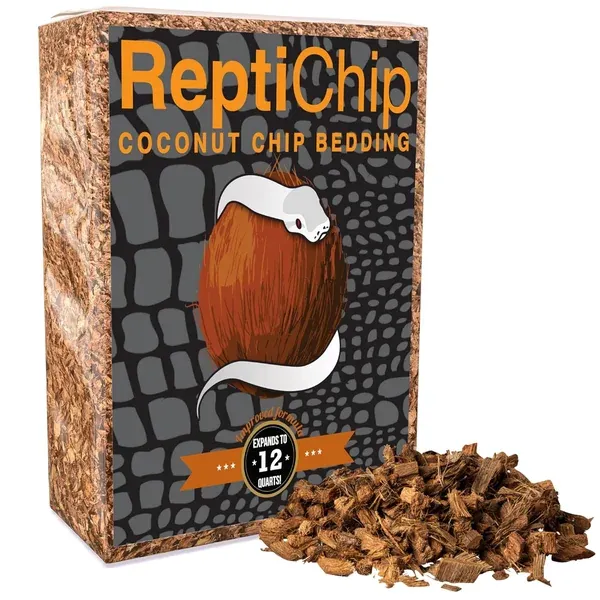
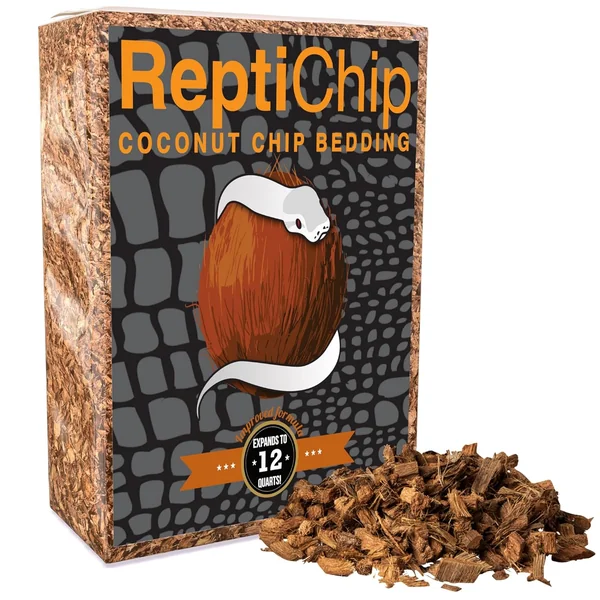
Should you trust ReptiChip coconut chip substrate for your reptile's enclosure? If you keep ball pythons, tortoises, or aquatic turtles, choosing the right bedding is one of the most consequential habitat decisions you'll make. The wrong substrate can trap dangerous bacteria, cause respiratory irritation, or fail to hold humidity — all of which directly affect your animal's health. ReptiChip's 12-quart loose coconut chip substrate positions itself as a natural, low-dust, humidity-friendly solution. Here's how it actually holds up.
---
Construction & Durability
ReptiChip is made from compressed coconut husk chips — the same raw material used in high-end horticultural substrates. The chips are loosely packed, coarse in texture, and noticeably larger than powdered coco coir or fine reptile bark. That size distinction matters: larger chips resist compaction, promote burrowing behavior in species like ball pythons, and allow better airflow at the substrate surface, which helps prevent the anaerobic bacterial buildup that finer substrates can develop over time.
The 12-quart bag provides a solid working volume for most standard 40-gallon breeder tanks. Depending on your desired depth — most keepers aim for 4–6 inches to support natural burrowing — one bag typically fills a 36" x 18" enclosure to a functional depth. You may need two bags for deeper enrichment setups or larger enclosures.
One standout quality here is moisture retention. Coconut husk chips absorb water readily and release it slowly, making them excellent for maintaining the 60–80% humidity that ball pythons require. For tortoise keepers working with humid-side species like red-footed or Russian tortoises, this substrate performs equally well. It won't dry out as rapidly as aspen shavings or paper bedding, which means fewer daily misting sessions and more stable humidity readings.
The chips hold their structure reasonably well between changes. Spot-cleaning is practical — saturated or soiled sections can be removed without disturbing the whole enclosure — and the substrate doesn't collapse into a muddy paste when wet, which is a common failure mode for finer coco products.
Longevity between full changes will vary depending on enclosure size, animal species, and your misting frequency. Most keepers do a complete change every 2–4 months with routine spot cleaning.
---
Size Guide
The 12-quart bag is a practical entry-level volume:
- 20-gallon tank (30" x 12"): One bag covers 4–5 inches comfortably
- 40-gallon breeder (36" x 18"): One bag fills to ~3 inches; two bags recommended for burrowing species
- 75+ gallon or tortoise table: Plan for three or more bags to achieve meaningful depth
For keepers running multiple enclosures or larger setups, ReptiChip is also available in larger compressed brick formats, which can be more cost-effective. The 12-quart loose format has the advantage of being ready to use straight from the bag — no soaking or expansion required, which matters when you're doing a quick emergency change.
---
Best For / Skip If
ReptiChip is an excellent fit for humid-environment reptile species that benefit from burrowing and stable moisture levels. This includes:
- Ball pythons and other Python species requiring 60–80% humidity
- Red-footed, sulcata, and Burmese star tortoises in humid enclosures
- Box turtles and similar semi-terrestrial species
- Dart frog vivariums and bioactive setups where natural substrate texture matters
The natural coconut husk material contains no added dyes, synthetic preservatives, or aromatic oils — unlike pine or cedar shavings, which release phenols that are genuinely toxic to reptiles. According to the
ASPCA Animal Poison Control, certain wood shavings and oils pose real health risks to small animals. Coconut husk carries no such concern, making it one of the safer natural substrate choices available.
Skip this if your setup requires:
- Arid desert environments — for bearded dragons, leopard geckos, or Uromastyx lizards that need dry, well-draining substrate, coco chips retain too much moisture. Sand-and-soil mixes or dry topsoil blends are more appropriate.
- Aquatic turtle tanks — while the product name mentions turtle tanks, fully aquatic setups like red-eared sliders don't benefit from terrestrial substrate. This bedding is suited for the land zones of semi-aquatic enclosures, not underwater flooring.
- Very small hatchlings — the chip size is coarse enough that tiny hatchlings could theoretically ingest pieces while striking at food. Paper towels or fine coco coir are safer for animals under 100 grams until they're established feeders.
---
The Verdict
ReptiChip delivers exactly what humid-environment reptile keepers need in a substrate: natural composition, reliable moisture retention, burrowing depth, and genuine ease of maintenance. It outperforms paper bedding aesthetically and functionally, and it avoids the respiratory risks associated with dusty fine substrates or aromatic wood shavings.
The 12-quart loose format is convenient for single-enclosure keepers and makes a great starting point if you're evaluating the brand before committing to larger quantities. The price point is competitive with mid-tier reptile substrates, and the performance justifies it.
The primary limitations are scope-related: this isn't a one-substrate-fits-all solution, and desert species or fully aquatic setups will need different options. For hatchlings, exercise caution with chip size until animals are feeding confidently. But for ball pythons, box turtles, and humid tortoise enclosures, this is one of the most reliable substrate choices on the market.
---