What It Is and Key Specs
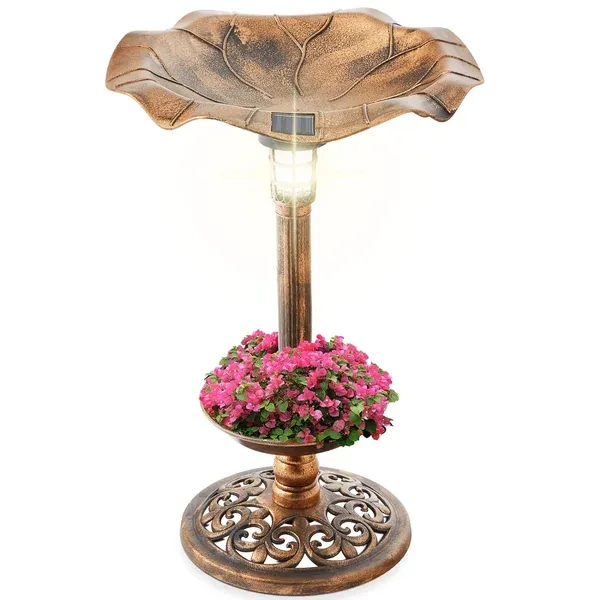
The Best Choice Products Solar Lighted Pedestal Bird Bath is a 2-in-1 outdoor accent that pairs a wide lily-leaf bird bath bowl with a planter base, finished in a bronze tone with scroll accents. According to the manufacturer's listing, the unit stands 29.5 inches tall with a 17-inch diameter basin. An integrated solar panel charges during the day to power a soft LED glow after dark — no external wiring or outlets required. The manufacturer also notes a 0.8-gallon basin capacity, which it describes as sufficient to keep birds cool during warmer months.
Build Quality and Materials
The bird bath is constructed from lightweight plastic/resin, which the manufacturer describes as weather-resistant and capable of withstanding sun, rain, wind, and seasonal temperature changes for year-round outdoor display. The all-weather resin build is a practical choice for a decorative garden piece at this price tier, though shoppers accustomed to cast iron, concrete, or glazed ceramic bird baths should note that lightweight plastic typically trades heft and long-term UV resistance for ease of handling and affordability — a common tradeoff across this category. No CPSC safety recall or compliance notice was surfaced in the available sources for this product.
Features Worth Noting
- Solar-powered LED lighting: The built-in panel charges passively by day and emits a decorative ambient glow at night. Published coverage from Best Choice Products' own review page describes the solar light as designed to illuminate the bath area as an evening garden accent.
- Integrated planter base: The pedestal doubles as a planter, allowing flowers or small plants to be displayed at the base while the upper basin attracts birds — a functional layering that distinguishes this model from a standard single-purpose bath.
- Tool-free setup: The manufacturer states no wiring is required, making assembly and repositioning straightforward.
- 0.8-gallon basin: A generously sized bowl relative to compact tabletop alternatives, though it is a static bath rather than a recirculating fountain despite "fountain" appearing in the product title — an important distinction for buyers expecting moving water.
Real-World Fit: Who It Suits, Who Should Skip
This bird bath is likely a good match for casual garden decorators who want an attractive, low-effort outdoor accent that does double duty as a planter. The solar lighting adds nighttime visual interest without any running costs or electrical work. The 29.5-inch height places the basin at a practical level for small birds while keeping it visible as a yard focal point.
Buyers who may want to look elsewhere:- Those expecting an active water fountain with a pump and flowing water — the listing describes LED lighting, not water circulation.
- Gardeners in regions with extended low-sunlight winters, where solar charging performance may be inconsistent.
- Shoppers prioritizing heavy, anchor-grade construction that resists tipping in high-wind environments; lightweight plastic construction, while convenient, is more susceptible to displacement than denser materials.
Honest Limitations
Based on manufacturer information and available published coverage, a few limitations are worth flagging before purchase:
1. No water circulation. Despite "fountain" in the product name, the solar power drives LED lighting only — not a water pump. Standing water in the basin will require manual refreshing to stay clean and mosquito-free.
2. Lightweight build. Convenient for setup and repositioning, but plastic pedestals at this tier typically require monitoring in windy conditions or may benefit from being partially filled or anchored.
3. Solar dependency. The nighttime LED feature is contingent on adequate daytime sun exposure. Heavily shaded gardens may see reduced lighting performance.
4. Planter functionality is limited by basin height. The planter sits at the base of the pedestal; the visual impact of any plantings will depend on what is grown and how the piece is positioned in the landscape.
Bottom Line
Based on the manufacturer's listing and available product coverage, the Best Choice Products Solar Lighted Pedestal Bird Bath offers a reasonable combination of decorative function — bird bathing, container planting, and solar accent lighting — in a single, easy-to-assemble unit. It is best understood as a garden décor piece rather than a performance bird bath or fountain. For buyers whose priority is low-maintenance visual charm and solar-powered evening ambiance, the value proposition is clear. Those seeking flowing water, premium materials, or heavy-duty construction will likely need to shop at a higher price point.