What It Is and Key Specs
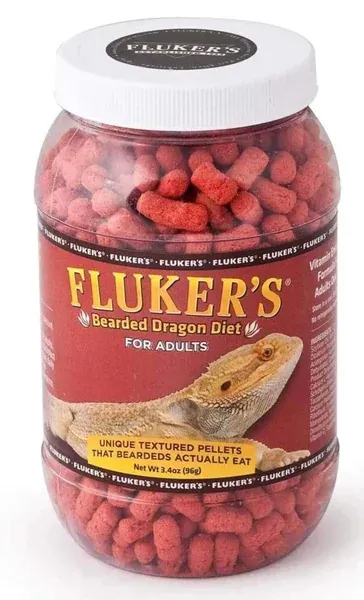
Fluker's Bearded Dragon Food is a dry pellet diet sold in a 3.4-ounce jar (Pack of 1). According to the Amazon listing, the formula is marketed as suitable for "All Stages," though the product title specifically calls out adult bearded dragons as the primary audience. The manufacturer describes it as a combination of digestible animal and plant sources, formulated to deliver a balance of protein, fats, vitamins, and minerals.
Fluker Farms — the manufacturer behind this product — produces a broader ecosystem of bearded dragon nutrition, including the Crafted Cuisine Adult Bearded Dragon Diet (a soft-moist ready-to-serve option), the Buffet Blend for Adult Bearded Dragons (a veterinarian-formulated mix of freeze-dried crickets, mealworms, and vitamin-enriched pellets), and various juvenile-specific and treat formulas. This pellet diet sits within that lineup as a dry, shelf-stable alternative.
Build Quality and Ingredients
The listing describes the formula as drawing from both animal and plant protein sources, which aligns with the omnivorous dietary needs of adult bearded dragons. It is positioned to supply essential vitamins and minerals without requiring supplementation layered on top, though the listing does not provide a detailed guaranteed analysis or specific ingredient breakdown in the available sources.
The compact 3.4-oz jar format is practical for single-dragon households or as a supplemental rotation item, though the relatively small container size means it may be consumed quickly if used as a primary staple.
Real-World Fit: Who It Suits, Who Should Skip
Based on manufacturer information from Fluker Farms and the broader product line philosophy, this pellet diet is best understood as a convenience component within a varied diet rather than a complete stand-alone solution. Fluker's own Buffet Blend page notes that combining multiple food types supports complete nutrition, and their juvenile veggie variety listing explicitly recommends pairing packaged foods with live feeders for best results.
Owners looking for a simple, mess-free food to rotate alongside fresh greens, live or freeze-dried insects, and occasional fruits may find this pellet format a useful addition. It could also serve as a travel-friendly or backup food when fresh ingredients are unavailable.
Likely to suit: Adult dragon owners who want a dry, shelf-stable option to supplement a varied diet; those already comfortable with Fluker's product ecosystem.
May want to skip: Dragons that are known to be selective eaters, or owners hoping to use it as a sole dietary staple without supplementation.
Honest Limitations
Palatability is a documented concern with pellet-format bearded dragon foods. A firsthand feeding account published on the Bearded Dragon community forum (
beardeddragon.org) describes a dragon actively spitting out pellets and eating around them when offered Fluker's Crafted Cuisine — a separate but related product in the same line. While that review covers a different product, it reflects a broader pattern: many bearded dragons show low enthusiasm for dry or pellet-format foods regardless of nutritional content.
The 3.4-oz size, while convenient, also limits value for multi-dragon households or owners seeking a long-term staple supply. The listing does not specify guaranteed analysis figures (protein percentage, fat percentage, fiber), which makes it difficult to compare nutritional density directly against competing formats.
Finally, the "All Stages" age range description listed in the product specs sits in mild tension with the "Adult Bearded Dragons" emphasis in the product title — prospective buyers with juvenile dragons should cross-reference Fluker's juvenile-specific formulas before purchasing.
Darrell Steward
1 Feb, 2021Brilliant
This is the best product that has ever been made. It is also one of the best items in the world right now. Definitely go for it.
Albert Flores
17 Oct, 2020Just WOW
It's good to use this product for development as it has very good performance, display quality and all other features.