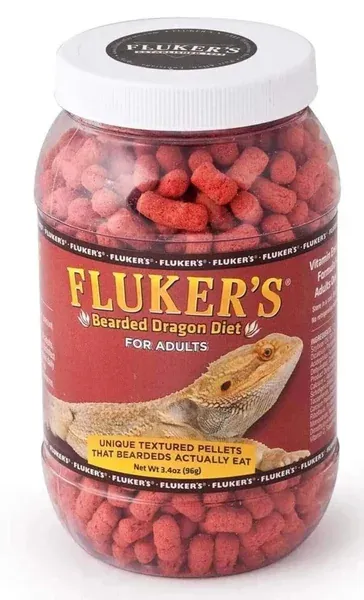
What It Is and Key Specs
Fluker's Bearded Dragon Food is a pellet-format diet packaged in a 3.4-ounce jar and marketed for adult bearded dragons, though the manufacturer's listing notes "All Stages" as the age range description. According to the product listing, it combines digestible animal and plant protein sources and is positioned as a complete nutritional option, providing what the manufacturer describes as "the proper balance of essential nutrients" including protein, fats, vitamins, and minerals. The single-jar format is compact — best suited for households with one dragon or as a supplemental rotation item rather than bulk feeding.
Build Quality and Ingredient Philosophy
Fluker's, operating under Fluker Farms, positions this pellet food within a broader ecosystem of bearded dragon products — including their freeze-dried Buffet Blends and soft-moist Crafted Cuisine lines. According to manufacturer information at
flukerfarms.com, their adult bearded dragon diet products are generally formulated to balance vegetables, fruits, and essential nutrients. The pellet format here differs from their soft-moist and freeze-dried offerings, offering a shelf-stable, measured approach to daily feeding.
The listing's claim of "digestible animal and plant source" ingredients aligns with accepted nutritional thinking for omnivorous reptiles, though the listing does not publish a full guaranteed analysis or ingredient breakdown in the retrieved sources. Owners who require full ingredient transparency for dietary management may want to review the physical label directly.
Real-World Fit: Who It Suits, Who Should Skip
This product is likely to appeal to adult beardie owners looking for a convenient, shelf-stable pellet option to complement or rotate with live feeders and fresh greens. The compact 3.4-oz jar is practical for travel or as a backup food.
However, palatability can be a meaningful variable with pellet diets. Community feedback published at
beardeddragon.org noted that at least one adult dragon was unimpressed with Fluker's pellet-style food, spitting the pellets out and eating around them — a reminder that individual dragon preferences vary widely. Owners with picky eaters may find pellet acceptance requires patience or mixing strategies.
It is worth noting that Fluker Farms' own product pages for other formats — including the Buffet Blend and Crafted Cuisine lines — suggest that variety and live feeders are important components of a complete diet. Bearded dragons are active foragers in the wild, and a pellet-only diet is commonly considered by reptile keepers to be less enriching than a mixed feeding approach, though this review makes no specific claim about the nutritional completeness of this particular formula beyond what the manufacturer states.
How It Compares Within the Fluker's Lineup
Fluker's offers several adult bearded dragon food formats. Their Buffet Blend for Adult Bearded Dragons, per
flukerfarms.com, combines freeze-dried crickets, mealworms, and vitamin-enriched pellets, and is described as veterinarian-formulated. Their Crafted Cuisine is a soft-moist, ready-to-serve format. This pellet-only product occupies a different niche — purely dry, shelf-stable, and simpler in format — which may suit owners prioritizing convenience and long shelf life over textural variety.
Honest Limitations
- The 3.4-oz jar is small; frequent buyers or multi-dragon households may find it requires restocking often.
- No full ingredient list or guaranteed analysis is available in the retrieved sources — owners managing health conditions should inspect the physical label.
- Community forum feedback suggests pellet acceptance is not guaranteed; some adult dragons actively avoid pellet textures.
- The manufacturer's own guidance across related products implies pellets work best as part of a varied diet, not as the sole food source.
Reader Sentiment
Readers on Amazon have given this product a 4.7 out of 5 from 559 aggregate ratings — a strong signal of general satisfaction among purchasers, though individual results, as with all reptile foods, will depend heavily on the specific animal's preferences and overall feeding regimen.