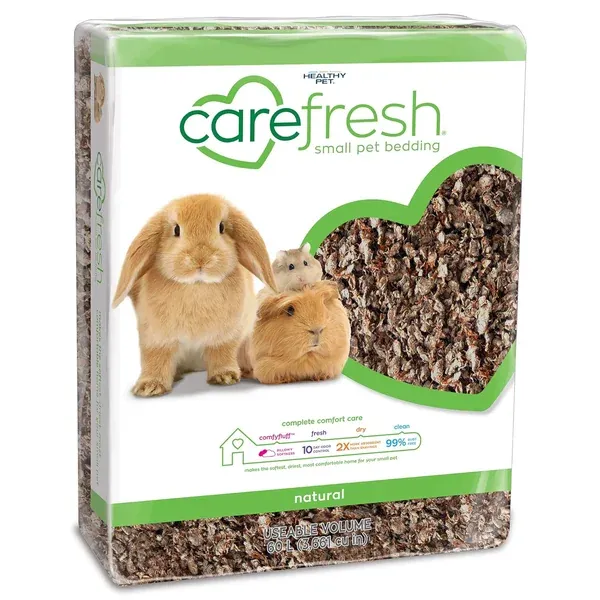
What It Is and Key Specs
Carefresh Natural Paper Bedding is manufactured by Healthy Pet and made from natural paper fiber — not wood shavings or synthetic materials. The 60L bag is the largest size in the lineup, with smaller 14L and 30L options also available; as noted in published coverage at
prugu.com, the larger size tends to be the most economical per liter. Key manufacturer claims include: 2x the absorbency of shavings, 99% dust-free composition, an odor-control formula that suppresses ammonia odors for up to 10 days, and certifications as both biodegradable and compostable. The bedding is free of harmful chemicals and synthetic dyes, according to the listing.
Build Quality and Safety
The bedding is made from natural paper fiber processed from scratch — meaning it is not a repurposed industrial byproduct — which the brand describes as gentle on sensitive feet and suitable for burrowing, tunneling, and nesting behaviors. The 99% dust-free claim is particularly relevant for respiratory health. As noted by
thecarefresh.org, the low-dust formulation reduces the risk of respiratory problems for both pets and their owners. The manufacturer's site (
healthy-pet.com) further highlights that natural paper fiber is gentler on sensitive noses compared to wood shavings, which can be a meaningful distinction for small animals prone to respiratory irritation. The product contains no harmful chemicals or synthetic dyes per the listing.
Real-World Fit: Who It Suits, Who Should Skip
This bedding is broadly suited to owners of hamsters, guinea pigs, rabbits, rats, and other small animals who prioritize low dust and odor management. The fluffy, pillowy texture accommodates natural burrowing and nesting instincts, making it a functional choice for species that spend significant time in contact with their substrate. The Vet Desk describes it as a budget-friendly option that is "extremely fluffy and cozy," and the 60L volume makes it practical for owners with larger enclosures or multiple animals.
Owners should note that bedding change frequency will vary. Thecarefresh.org recommends changing the bedding approximately once a week, though enclosure size and number of pets will affect that cadence. Buyers who only need a small volume may find the 14L or 30L sizes more appropriate to avoid storage issues with unused bedding.
How It Compares in Its Category
Wood shavings are a common alternative in this category. The manufacturer claims Carefresh is 2x more absorbent than shavings, and published coverage consistently notes that paper-fiber bedding typically generates less dust and fewer respiratory concerns than wood-based products — a distinction echoed across multiple sources reviewed here. Cedar and pine shavings in particular are commonly cited in small-animal care literature as potential respiratory irritants, a concern that paper bedding avoids. Coverage at
prugu.com also notes that small ingestion of the paper bedding is considered relatively low-risk compared to some wood-based alternatives, though owners should consult their veterinarian for species-specific guidance.
Honest Limitations
No product is without trade-offs, and a few are worth flagging:
- Weekly replacement cadence means ongoing cost, especially for larger enclosures. The 60L bag helps extend the purchase cycle, but it is not a one-time expense.
- Odor control has a ceiling. The manufacturer's claim covers up to 10 days of ammonia suppression — not indefinite control. High-traffic enclosures or warmer environments may require more frequent changes.
- Storage bulk. A 60L bag of paper bedding is lightweight but voluminous, which can be inconvenient for buyers with limited storage space.
- Not a perfect dust barrier. "99% dust-free" is not the same as dust-free. Owners of animals or people with significant dust sensitivities should be aware that trace dust is still present.
Reader Sentiment
Across nearly 6,000 Amazon ratings, readers award this bedding a 4.6 out of 5 aggregate — a notably strong signal for a consumable product in a competitive category. This review synthesizes the manufacturer listing, brand information from
healthy-pet.com, and published editorial coverage; individual results will vary based on enclosure type, species, and husbandry habits.