What It Is and Key Specs
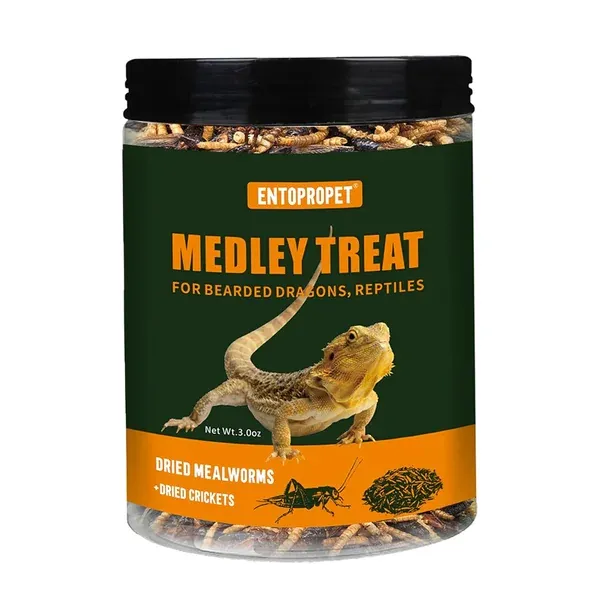
The LuvemPets Dried Mealworms and Dried Crickets Medley is a 3 oz (single-pack) blend of two insect-based protein sources: dried mealworms and dried crickets. According to the manufacturer, the product is made with 100% natural ingredients — no added colors, flavors, or preservatives — and is described as GMO-free with no antibiotics, hormones, or chemicals. The blend is positioned as a "medley treat," meaning it is intended as a supplement or enrichment food rather than a sole dietary staple.
The product is shelf-stable and requires no refrigeration before or after opening, which distinguishes it from fresh or live feeder insect options. It ships in a single resealable 3 oz format, making it practical for smaller households or those new to feeding dried insects.
Nutritional Profile and Build Quality
LuvemPets highlights two primary nutritional selling points: elevated calcium content and a rich protein profile. Both mealworms and crickets are well-established as protein-dense feeder insects in the reptile and avian hobby communities. According to the manufacturer, the medley is formulated to meet the dietary requirements of aquatic and reptile pets specifically, offering what the listing describes as "well-balanced nutrition."
It is worth noting that the broader dried insect category has documented nutritional trade-offs. Published coverage from Dubia.com notes that reptiles often rely on their diet for a portion of their water intake, and a diet based primarily on dried insects can contribute to dehydration and secondary issues like impaction. This does not disqualify dried insects as a treat, but it does underscore that this product functions best as a supplement alongside fresh food and proper hydration, not as a complete diet.
Real-World Fit: Who It Suits and Who Should Skip It
The LuvemPets medley is explicitly listed as suitable for bearded dragons, turtles, birds, tropical fish, and "some amphibians," making it one of the more broadly positioned dried insect products on the market. The no-prep, no-refrigeration format is a genuine convenience advantage for multi-pet households or casual users who want to avoid the logistics of live feeders.
This product is likely a good fit for:
- Bird and backyard chicken owners looking for a protein-rich treat
- Turtle and tropical fish keepers who supplement prepared diets with insect protein
- Bearded dragon owners who use dried insects as an occasional dietary addition
It is a less ideal fit for:
- Reptile keepers whose animals rely heavily on insect prey for hydration, where live or freeze-dried options may better support moisture intake
- Owners of strict insectivores that require a significant volume of feeders daily, where a 3 oz package may be limiting
How It Compares in the Category
The dried insect category includes well-known alternatives such as Fluker's Freeze-Dried Mealworms and Crickets, and Exotic Nutrition's freeze-dried mealworm line — both of which use freeze-drying to preserve nutritional integrity. The LuvemPets listing does not specify whether its drying process is freeze-drying, roast-drying, or sun-drying, which are meaningfully different methods. Exotic Nutrition's sourcing notes that crickets are "gut-loaded then sun-dried to maintain nutrition," and Rainbow Mealworms clarifies that its dried mealworms are "roast dried and not live." Without equivalent process transparency from LuvemPets, buyers with strict nutritional standards may want to seek clarification before committing.
Honest Limitations
- Drying method unspecified: The listing does not disclose how the mealworms and crickets are dried, which can affect final nutrient density.
- Treat, not a staple: The manufacturer's own framing positions this as a medley treat; it should not replace a varied, moisture-inclusive diet, particularly for reptiles.
- Small package size: At 3 oz, the single pack may not be economical for owners feeding larger animals or larger collections regularly.
- Broad species claim: While the "suitable for various pets" claim is common in the category, individual species have distinct nutritional needs; consultation with a vet or specialist is advisable before making this a regular part of any animal's diet.
Darrell Steward
1 Feb, 2021Brilliant
This is the best product that has ever been made. It is also one of the best items in the world right now. Definitely go for it.
Albert Flores
17 Oct, 2020Just WOW
It's good to use this product for development as it has very good performance, display quality and all other features.