What It Is and Key Specs
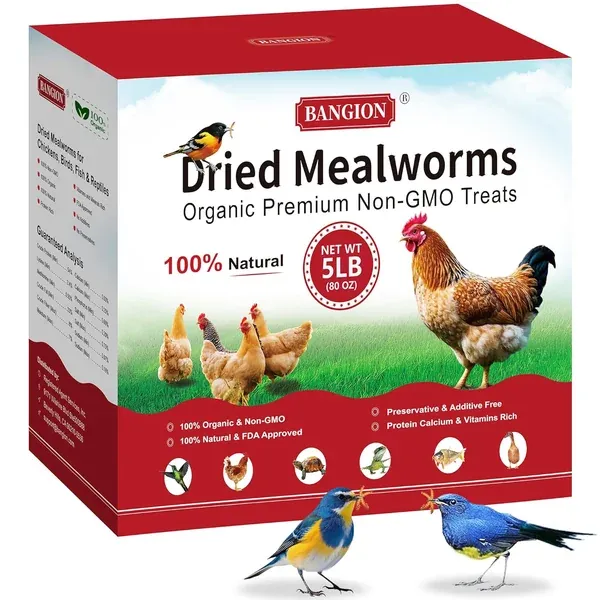
BANGION's dried mealworms come in a 5-pound single pack — a generous quantity suited to keepers with multiple animals or high feeder traffic. According to the manufacturer listing, the mealworms are organic and non-GMO, raised in what the brand describes as "high quality, safe, exceptional" conditions. The declared nutritional profile is 51% protein, 25% fat, and 7% fiber, which aligns closely with the ~50% protein figure cited by BackYardChickens.com for dried (as opposed to live) mealworms.
The product is positioned for chickens and laying hens first, but the listing also names wild birds, bluebirds, ducks, turtles, and reptiles as suitable recipients. BANGION states the mealworms can be served as a standalone feed or mixed with other foods.
Nutritional Value and Safety Considerations
The headline nutrient here is protein, and it's genuinely high. Published resources at PickyNeb.com note that mealworms also carry meaningful B vitamins, iron, and calcium — a broader micronutrient picture than the listing itself highlights.
That said, the same numbers that make mealworms appealing are the ones that demand restraint. Cluckin.net points out that dried mealworms are "almost completely protein and fat," and that feeding more than a few can upset the nutrient balance of a hen's diet and cause digestive problems. BackYardChickens.com adds that excess protein — mirroring the risks of too much calcium — can stress a chicken's kidneys over time. Raising-Happy-Chickens.com echoes the guidance to feed sparingly, particularly during periods of high stress such as cold weather, predator scares, or moulting, when the caloric and protein boost is most beneficial.
The takeaway from independent sources is consistent: dried mealworms work best as a supplement or treat, not a primary feed, regardless of how nutrient-dense they are.
Storage
Proper storage matters with this format. PickyNeb.com notes that dried mealworms can absorb ambient moisture, which accelerates spoilage. An airtight container is recommended after opening — worth factoring in when buying a 5-pound quantity, as it will likely sit in storage between feedings.
Real-World Fit: Who It Suits, Who Should Skip
Good fit:- Backyard chicken keepers looking for a high-protein treat during moulting, cold snaps, or recovery periods.
- Wild bird enthusiasts feeding bluebirds or other insectivorous species, which the listing specifically calls out.
- Multi-animal households with ducks, turtles, or reptiles that also benefit from dried insect protein.
- Buyers who want a large quantity and have the storage infrastructure to keep it fresh.
Consider skipping if:- You're looking to replace balanced layer feed — independent sources are clear that mealworms shouldn't serve that role.
- You have a small flock and no airtight bulk storage solution; 5 pounds is a substantial quantity that requires proper handling to avoid spoilage.
- You're expecting egg-laying improvements specifically from mealworm supplementation — Raising-Happy-Chickens.com notes that "eating mealworms is not" a direct driver of laying.
Honest Limitations
- Portion discipline required. The 51% protein / 25% fat combination is nutritionally dense enough that overfeeding is a genuine risk, not a theoretical one. Multiple independent poultry sources flag kidney strain and digestive upset as real consequences of excess.
- "Organic" and "non-GMO" claims are manufacturer-stated. The listing does not reference third-party certification, so buyers who prioritize verified labeling may want to investigate further.
- Versatility claims are broad. While mealworms are genuinely suitable for a range of animals, the specific needs of reptiles and turtles differ from those of poultry and birds. Buyers feeding non-avian species should consult species-specific guidance.
- Moisture sensitivity. A 5-pound supply requires careful storage discipline to maintain quality over time.
Darrell Steward
1 Feb, 2021Brilliant
This is the best product that has ever been made. It is also one of the best items in the world right now. Definitely go for it.
Albert Flores
17 Oct, 2020Just WOW
It's good to use this product for development as it has very good performance, display quality and all other features.