What It Is and Key Specs
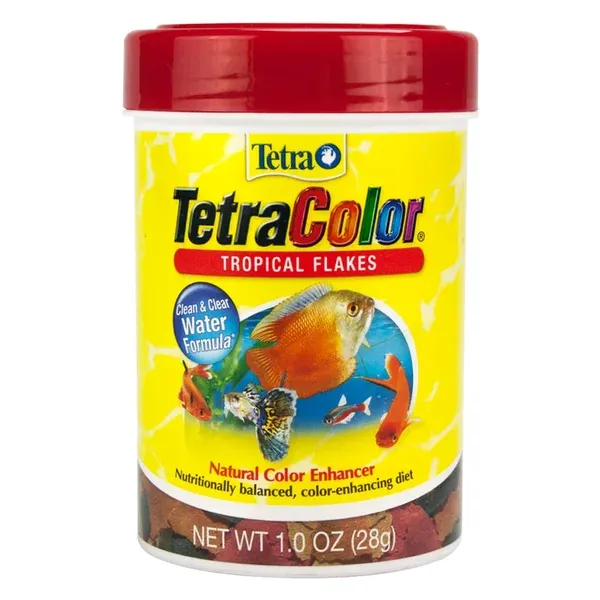
Tetra TetraColor Tropical Flakes (model 77160) is a 1-ounce (185 ml) canister of color-enhancing flake food aimed at everyday feeding of tropical freshwater fish. According to the manufacturer's listing, the formula is built around two functional additions: vitamin C and the patented ProCare health-enhancing complex borrowed from Tetra's flagship TetraMin line. The stated purpose is twofold — support general fish health and help develop the natural pink-to-orange-red pigmentation present in many tropical species.
The canister is a single-serve pack (Pack of 1), making it a straightforward entry point for hobbyists who want to try the food before committing to a larger size.
Rather than assessing physical build, the relevant quality markers here are formulation and safety. The manufacturer highlights the inclusion of ProCare — a proprietary blend Tetra also uses in TetraMin — as the primary health-support mechanism, supplemented by vitamin C. Color enhancement is specifically tied to the natural pink-to-orange-red spectrum, so fish that express colors outside that range (blues, greens, yellows) may see less benefit from the carotenoid-type enhancement this formula appears to target.
One practically useful claim supported by the listing: the flakes are formulated to not cloud water, which is a meaningful differentiator in a category where lower-cost flakes sometimes break down quickly and reduce water clarity.
Real-World Fit: Who It Suits, Who Should Skip
Per the manufacturer, TetraColor Flakes are designed to be fed daily, ideally alternating with spirulina-based foods and treats rather than used as the sole dietary source. This positions the product as part of a rotation rather than a complete, standalone diet — a nuance worth noting for new hobbyists who might assume one food covers all nutritional bases.
The food is best suited to:
- Community tropical fish keepers who already rotate multiple food types.
- Aquarists specifically looking to enhance red-to-orange pigmentation in species such as tetras, livebearers, and similar fish.
- Hobbyists who prioritize water clarity, given the no-cloud-water claim.
Those who might want to look elsewhere:
- Keepers of fish whose coloration falls outside the pink-to-orange-red spectrum, as the color-enhancement benefit would be limited.
- Aquarists seeking a single, all-in-one complete diet without the need to supplement with spirulina or treats.
- Owners of fish that require sinking pellets, wafers, or other food formats (bottom-dwellers, for example).
Honest Limitations
A few constraints are worth flagging openly:
- Rotation required. The manufacturer explicitly recommends alternating with spirulina foods and treats, indicating TetraColor Flakes alone are not positioned as a nutritionally complete diet.
- Narrow color-enhancement scope. The pigment support is specifically described as promoting "natural pink to orange-red colors," so fish with other dominant colorations receive general nutrition but not targeted color support.
- Small container size. At 1 ounce, the canister will be consumed relatively quickly in tanks with multiple fish, which may make it less economical for larger setups if purchased repeatedly at single-pack prices.
- Duplicate listing claims. Several bullet points in the manufacturer's listing are verbatim repeats, which offers no additional technical detail and limits the depth of information available to evaluate the formula independently.
Reader Reception
Aggregate reader reviews on third-party platforms reflect generally positive sentiment for this product as a color supplement within a broader feeding regimen — consistent with the manufacturer's intended use case. Individual results will vary depending on species, tank conditions, and what other foods are offered in rotation.
---
This review is based on the manufacturer's product listing, feature bullets, and published coverage. No hands-on feeding trial was conducted by this editorial team.