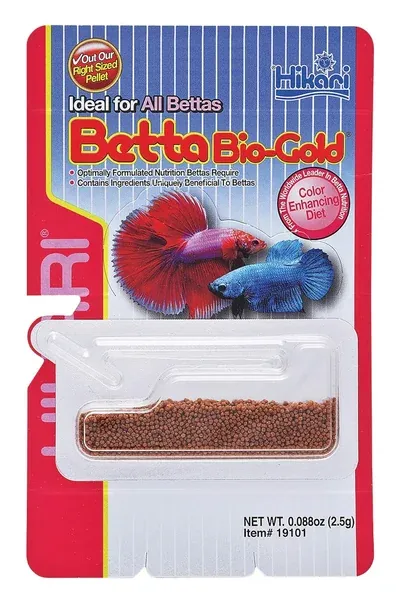
Should you buy Hikari Betta Bio-Gold Baby Pellets for your betta? If you've spent any time in the aquarium hobby, you already know Hikari is one of the most trusted names in fish nutrition. These tiny baby pellets are purpose-built for bettas — and for a container barely larger than a lipstick tube, they pack in a serious nutritional punch.
Here's the full breakdown.
What Makes These Pellets Different From Standard Betta Food
The Hikari Betta Bio-Gold Baby Pellets are formulated specifically with bettas' carnivorous dietary needs in mind. The pellet size is notably small — intentionally so. Bettas have relatively tiny mouths, and oversized pellets are one of the most common causes of digestive issues, bloating, and even swim bladder problems in bettas. These baby pellets address that directly.
The formula is rich in protein, which is appropriate for a species that in the wild feeds primarily on insects and larvae. Hikari includes their proprietary blend of carotenoids to support vibrant color, along with vitamins and minerals aimed at immune health. No artificial preservatives or unnecessary fillers are hiding in the ingredient list, which is a genuine differentiator from budget betta foods you'll find at big-box pet stores.
Hikari also applies a nutrient-retention process to the pellets to help minimize water clouding — a small but appreciated detail if you run a planted or display tank.
Who This Food Is Best For
Ideal for betta owners who want precision nutrition in a small package, these pellets are particularly well-suited for:
- Adult bettas with smaller mouths — some bettas, especially females or younger adults, struggle with full-sized pellets from other brands
- New betta owners looking for a reliable, well-regarded starting food without researching a dozen options
- Tanks with live plants or decorative setups where water clarity matters and slow-dissolving pellets create a mess
The 0.088 oz container is genuinely small — this is a product you'll go through in a few months with a single betta, feeding two to three pellets twice daily as most betta keepers recommend. That's not a flaw; it's the appropriate serving reality for a fish that eats very little.
Overfeeding bettas is one of the leading causes of poor water quality and related health issues, so the compact size actually encourages responsible portioning.
Limitations and Who Should Skip This
Where it falls short is primarily around value-per-ounce for multi-betta households. If you're running a fish room, a breeding operation, or even a handful of separate betta tanks, restocking this container frequently becomes both inconvenient and expensive relative to buying a larger betta-specific food in bulk.
It's also worth noting that while the protein content is solid, bettas thrive with dietary variety. These pellets work best as a staple food, not the
only food. Supplementing with frozen or freeze-dried foods — like bloodworms, daphnia, or brine shrimp — better mirrors a betta's natural diet and supports long-term health.
Betta health resources from aquarium authorities consistently note that dietary diversity correlates with better coloration and vitality.
A few other honest limitations:
- The container is not resealable in a meaningful way — you'll want to transfer to an airtight container for freshness if you won't finish it quickly
- Single-betta households may find the price-per-ounce higher than comparable quality foods in larger sizes
- Not designed for other fish species; don't use this as a general community tank food
Nutrition and Safety: What You Need to Know
From a safety standpoint, Hikari Betta Bio-Gold Baby Pellets present no significant concerns for betta fish when fed as directed. The pellet size is genuinely appropriate — this is not a product where you need to worry about a betta choking or struggling with oversized food.
The key safety habit to pair with this food is avoiding overfeeding. Bettas should receive only what they can eat in two to three minutes per feeding. Excess pellets decompose quickly and spike ammonia levels in smaller tanks, which is far more dangerous to your fish than the food itself.
This food is formulated for bettas specifically. Do not use it as a primary food for goldfish, tropical community fish, or other species — their nutritional requirements differ substantially.
Is Hikari Betta Bio-Gold Worth the Price?
For the quality of ingredients and Hikari's reputation for consistency in their manufacturing process, yes — worth it for dedicated betta keepers who prioritize nutrition over cost-per-ounce.
Compared to generic betta pellets at lower price points, the difference in ingredient quality and pellet sizing precision is noticeable. Whether that matters to you depends on how seriously you take your betta's care. Casual keepers may be perfectly happy with a budget alternative. But if you've invested in a quality tank setup and want a food that supports coloration, immune health, and digestive comfort, Hikari Bio-Gold earns its place as a pantry staple.
The small container size also means freshness is less of a concern — fish food loses nutritional potency over time once opened, and a 0.088 oz container will be used up well before degradation becomes an issue.*
*For best results, store in a cool, dry location away from direct light.
If your betta has shown signs of digestive issues, swim bladder problems, or unusual lethargy, consult your aquatic veterinarian before changing foods — while diet is often a factor, symptoms can have multiple causes that a professional should evaluate.
---