What It Is and Key Specs
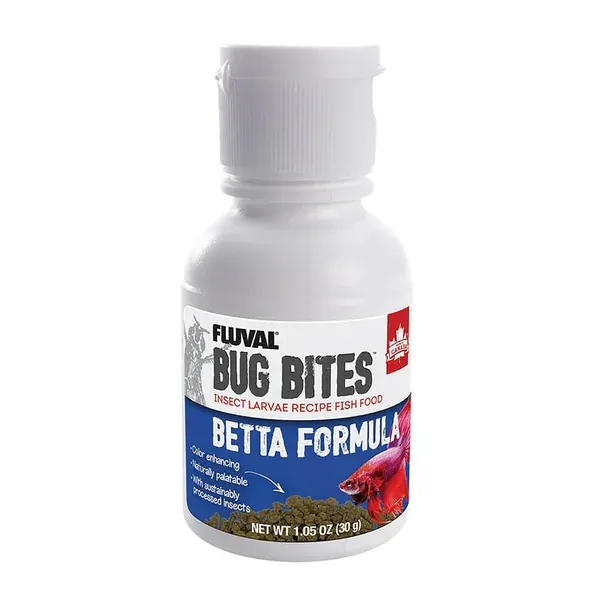
Fluval Bug Bites Betta Micro Granules are a 1.05 oz (30 g) small-batch fish food designed specifically for bettas and other small to medium sized fish. According to manufacturer information and the Fluval USA product page, the formula contains up to 40% Black Soldier Fly Larvae as the lead ingredient, followed by whole salmon, fish protein concentrate, wheat, potato, shrimp meal, and a suite of micronutrients including dicalcium phosphate, calcium carbonate, lecithin, choline chloride, L-lysine, vitamin E, biotin, niacin, and calcium L-ascorbyl-2-phosphate, among others.
The granules are sized at 0.25–1.0mm — a micro format the manufacturer describes as "slow sinking," intended to let fish feed at their preferred depth. Fluval recommends feeding as much as fish can consume in two minutes, two or three times daily. The product is marketed as suitable for all life stages.
Ingredient Quality and Nutritional Profile
The insect-forward approach is notable. Bugs are a primary food source for wild bettas, so leading with Black Soldier Fly Larvae is considered a naturalistic protein choice by the aquarium hobbyist community, as noted in published coverage at
boxednature.com. The formula also includes whole salmon, which the manufacturer states provides Omega 3 and 6 fatty acids to support skin, scales, and fins. Supplemental vitamins, amino acids, and minerals round out what Fluval positions as a balanced daily diet.
The ingredient list sourced from fluvalaquatics.com/us confirms a multi-protein approach with both animal and plant components (wheat and potato are present as carbohydrate sources). This is a common structure across premium prepared fish foods, and the specific proportions beyond the 40% larvae figure are not disclosed publicly.
Real-World Fit: Who It Suits
Based on forum discussions at
fishlore.com and
bettafish.com, many betta keepers report their fish take readily to Bug Bites and have observed no adverse effects over extended feeding periods. The slow-sinking micro granule size is frequently cited as a practical advantage — bettas that prefer to strike at mid-column or surface can still access the food before it fully settles, and smaller or shyer fish are not disadvantaged.
The format and ingredient profile make this a reasonable choice for:
- Betta keepers looking for an insect-protein primary food
- Community tanks with small companions, given the size-appropriate granules
- Hobbyists who prefer single-protein-source alternatives to generic flake blends
Honest Limitations
Several considerations emerge from community sources and warrant transparency:
Digestive concerns are a recurring forum theme. At least one thread on
plantedtank.net attributes constipation and bloat specifically to Bug Bites when fed as a sole diet. Forum participants on
fishlore.com have echoed the view that Bug Bites, while good, may not be complete as a fish's
only food source — one reviewer there gave an 8/10 and explicitly recommended dietary variety alongside it.
Wheat is present in the formula. While not inherently harmful, some betta keepers prefer grain-minimal diets. The ingredient list from Fluval's own product page confirms wheat and potato are included.
Packaging size. At 1.05 oz, this is a small container by weight. For single-betta households this may actually reduce waste from expired food, but multi-tank setups may find restocking frequent.
No independent nutritional analysis is available in the sources reviewed. Guaranteed analysis figures beyond the "up to 40%" larvae claim are not included in the publicly available listing information synthesized here.
Aggregate reader ratings reflect broadly positive sentiment, with betta keepers on both
fishlore.com and
bettafish.com reporting fish that eat enthusiastically and show no obvious ill effects. Rotating Bug Bites with other foods — such as freeze-dried or live options — appears to be the approach most experienced hobbyists recommend, rather than relying on any single prepared food exclusively.
Bottom Line
Fluval Bug Bites Betta Micro Granules make a credible case on ingredient quality: an insect-first protein source, supplemental salmon, and a size-appropriate slow-sinking format backed by a reputable aquarium brand. The formula synthesizes manufacturer specifications and published hobbyist coverage into a picture of a solid staple food — with the caveat that dietary variety and portion discipline appear important for avoiding the digestive issues some users have reported.
Reader Comments
No comments yet
Be the first to share your thoughts!