What It Is and Key Specs
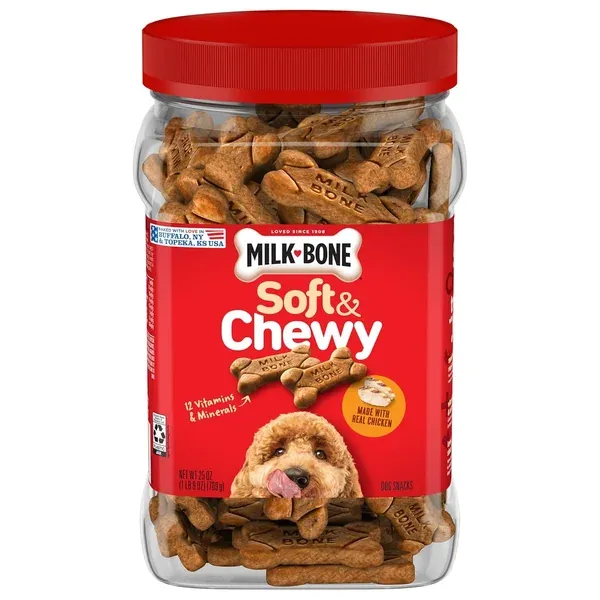
The Milk-Bone Soft & Chewy Chicken Recipe comes in a 25 oz (1.56 lb) canister — a practical format for households doing frequent training sessions. According to the manufacturer, real chicken breast is the number-one ingredient, and the treat delivers 18% protein per serving. The formula is also fortified with 12 vitamins and minerals, specifically called out as including iron, zinc, and vitamin B12.
The texture is soft and pliable by design, which serves a functional purpose: the treats are easy to break into smaller pieces mid-session, making them suited to rapid-reward training without overfeeding. The manufacturer describes the texture as "satisfyingly tender" and notes it is easy on teeth and gums — a point confirmed on Milk-Bone's own product page (
milkbone.com).
Build Quality and Safety
Milk-Bone is a long-established brand, and this product is manufactured for general adult dog consumption. However, Milk-Bone's own website is explicit on one important restriction: this treat is not suitable for dogs under one year of age or adult dogs less than 10 pounds. Owners of puppies or toy breeds should take that caveat seriously before purchasing.
On the ingredient front, veterinary commentary published by Dial A Vet notes that Milk-Bone treats are typically considered safe, but flags that the formulation contains wheat, soy, and other ingredients that may not suit all dogs — particularly those with known dietary sensitivities or allergies (
dialavet.com). Pet owners managing food-sensitive dogs should review the full ingredient list before adding these to a rotation.
Real-World Fit: Who It Suits, Who Should Skip
These treats occupy a practical middle ground: they're affordable, widely available, and formulated with a training workflow in mind. The breakable texture and chicken flavor make them a reliable high-value reward for adult dogs during repeat training sessions. The canister format supports consistent portioning and keeps treats fresh between sessions.
Reader feedback aggregated by The Review Index across 997 user reviews yields an overall score of
9.4/10 from readers — a strong signal of broad palatability across different dogs and households (
thereviewindex.com).
That said, these treats are not a fit for every dog.
Skip them if:- Your dog is under 12 months old (per manufacturer guidance)
- Your dog weighs less than 10 pounds (per manufacturer guidance)
- Your dog has wheat or soy sensitivities
- You are specifically seeking grain-free or limited-ingredient options
Coverage from Lord Jameson also points out that some pet owners have begun seeking alternatives to Milk-Bone products in response to concerns about allergies and ingredient quality (
lordjameson.com), which is worth noting for health-conscious owners, even if the treats remain broadly popular.
Honest Limitations
No treat is without trade-offs. A few worth noting here:
- Not universally allergen-friendly. The presence of wheat and soy means dogs with common food sensitivities may react poorly, as noted by veterinary sources.
- Age and size restrictions apply. The manufacturer explicitly excludes puppies under one year and adult dogs under 10 pounds — a meaningful limitation given how often small-breed owners seek soft, easy-to-chew options.
- Calorie density warrants attention. Forum commentary on Dog Food Advisor notes that soft, chewy treats in this category tend to be calorie-dense, which can be a concern if treats are given frequently or in place of balanced meal portions (dogfoodadvisor.com).
- Ingredient transparency. While the listing highlights chicken breast, vitamins, and minerals prominently, owners who prioritize clean or minimalist ingredient panels may find the full list less aligned with their standards.
Bottom Line
For owners of eligible adult dogs who want a reliable, palatable training treat with broad appeal and a convenient canister format, Milk-Bone Soft & Chewy Chicken Recipe delivers on its core promise. The 18% protein content, real chicken breast as the lead ingredient, and vitamin-mineral fortification add credibility to the nutritional claims. The strong reader consensus reinforces its palatability. The primary reasons to look elsewhere are size and age exclusions, ingredient sensitivities, or a preference for cleaner-label alternatives.
Darrell Steward
1 Feb, 2021Brilliant
This is the best product that has ever been made. It is also one of the best items in the world right now. Definitely go for it.
Albert Flores
17 Oct, 2020Just WOW
It's good to use this product for development as it has very good performance, display quality and all other features.