What It Is and Key Specs
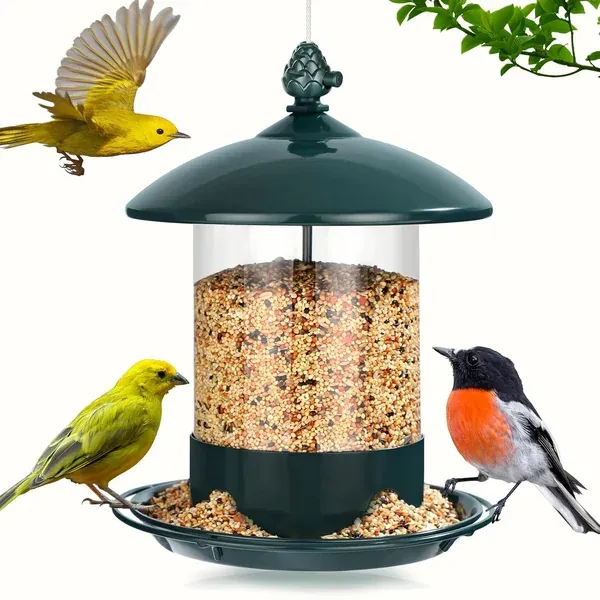
The Gbekery Metal Bird Feeder is an outdoor hanging seed feeder designed for year-round use. Its core structure pairs a thickened, clear polycarbonate (PC) tube with a metal lid and 360° seed tray, both treated with an anti-rust, powder-coated finish. The feeder holds up to 2 lbs of seed, accommodates a variety of seed types — including sunflower seeds and mixed grains — and offers four feeding ports arranged around a circular perch so multiple birds can feed at the same time. A slider-lock cap system is built into the lid to deter squirrels from prying it open. The feeder ships in green.
Build Quality and Weather Resistance
The combination of metal components and a thickened PC tube is the design's main selling point. The lid and tray carry an anti-rust coating, and the powder-coated finish is stated to resist corrosion over time. A large metal roof is sized to shield seeds and perching birds from wind, rain, and snow. Drainage holes in the tray are designed to prevent standing water, which helps keep seeds dry and reduces spoilage.
Published coverage on
feedmybirds.com describes the feeder as durable and well-suited to everyday outdoor conditions, while a roundup on
spiderzoon.com characterized it as "an excellent choice if you want an attractive, durable, easy-to-use hanging feeder for small and medium birds" — framing that aligns with the manufacturer's own positioning. Neither source reported issues with rust or weather degradation, though long-term multi-season data from independent reviewers is limited in what's available.
Ease of Use: Filling, Monitoring, and Cleaning
A wide-mouth opening is included specifically to make refilling straightforward, and the transparent PC tube lets owners gauge seed levels at a glance without removing the lid — a practical detail that reduces unnecessary top-ups and cuts down on waste. The feeder is designed to be fully detachable, which the listing cites as enabling more thorough cleaning than fixed-construction alternatives. Regular cleaning matters in a bird feeder; a design that comes apart without tools lowers the barrier to doing it often enough.
Real-World Fit: Who It Suits, Who Should Skip
Based on listing specs and editorial coverage, this feeder is well-matched to backyard birders who prioritize weather resistance and want to support multiple birds feeding simultaneously without constant refills. The 360° perch and four feeding ports make it practical for households that attract social, flock-feeding species. The 2 lb seed capacity is moderate — adequate for casual feeding but likely to require more frequent refilling for high-traffic yards compared to larger-capacity feeders.
The squirrel-deterring slider-lock cap is worth noting for urban and suburban settings where squirrel pressure is common, though no independent data in available sources confirms long-term effectiveness against persistent animals. Buyers in areas with very heavy squirrel activity should set realistic expectations.
The feeder is described by
spiderzoon.com as suited to small and medium birds, so those specifically seeking to attract larger species may want to look at alternatives with wider ports or platform designs.
Honest Limitations
- Moderate seed capacity: At 2 lbs, the hopper will need more frequent attention in busy gardens compared to larger feeders.
- Squirrel resistance is passive: The slider-lock cap is a deterrent, not a guarantee — determined squirrels may find workarounds that independent reviews have not fully stress-tested in available sources.
- Limited long-term data: Published coverage is positive but relatively brief; multi-season durability of the anti-rust coating has not been independently documented in the sources reviewed here.
- Small-to-medium bird focus: The port and perch design is optimized for smaller species, which may limit appeal for birders targeting larger visitors.
After-Sales Support
Gbekery states a 24-hour customer service commitment and encourages buyers to reach out directly for any product issues — a standard but reassuring safety net for an item with mechanical components like the slider-lock cap and detachable tray assembly.
Darrell Steward
1 Feb, 2021Brilliant
This is the best product that has ever been made. It is also one of the best items in the world right now. Definitely go for it.
Albert Flores
17 Oct, 2020Just WOW
It's good to use this product for development as it has very good performance, display quality and all other features.