What It Is and Key Specs
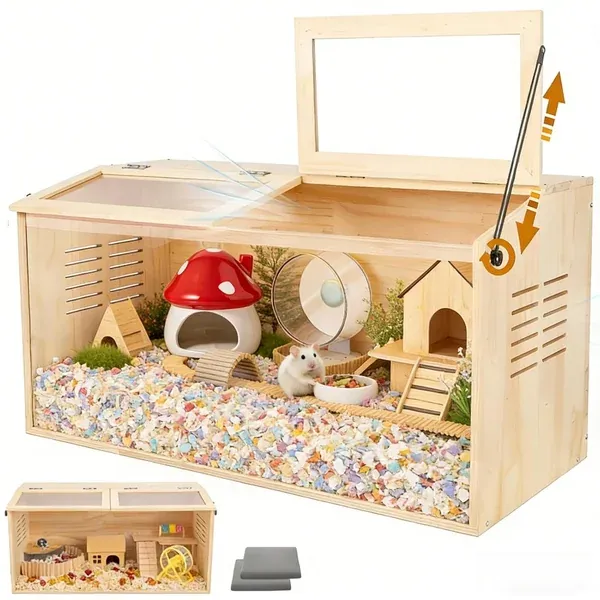
The LuvemPets wooden hamster cage measures 32 inches long, 16 inches wide, and 16 inches tall — a footprint that the manufacturer describes as spacious enough to accommodate tunnels, exercise wheels, bridges, swings, and themed décor (toys not included). The frame is built from pine with thickened acrylic panels on multiple faces, giving the enclosure its signature open sightlines. Two washable liners are included. The cage ships with an openable top and a tilting front door for feeding and maintenance access. A comparable cage from VEVOR in the same 32 x 16 x 16-inch class uses high-density fir rather than pine, which is a meaningful distinction discussed below.
The manufacturer lists compatibility with dwarf hamsters, Syrian hamsters, chinchillas, gerbils, and other small animals, though buyers should assess whether the interior volume suits the specific species they keep — some hamster welfare communities recommend significantly larger floor space for Syrians in particular.
Build Quality and Materials
According to the listing, all materials are described as non-toxic and harmless. The acrylic panels are highlighted as "thickened" and provide a crystal-clear 270°-style viewing experience, while two side-panel air outlets are said to deliver fresh airflow and odor control. The tilting door mechanism is positioned as a convenience feature for routine cleaning.
A note on wood type: The listing specifies pine construction. Community resources at The Hamster Forum flag that certain woods — particularly those with aromatic oils or phenols, such as cedar — carry known risks for small animals. Pine occupies a debated middle ground in those discussions; some members consider kiln-dried or heat-treated pine acceptable, while others advise caution. Buyers with concerns about their specific hamster species are encouraged to consult veterinary or specialist guidance before purchasing a pine-framed enclosure. No CPSC warning or recall information was identified in connection with this product at the time of this review.
Ventilation and Visibility
The large-format acrylic panels and dual side air outlets are among the cage's most-cited selling points. The design allows observation from multiple angles without the visual obstruction of wire bars. Published user feedback on a comparable wooden cage in this size class noted the viewing window is a genuine highlight, though one reviewer pointed out that the groove securing the removable acrylic panel could be deeper — a small grain of debris was enough to cause the panel to pop out (sourced from VEVOR product reviews for the same size class at
vevor.com). Buyers should inspect panel fitment carefully on arrival.
Real-World Fit: Who It Suits, Who Should Skip
Good fit for:- First-time hamster owners who want a visually attractive, furniture-style enclosure.
- Owners of dwarf hamsters or smaller Syrian hamsters who can fill the space with enrichment items.
- Pet parents who prioritize easy visual monitoring of their animals throughout the day.
- Those who value simplified, tool-free assembly without dedicated DIY experience.
Consider skipping if:- Your hamster is a confirmed heavy chewer. The Hamster Forum's community coverage consistently notes that wooden cages are poorly suited to habitual chewers, since sustained gnawing can compromise structural integrity and hygiene over time (thehamsterforum.com).
- You house your pet in a high-humidity environment. Wooden cage guides note that rot, mold, and moisture damage are realistic long-term risks that require proactive monitoring and periodic wood treatment (woodhamstercage.com).
- You prefer wire or glass enclosures that can be fully sanitized with water and disinfectant without risk of warping.
Honest Limitations
Every product in this category carries trade-offs, and this one is no exception:
- Wood degradation risk: Unlike glass or plastic, pine is susceptible to moisture absorption, odor retention, and chewing damage over time. Periodic inspection for rot or mold is recommended (woodhamstercage.com).
- Panel retention: Based on published reviews of comparable cages in this class, the acrylic panel groove fit may be less secure than expected, particularly if bedding or debris accumulates in the track.
- Species suitability debate: While the listing includes Syrian hamsters in its compatibility list, some hamster welfare communities advocate for even larger floor areas for Syrians. Buyers should research current species-specific habitat guidelines independently.
- Pine controversy: The suitability of pine for small-animal enclosures is an ongoing discussion in specialist communities (thehamsterforum.com). The manufacturer states the materials are non-toxic, but informed buyers may wish to verify the wood treatment process before committing.
Reader Ratings
Reader feedback on comparable wooden hamster enclosures in this size class has been broadly positive, with enrichment potential and clear visibility cited most frequently as standout qualities. Specific aggregate scores for this product, where available, are attributed to verified purchaser reviews on the retail listing page.
Darrell Steward
1 Feb, 2021Brilliant
This is the best product that has ever been made. It is also one of the best items in the world right now. Definitely go for it.
Albert Flores
17 Oct, 2020Just WOW
It's good to use this product for development as it has very good performance, display quality and all other features.