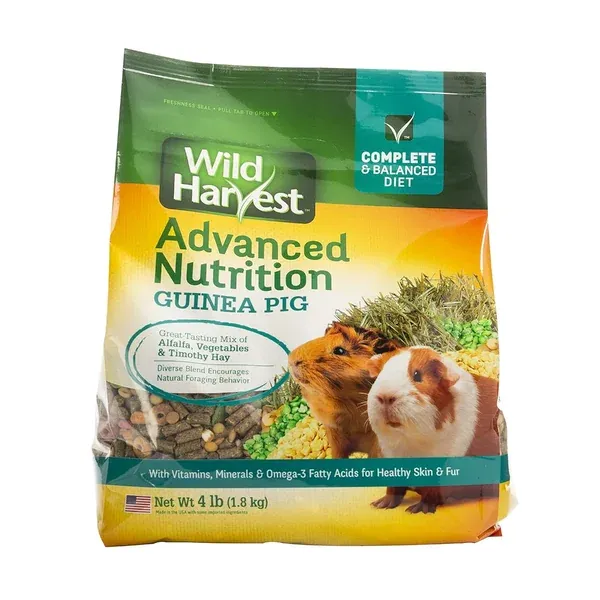
What It Is and Key Specs
Wild Harvest Advanced Nutrition Guinea Pig Food is a 4-pound, single-pack blend designed as an everyday complete diet for guinea pigs. According to the manufacturer, the formula combines alfalfa, Timothy hay, and vegetables alongside high-fiber pellets intended to replicate foraging behaviors found in a natural habitat. The brand states the food delivers fiber, protein, vitamins, and minerals — and the product page at wildharvestpets.com also references Omega-3 fatty acids as part of the nutritional profile.
Feeding guidance from the listing is straightforward: ¼ cup to ½ cup daily per guinea pig. Wild Harvest positions itself as a broader brand offering "a full assortment of nutritional and interactive engagement products" for small animals.
Mainstream Reception
Across 13,879 Amazon ratings, readers have given this food an aggregate score of 4.6 out of 5 — a notably high volume of feedback for a small-animal food product. That volume suggests widespread availability and consistent repeat purchasing among a large base of guinea pig owners.
This is where prospective buyers should pay close attention. Hobbyist community coverage raises meaningful questions about the ingredient list. Contributors on The Guinea Pig Forum (
theguineapigforum.co.uk) report that the formula has been found to contain
pork fat and fish oil — ingredients that forum members consider inappropriate for guinea pigs. These are not inferences; forum contributors describe verifying the claims by checking the ingredient panel on purchased bags directly.
Separately, the guinea pig specialty community at Guinea Pig Cages (
guineapigcages.com) takes a harder stance, with contributors arguing that beyond added vitamins and minerals, the food offers limited nutritional value for the species and includes ingredients they characterize as unhealthy.
It is worth noting that seed-and-pellet blends at this tier commonly include filler components and animal-derived additives — this is typical across value-positioned small-animal mixes, though that context does not resolve the specific concerns raised about this product's own ingredient panel. Owners with strict dietary standards for their guinea pigs should read the current ingredient list on the physical bag before purchasing, as formulations can change over time.
Real-World Fit: Who It Suits, Who Should Skip
May suit: Owners looking for a budget-accessible, widely available guinea pig blend who supplement heavily with fresh hay, leafy greens, and vitamin C-rich vegetables. At ¼ to ½ cup per day, the bag offers reasonable longevity for a single guinea pig.
Consider skipping if: You follow specialist guinea pig dietary guidance that excludes animal-derived fats (such as pork fat or fish oil), or if you prefer a pellet-only diet without a seed/vegetable mix component. Guinea pig nutritional advocacy communities generally favor plain, uniform pellets (particularly those without seeds or dried fruit) to prevent selective feeding, where animals pick preferred pieces and leave behind nutritionally important components. The mix format of this product makes selective feeding a realistic behavioral concern.
Honest Limitations
- Animal-derived ingredients: Community sources report the presence of pork fat and fish oil, which many guinea pig owners and enthusiasts consider unsuitable for the species.
- Mix format encourages selective feeding: A blend of pellets, vegetables, and varied components can lead guinea pigs to eat preferred pieces first, potentially skewing the nutritional balance away from what the label projects.
- Community credibility gap: Despite the strong reader aggregate, dedicated guinea pig husbandry communities express consistent skepticism about this product's nutritional quality — a disconnect worth weighing carefully.
- Vitamin C considerations: Guinea pigs cannot synthesize their own vitamin C, and vitamins in packaged foods degrade over time; fresh dietary sources remain important regardless of what a dry food label states.