What It Is and Key Specs
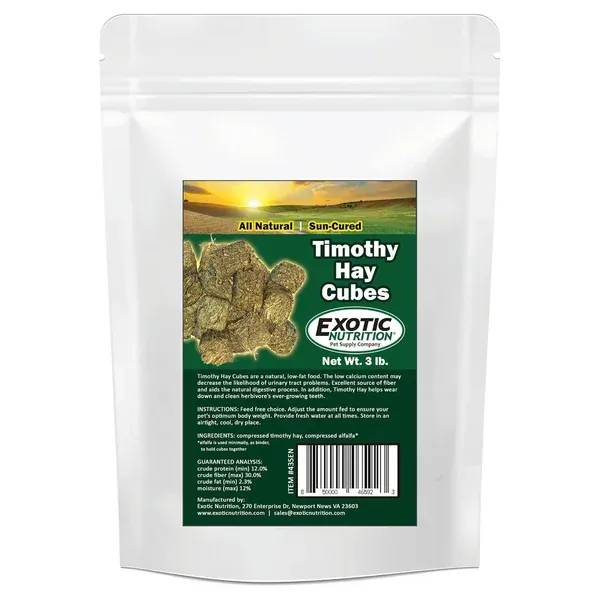
Exotic Nutrition's Timothy Hay Cubes are compressed blocks of sun-cured, 100% timothy grass sold in a 3 lb single pack. The manufacturer markets them for a wide range of small animals: rabbits, guinea pigs, chinchillas, degus, prairie dogs, tortoises, hamsters, gerbils, and rats, among others. Exotic Nutrition has been producing exotic-animal products since 1998 and distributes through various storefronts, including the ZooPro Amazon channel.
A comparable 30 lb timothy hay cube product from Farmer Dave Pet Supply — reviewed separately at
farmerdavepetsupply.com — lists a nutritional profile of roughly 9% crude protein (min), 1.8% crude fat (min), 35% crude fiber (max), and 12% moisture (max). Exotic Nutrition does not publish a full guaranteed analysis directly in the Amazon listing, so buyers with strict dietary requirements should contact the manufacturer for confirmed figures on this specific product.
Build Quality and Composition
The cubes are described as compressed blocks of sun-cured timothy hay — a single-ingredient format with no additives listed. The low-fat profile cited by the manufacturer (timothy grass is naturally low in fat) is consistent with the grass's general nutritional character. The compressed format makes storage tidier than loose hay and reduces the dust and allergen scatter that some owners find problematic with standard timothy bales.
Dental and Digestive Benefits
According to the manufacturer, timothy hay promotes wear on small animals' continuously growing teeth and supports natural digestive function through high fiber content. These claims are broadly consistent with what veterinary guidance says about high-fiber grass hay for herbivores — but the cube format introduces an important nuance addressed below.
Real-World Fit: Who It Suits, Who Should Skip
Good fit:- Owners looking for a supplemental chew treat or enrichment item alongside a loose-hay diet
- Households where hay dust or allergens are a concern — the compressed cube format contains scatter better than loose hay
- Owners of tortoises, prairie dogs, or other species that may engage differently with a cube format
Worth reconsidering:
Community discussion on BinkyBunny (
binkybunny.com) is direct on this point: hay cubes "aren't able to provide the benefits that loose hay does" and are best treated as playthings or treats rather than a primary hay source. A thread on Guinea Pig Cages (
guineapigcages.com) recounts a case where a guinea pig fed exclusively on timothy cubes — without access to loose hay — developed serious tooth problems and an abscessed jaw. Community consensus there is that cubes are fine as an occasional treat, but loose hay should remain the dietary staple.
This is the single most important distinction a buyer needs to understand before purchasing.
Reader Sentiment
Across 505 Amazon ratings, readers award this product an aggregate score of 4.4 out of 5 stars — a strong result that suggests most buyers are satisfied with freshness, palatability, and convenience. The broad appeal across multiple species also comes through in the listing's extensive target-animal list.
Honest Limitations
- Not a loose-hay replacement. Published community coverage consistently frames cubes as a supplement or treat, not a dietary staple. Exclusive reliance on cubes has been linked to dental issues in guinea pigs.
- No published guaranteed analysis in the listing. Buyers managing animals with specific nutritional needs should verify protein, fiber, and moisture figures directly with Exotic Nutrition.
- Compressed format may limit foraging behavior. Loose hay encourages natural grazing and extended foraging time; a dense cube does not replicate that behavioral enrichment in the same way.
- 3 lb quantity. For multi-pet households or larger animals, this pack size may run out quickly, raising the cost-per-ounce relative to bulk alternatives.
Bottom Line
Exotic Nutrition's Timothy Hay Cubes are a well-regarded, single-ingredient product that works best as a supplement to — not a substitute for — a loose timothy hay diet. For owners who want a cleaner, lower-dust chew treat that keeps small animals occupied and supports dental wear, these cubes are a reasonable choice. Anyone tempted to use them as a primary hay source should reconsider in light of the dental-health concerns raised by the small-pet community.
Reader Comments
No comments yet
Be the first to share your thoughts!