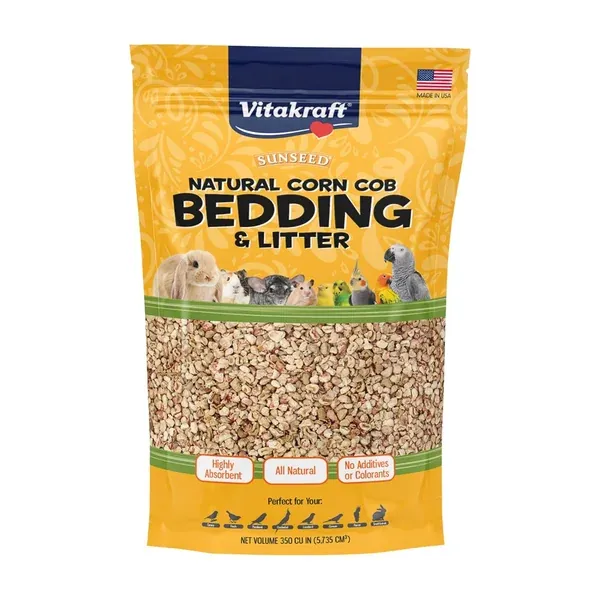
What It Is and Key Specs
The Sunseed Natural Corn Cob Bedding & Litter is produced by Vitakraft under its Sunseed brand and comes in a 350-cubic-inch package — a mid-range volume suited to single-habitat use or a brief trial run before committing to a larger quantity. According to the manufacturer, the bedding is made from 100% USA-grown corn cob and is entirely free from artificial dyes, fragrances, and chemical additives (
vitakraft.com). The product is positioned as both a bedding and a litter, meaning it can line cage floors, trays, and habitat bases interchangeably.
Intended species include parrots, finches, hamsters, gerbils, rabbits, and guinea pigs — a notably broad range that reflects the material's neutral, low-irritant profile rather than species-specific engineering.
Build Quality and Material Safety
Corn cob is a well-established substrate in the small-animal category, and Vitakraft's formulation leans into its natural credentials: no chemicals, no artificial additives, and processed to reduce dust. The low-dust claim is meaningful for bird owners in particular, since avian respiratory systems are sensitive to airborne particulates. The manufacturer states the product is processed carefully to minimize dust, which should also reduce mess outside the cage — though "low dust" in this category typically means reduced, not eliminated, and owners of highly sensitive species (such as certain parrots) should monitor air quality regardless of bedding choice.
The all-natural, additive-free composition means there are no synthetic fragrance chemicals masking odors — odor control here relies on the corn cob's natural moisture absorption rather than added scents.
Absorbency and Odor Control
The listing highlights superior moisture absorption as a primary functional benefit, stating the bedding quickly draws moisture away to keep cages dry and fresh. Corn cob substrates are generally recognized in the pet care space for reasonable absorbency, though performance will vary based on the number of animals, cage size relative to the 350-cubic-inch fill, and how frequently the bedding is changed. The odor reduction claimed is described as a natural outcome of moisture control rather than a fragrance-based solution, which is a meaningful distinction for owners who prefer scent-free environments for their pets.
Real-World Fit: Who It Suits, Who Should Skip
This bedding is a reasonable starting point for owners of small animals or cage birds who want a straightforward, natural substrate without synthetic additives. The USA-grown sourcing and chemical-free formulation will appeal to owners prioritizing ingredient transparency.
That said, the 350-cubic-inch package is on the smaller side. Households with multiple enclosures, large habitats, or animals that burrow heavily — such as Syrian hamsters or guinea pigs in spacious runs — may find this quantity insufficient for more than one or two changes. For those setups, bulk sizing would be more economical.
Owners of species with heightened respiratory sensitivities should also note that no corn cob bedding is entirely dust-free; the "low dust" descriptor from the manufacturer indicates a reduction, not elimination. Shoppers with those concerns may want to compare this against paper-based or fleece alternatives before deciding.
Honest Limitations
- Package size: At 350 cubic inches, this is a smaller-volume option; multi-pet households or large enclosures will go through it quickly.
- Dust reduction, not elimination: The manufacturer's own language says "reduce dust" — owners of highly dust-sensitive birds should weigh this carefully.
- No burrowing depth for dedicated diggers: Corn cob granules offer less structural support for deep-burrowing species compared to paper or aspen substrates.
- Odor control is passive: Moisture-dependent odor management requires consistent cage cleaning; it is not a substitute for regular maintenance.
Bottom Line
Based on the manufacturer's listing and product information, Sunseed Natural Corn Cob Bedding offers a clean, chemically simple substrate option for bird and small-animal owners who value natural materials and USA sourcing. Its versatility across species is a practical asset for multi-pet households keeping different animals. The 350-cubic-inch size works best as a trial or for smaller single-pet setups; heavier users will want to factor in repurchase frequency. As with any substrate, matching it to your specific species' needs and your own cleaning routine is the most reliable path to a good outcome.