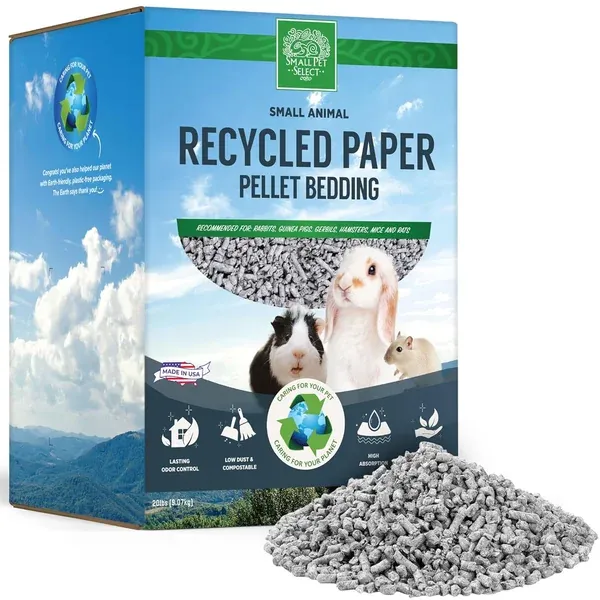
What It Is and Key Specs
Small Pet Select's Recycled Paper Pellet Bedding arrives in a 20 lb bag and is made entirely from post-consumer recycled paper, pressed into larger soft pellets. According to the manufacturer, the pellets are unscented, non-clumping, and retain their shape when wet rather than disintegrating into a wet mash. The formula contains no baking soda or added chemicals, per the brand's own product page at
shop.smallpetselect.com. The bedding is recommended for rabbits, guinea pigs, hamsters, and other small animals, and is positioned for use both as habitat bedding and as litter box fill.
Key highlights from the listing and manufacturer sources include:
- 99% dust-free low-dust formula
- Odor control for up to 14 days, per smallpetselect.com
- Absorbs nearly three times more liquid than clay litter
- 100% recycled paper, biodegradable and compostable
- Non-allergenic: no added irritants, artificial fragrances, or allergens
Build Quality and Safety
The pellet format is described as larger and soft, designed for easy pouring in and out of enclosures. Because the pellets are non-clumping, wet or soiled material can be spot-cleaned without disturbing the entire bed — a practical advantage for habitats that don't require full, frequent changes.
From a safety standpoint, the manufacturer is explicit that the bedding is free from baking soda and harmful chemicals, and contains no artificial scents. This matters because, as Small Pet Select's own guinea pig care resource at
shop.smallpetselect.com notes, dusty bedding, recycled-paper sludge, and artificial scents can cause breathing issues or toxicity in small animals. The 99% dust-free claim and unscented formulation directly address these concerns. The non-allergenic designation indicates no added irritants, making it a candidate for households where either the pet or owner has sensitivities.
Oxbow Animal Health's published guidance independently corroborates the general category choice, noting that paper bedding is "a very good bedding option for most small pets," while also flagging that dusty bedding broadly can contribute to respiratory issues — reinforcing why a low-dust formula is a meaningful specification, not just marketing language (
oxbowanimalhealth.com).
Real-World Fit: Who It Suits, Who Should Skip
This bedding is a strong candidate for owners of rabbits, guinea pigs, or hamsters who prioritize respiratory health — especially in households with allergy-prone pets or people. The pellet format's non-tracking characteristic (noted on the wholesale product page at smallpetselectwholesale.com) also suits owners who are tired of loose substrate scattering outside the enclosure.
The 20 lb size is practical for multi-pet households or owners of larger enclosures who want to reduce how often they reorder. The biodegradable and compostable nature of the material is a genuine plus for environmentally conscious owners.
Owners who prefer a soft, loose substrate for burrowing species — such as some hamster breeds that like to tunnel — may find pellets less suitable than a finer paper or paper-fluff bedding. The non-clumping formulation also means it won't behave like cat litter for those expecting that kind of waste consolidation.
Honest Limitations
Every product has trade-offs worth naming:
- Non-clumping by design: Soiled pellets must be spotted and removed manually rather than scooped in clumps, which requires a bit more attentiveness during spot-cleaning.
- Pellet texture may not suit all burrowers: Species or individuals that favor deep burrowing may find the rigid pellet form less accommodating than loose-fill or crinkle paper bedding.
- Odor control is time-limited: The manufacturer's own 14-day odor-control window implies that full changes or diligent spot-cleaning are still required on a regular schedule — this is not a set-and-forget solution.
- Recycled paper sourcing: While "post-consumer recycled paper" is an eco-positive attribute, the manufacturer does not elaborate on specific certifications or processing standards in the available sources, so buyers seeking detailed supply-chain transparency may need to contact the brand directly.