What It Is and Key Specs
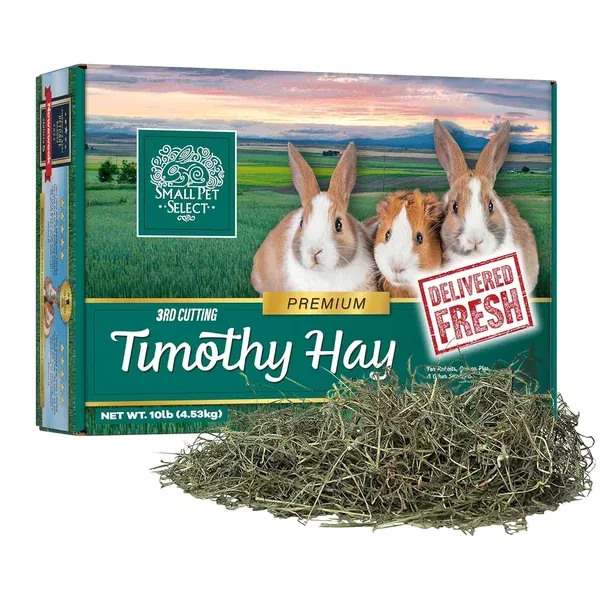
Small Pet Select's 3rd Cutting Super Soft Timothy Hay is a 10 lb box of third-cut timothy hay marketed specifically for picky eaters — rabbits, guinea pigs, chinchillas, and other small herbivores. According to the manufacturer and their wholesale channel, third-cut timothy is characterized by an ultra-soft texture, a high leaf-to-stem ratio, and lower availability compared to rougher first- or second-cut varieties. The company describes it as "the most palatable hay you can offer to your pet" — a useful framing for owners who have struggled to get their animals interested in hay at all.
The hay is sourced exclusively from US fields grown specifically for pet food use, and the manufacturer states each box is hand-packed in small batches. It ships in a high-strength corrugated box without compression packing, which the company says preserves the integrity of the stems and leaves during transit.
Build Quality and Freshness Approach
Rather than bulk-compressing the product (a common practice in the hay category), Small Pet Select ships in uncompressed corrugated boxes. This approach, as described in the listing, is intended to prevent the bruising and breakdown of delicate third-cut leaves and stems. The company also emphasizes sourcing from dedicated pet-food hay fields rather than repurposed agricultural surplus — a distinction they highlight in both their retail and wholesale channels.
The manufacturer notes they travel 22,500 miles every summer as part of their sourcing process, according to their product page at
shop.smallpetselect.com, suggesting hands-on field selection rather than commodity purchasing.
Nutritional Role
Per the listing, the hay provides a blend of protein, fiber, and fat suited to the digestive and dental health needs of small herbivores. Hay is generally understood in small-animal care as the dietary cornerstone for rabbits and guinea pigs — supporting gut motility and wearing down continuously growing teeth. The manufacturer positions third-cut specifically as a bridge for animals that have been rejecting coarser hay, including those recovering from illness, where palatability becomes especially important.
No specific guaranteed analysis figures are provided in the available listing information, so owners managing animals with precise dietary requirements should contact the manufacturer directly for current nutritional data.
Real-World Fit: Who It Suits, Who Should Skip
This product is likely a strong match for:
- Picky eaters — owners whose rabbits, guinea pigs, or chinchillas consistently ignore or sort around stems in first- or second-cut hay.
- Recovering animals — pets with dental issues or post-illness appetite suppression where softer texture may encourage eating.
- Owners prioritizing sourcing transparency — the US-grown, small-batch, hand-packed positioning is a meaningful differentiator for those concerned about hay origin.
It may be less ideal for:
- Owners on a tight budget — third-cut timothy is described by the manufacturer as less available than rougher cuts, which typically means a higher price point. Check the live listing price before committing.
- Animals that eat hay readily — if a pet happily consumes standard first- or second-cut hay, the added cost of third-cut may not deliver proportional benefit.
- High-volume households — at 10 lb per box, frequent reordering may be necessary for multi-pet homes.
Honest Limitations
This review synthesizes the manufacturer listing, product pages, and published coverage — no independent laboratory analysis or hands-on use is implied.
A few limitations are worth noting. Third-cut hay's higher leaf content and softer texture, while prized for palatability, generally means it is lower in fiber and higher in protein and fat than first-cut — a tradeoff that is well-documented at the category level. Owners of animals requiring maximum fiber intake (for example, those managing GI stasis history) may want to weigh this with a veterinarian.
The 100% satisfaction guarantee is mentioned in the listing, but its specific terms and redemption process are not detailed in available sources — buyers should review the current policy before purchasing.
Readers on Amazon rate it 4.2/5 across 1,348 ratings, suggesting broadly positive reception, though individual results will vary depending on each animal's specific preferences and health status.
Reader Comments
No comments yet
Be the first to share your thoughts!