What It Is and Key Specs
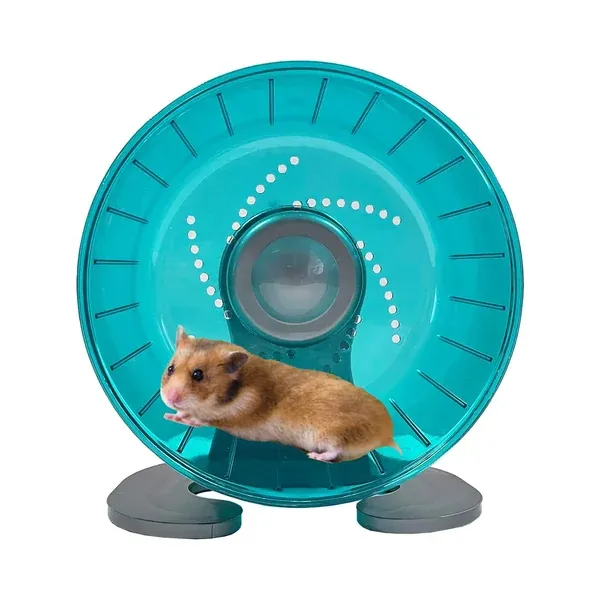
The Petest Hamster Exercise Wheel is a 6.7-inch diameter running wheel available in green. According to the manufacturer's listing, it is compatible with hamsters, mice, gerbils, and similarly sized small animals. The wheel ships ready to use — no assembly required — and can be deployed three ways: placed flat on a cage floor, used with the included stand, or clipped onto the bars of a wire hamster home. The axle uses a metal disc mechanism at the center, with a grey plastic hub that interfaces with the spinning ring.
Build Quality and Noise
The manufacturer describes the wheel as a "silent spinner" that "rolls smoothly and silently," which is one of its primary selling points. Published coverage from The Dodo's DodoWell editorial roundup singles out the Petest wheel for covering "all the bases when it comes to durability, size and silence," and also notes it is easy to clean — lending some external credibility to the noise and build claims (
thedodo.com/dodowell/hamster-wheel). Cleaning instructions from the manufacturer are straightforward: mild soapy water and a non-abrasive cloth or sponge only.
One noteworthy detail the manufacturer includes directly in the listing is a maintenance tip: if the wheel becomes noisy or difficult to turn, owners should inspect the metal disc at the center and confirm there is a slight gap between the back edge of the grey plastic center and the inside face of the wheel. The fact that this tip is included proactively suggests occasional noise is a known possibility and that the fix is user-manageable, but it does imply the wheel may require periodic adjustment over time.
Size and Animal Welfare Considerations
At 6.7 inches in diameter, sizing is a genuine consideration. Independent guidance from Small Pet Expert notes that hamsters should be able to run with a straight back, and that a wheel that is too small can cause a hamster's spine to curve uncomfortably (
smallpetexpert.com/hamster/exercise). PetShun echoes this, noting that a wheel that is too small can lead to back pain and discomfort during running (
petshun.com/article/why-does-my-hamster-not-run-his-wheel).
For context, 6.7 inches is generally considered suitable for dwarf hamster breeds and mice, but Syrian hamsters — which are larger — typically require a wheel of 10 to 12 inches. Owners of Syrian hamsters should assess their specific animal's size against this wheel's diameter before purchasing.
Real-World Fit: Who It Suits, Who Should Skip
This wheel is well-positioned for owners of dwarf hamsters, mice, or gerbils who want a quiet, versatile, and straightforward option without a complicated setup. The three mounting configurations make it adaptable to a range of common cage types, which adds genuine practical value. DodoWell's inclusion of the Petest wheel in their editorially curated roundup at its accessible price point suggests it holds up competitively within the budget-friendly segment (
thedodo.com/dodowell/hamster-wheel).
Buyers should skip this wheel if they keep larger Syrian hamsters, as the 6.7-inch diameter is unlikely to allow a natural, spine-safe running posture for that breed. Those seeking a completely maintenance-free experience should also note the manufacturer's own caveat about checking the center mechanism if noise develops.
Honest Limitations
- Size ceiling: At 6.7 inches, this wheel is not appropriate for Syrian or other larger hamster breeds, where a curved running posture can cause physical discomfort over time.
- Potential for noise over time: The manufacturer's own tip acknowledges that the wheel can become noisy or stiff, requiring the user to inspect and adjust the metal disc and plastic hub gap — a minor but real maintenance consideration.
- Cleaning constraints: Only mild, soapy water and a non-abrasive cloth are recommended, which limits sanitizing options compared to wheels with fully removable components.