What It Is and Key Specs
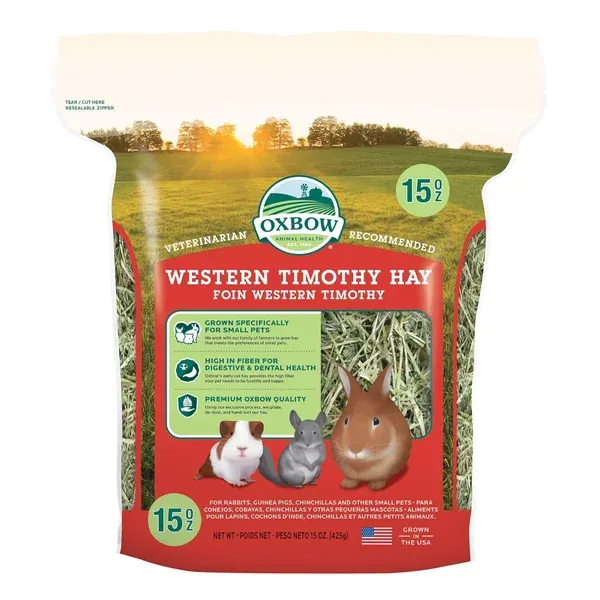
Oxbow Western Timothy Hay is a single-ingredient, loose grass hay sold in a 15 oz pack. According to the manufacturer, the hay is harvested from a dedicated family of farms in the United States and is described as a "nutritious, sweet-smelling grass" intended to stimulate the appetite of small herbivores. The product is hand-sorted and hand-packed, and the listing specifies it is de-dusted — a practical consideration for pets and owners sensitive to airborne particles.
Published guaranteed analysis figures from retailer coverage list the nutritional profile as: Crude Protein min 7.00%, Crude Fat min 1.50%, Crude Fiber max 32.00%, and Moisture max 15.00%. The loose hay contains stems, leaves, and limited seed heads — the physical form commonly associated with long-strand timothy grass. Per the manufacturer, it contains no additives or binders.
Compatible species, per the listing, include rabbits, guinea pigs, chinchillas, hamsters, and gerbils.
Build Quality and Sourcing
Oxbow emphasizes a farm-to-bag approach: hay is grown on its own partner farms in the western United States, then hand-sorted before packaging. The de-dusting process is called out explicitly in the product title, which addresses a common complaint about bulk hay products — excessive fine particulate that can irritate respiratory tracts in small animals.
The 100% all-natural claim is substantiated by the absence of listed additives or binders, consistent with what you'd expect from a straight-cut grass hay. The manufacturer does not claim organic certification in the available sources, so buyers seeking certified-organic hay should confirm that independently.
Veterinarian Endorsement and Nutritional Role
Both the product listing and Oxbow's own product page note that Western Timothy is the #1 vet-recommended hay for small herbivores, and that the brand is "trusted and recommended by leading veterinarians." The manufacturer frames this hay as serving three simultaneous functions: supporting digestive health through high fiber content, promoting dental wear via long-strand chewing, and providing daily forage enrichment — all of which align with standard small-animal husbandry guidance for obligate herbivores.
The high crude fiber ceiling (up to 32%) is consistent with the nutritional profile that small-animal veterinarians typically recommend for maintaining gut motility in rabbits and guinea pigs. Timothy hay is generally considered appropriate as the primary or sole hay source for adult rabbits and guinea pigs, though younger animals and pregnant females may have different requirements — a point worth discussing with a veterinarian.
Real-World Fit: Who It Suits, Who Should Skip
This product is a strong match for owners of adult rabbits, guinea pigs, or chinchillas who want a mainstream, widely available timothy hay with predictable quality standards. The hand-sorting and de-dusting make it a reasonable choice when a pet has shown sensitivity to dusty loose hay.
It is less obviously suited to owners seeking bulk economy: at 15 oz, the pack size is relatively small. Community forum coverage notes that sourcing large quantities from Oxbow — particularly in certain regions — can be the only practical option, but also that hay quality can vary batch to batch, a limitation discussed in more detail below.
Honest Limitations
No product is without drawbacks, and hay is an agricultural product by nature.
- Batch-to-batch variability is a documented concern in community discussion. A guinea pig owner forum thread specifically flags inconsistent quality across shipments of Oxbow Western Timothy, noting that some batches have not met expectations. This is not unique to Oxbow — variability is common across commercially packaged hay — but it is worth factoring in, especially for picky eaters.
- Small pack size: At 15 oz, owners with multiple animals will cycle through this quickly and may find the per-ounce cost higher than bulk alternatives.
- No organic certification is indicated in available sources, which matters to some buyers.
- Limited seed heads: The listing notes "limited seed heads," which some animals prefer. Buyers whose pets favor seed-head-rich cuts may want to investigate orchard grass or other hay varieties.
Reader Comments
No comments yet
Be the first to share your thoughts!