What It Is and Key Specs
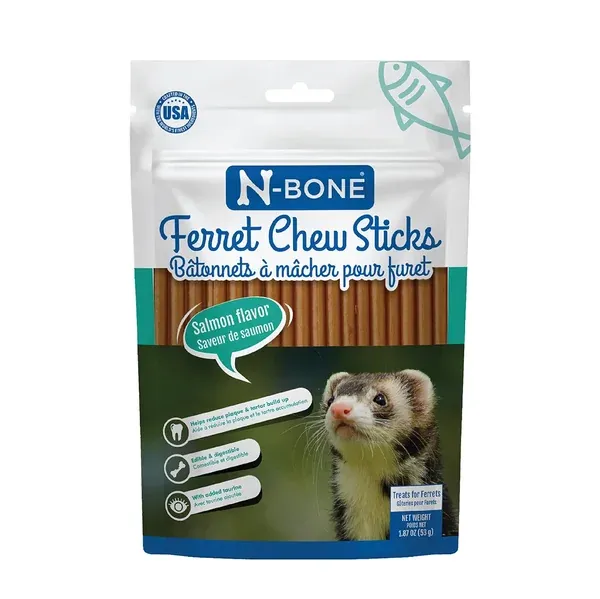
N-Bone Ferret Chew Sticks are salmon-flavored soft chew treats sold in a 1.87 oz single pack. According to the manufacturer's listing, they are designed to encourage healthy chewing habits and provide daily enrichment for ferrets. The treats are positioned as an everyday reward rather than a functional supplement.
Full ingredient data published by Pawskies (
https://www.pawskies.com/product-page/n-bone-ferret-chew-sticks-salmon-flavor-1-87-oz) lists:
wheat gluten, corn starch, vegetable glycerin, gelatin, water, corn gluten meal, menhaden meal, herring oil (preserved with mixed tocopherols), natural salmon flavor, lecithin, ginger, taurine, rosemary extract, mixed tocopherol.Notable inclusions are menhaden meal and herring oil as the primary animal-derived protein and fat sources, plus taurine — an amino acid commonly recognized as essential for obligate carnivores. Rosemary extract and mixed tocopherols serve as natural preservatives, consistent with the manufacturer's claim of no artificial preservatives.
Build Quality and Ingredient Transparency
The manufacturer states these chew sticks are made in the USA with premium ingredients and contain no wheat, corn, soy, artificial flavors, colors, or preservatives. However, the published ingredient list (sourced from Pawskies) shows wheat gluten, corn starch, and corn gluten meal among the first several ingredients. Prospective buyers who need to avoid wheat or corn for their ferret should review the full ingredient panel carefully before purchasing, as the "made without wheat, corn, soy" marketing language on the listing appears to conflict with the published ingredient data. This discrepancy is worth flagging directly to the manufacturer or retailer for clarification.
On the positive side, the formula does avoid artificial flavors, colors, and synthetic preservatives, relying instead on rosemary extract and tocopherols — a formulation approach consistent with the "natural" positioning.
Soft Texture and Daily Use
The manufacturer describes these as soft, chewy sticks that are easy for ferrets to bite and enjoy. The format is suited to interactive bonding and everyday treat sessions rather than extended solo chewing. The small 1.87 oz pack size reflects a treat-tier product meant to be used in moderation alongside a balanced ferret diet.
Real-World Fit: Who It Suits, Who Should Skip
Good fit for: Ferret owners looking for a USA-made, salmon-flavored soft chew that avoids artificial additives and includes taurine. The soft texture may also work well for ferrets that struggle with harder treat formats. Readers on Amazon rate the product 4.4/5 across 455 ratings, suggesting broad satisfaction among ferret owners who have purchased it.
Consider skipping if: Your ferret has confirmed grain sensitivities or you've been specifically advised to avoid wheat or corn — the ingredient list warrants scrutiny given the marketing language. Additionally, owners seeking a high-protein, meat-first treat should note that plant-derived binders (wheat gluten, corn starch, corn gluten meal) appear early in the formulation.
Honest Limitations
- The pack size (1.87 oz) is small, which may mean frequent repurchasing for households with multiple ferrets.
- The apparent inconsistency between the "no wheat, corn" marketing claim and the published ingredient list is a transparency concern that buyers should independently verify.
- Ingredient-level nutritional data (guaranteed analysis) was not available in the sources reviewed, so a full macronutrient assessment cannot be made here.
- As with treats broadly across this category, chew sticks are a supplement to — not a replacement for — a complete ferret diet.
Bottom Line
N-Bone Ferret Chew Sticks offer a soft, salmon-flavored treat option made in the USA with natural preservatives and taurine included. The readers' aggregate of 4.4/5 from 455 Amazon ratings reflects strong general reception. That said, ferret owners with grain-sensitivity concerns should cross-check the full ingredient list against the marketing claims before buying, as the two don't fully align based on available published data.