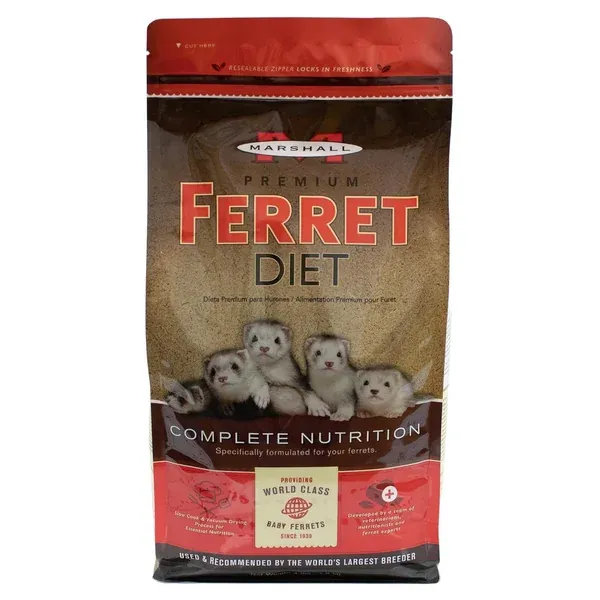
What It Is and Key Specs
Marshall Premium Ferret Diet is a dry pellet food positioned as a ferret's sole daily diet. According to the manufacturer, the formula delivers:
- 38% crude protein
- 18% crude fat
- 3.5% crude fiber
Chicken by-products (organs only), whole chicken, and chicken by-product meal are the first three listed ingredients, making poultry the dominant protein source. Marshall's own nutrition page describes the formula as "highly digestible with little carbohydrates and moderate in fats," and notes it is designed to suit all life stages. The bag ships at 4 lbs, intended to be fed free-choice as a primary diet, with treats and other foods capped at 10% of total intake.
Ferrets are obligate carnivores with short digestive tracts that process animal protein efficiently and struggle with high-fiber or high-carbohydrate loads. The 3.5% fiber figure and animal-forward protein sourcing align with broadly accepted principles for the species.
That said, a full read of the ingredient panel is worth noting: corn meal and dried beet pulp appear alongside the poultry proteins. Plant-derived ingredients are common across this segment of the ferret food market — though whether their inclusion at this specific formula's levels is a concern is a question best directed to a veterinarian familiar with the individual animal.
The manufacturer states the formula was developed by "a team of veterinarians, nutritionists, and ferret experts," and Feeders Pet Supply lists it as providing "complete nutrition for all life stages."
Palatability
Reader reviews on Influenster include at least one owner reporting strong acceptance — noting her ferret "loves it" and has imprinted on the food to the point of being selective about alternatives. Imprinting is a recognized behavioral pattern in ferrets, which can make early food choices particularly consequential for long-term dietary flexibility.
Safety and Regulatory Standing
The product is sold through established national pet retail channels, including Feeders Pet Supply. No active CPSC recall or safety action was identified in the sources reviewed for this article. As with any pet food, owners should verify current recall status through the FDA's pet food recall database before purchase and periodically thereafter.
Real-World Fit: Who It Suits, Who Should Skip
May suit: Owners seeking a widely available, purpose-formulated ferret pellet with a recognizable brand and a vet-development claim. The free-choice feeding format is straightforward for busy households, and the relatively high fat content (18%) supports the energy demands of active ferrets.
Worth pausing for: At least one Influenster reviewer reported weight gain in multiple ferrets on this diet and subsequently switched brands, with their veterinarian explicitly advising against Marshall products. Another reviewer noted the food felt low in quality. These are individual accounts and cannot be generalized across all animals or feeding situations, but they are drawn from published coverage and are relevant data points for owners monitoring body condition.
Ferret dietary needs also vary by age, health status, and activity level. Owners with ferrets that have insulinoma, adrenal disease, or other metabolic conditions should consult a veterinarian before selecting any single commercial diet.
Honest Limitations
- Corn meal and beet pulp are plant-based inclusions in a diet marketed for an obligate carnivore; some ferret nutrition advocates flag grain and starchy fillers as suboptimal, though this is a point of ongoing debate in the ferret-keeping community.
- Published reader feedback includes accounts of weight gain and at least one veterinary recommendation against the brand — neither dismissible nor definitive on its own.
- Ferrets that imprint on this food early may resist dietary transitions later, which can complicate any future switch to a different formula.
- Price and availability vary by retailer; the listing page carries the current price.