What It Is and Key Specs
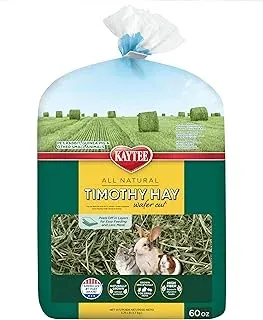
Kaytee Wafer Cut Timothy Hay is a 60-ounce (3.75 lb) single-pack of compressed timothy hay intended for guinea pigs, rabbits, and comparable small herbivores. The defining feature is the wafer-cut format: hay is pressed into layer-able wafers that, according to the manufacturer, peel apart rather than crumble into loose chaff. Kaytee states the product is hand-selected to preserve long fiber strands and a proper leaf-to-stem ratio — both characteristics that matter for the gut motility of strict herbivores. The hay is described as farmed specifically for small pets, grown without pesticides or artificial preservatives, and not genetically engineered in any way.
Build Quality and Sourcing
Kaytee positions this hay as a premium-tier offering within its lineup, backed by what the brand describes as more than 150 years of expertise in small-animal nutrition. The hand-selection claim, if accurate, suggests a quality-control step beyond bulk commodity hay — though buyers should note that "hand-selected" is a manufacturer claim and not independently verified in the sources available for this review. The pesticide-free and non-GMO assertions are stated on the listing; no third-party certification is cited in the available product information. Shoppers who require certified-organic status should confirm label details before purchasing, as "grown without pesticides" and a certified-organic designation are distinct claims.
Digestive Health and Nutritional Role
Timothy hay is the cornerstone diet for guinea pigs and rabbits because its high insoluble fiber content supports continuous gut motility and helps wear down continuously growing teeth. Kaytee's listing specifically calls out digestive health as a primary benefit, consistent with the broader veterinary consensus that unlimited timothy hay should make up the bulk of an adult rabbit's or guinea pig's daily intake. The wafer format does not alter the underlying forage; it reorganizes it for handling convenience rather than changing its nutritional profile.
Real-World Fit: Who It Suits, Who Should Skip
This product is a practical choice for owners who find loose hay messy or difficult to portion. The layer-peeling wafer format is particularly convenient for those feeding from hay racks or small enclosures where a pile of loose hay creates significant scatter. At 60 ounces, the bag represents a reasonable mid-size supply for one or two animals.
Owners of larger rabbit colonies or rescues housing multiple animals may find the single-bag format less economical than bulk alternatives. Those whose animals are highly selective about hay texture or fragrance — a common quirk among guinea pigs especially — should be aware that a compressed-wafer format differs in feel and scent from loose-cut or baled hay, and individual animals may have a preference either way. Similarly, buyers seeking a certified-organic product should verify the label, as the listing does not make that specific claim.
Honest Limitations
- The wafer format, while marketed as mess-reducing, means animals must pull layers apart rather than forage freely through loose hay — some animals may find this less stimulating behaviorally than loose hay.
- "Hand-selected" and "grown without pesticides" are manufacturer claims; no independent third-party certification is referenced in the available product information.
- A single 60-ounce bag may not offer the best value per ounce for households with multiple animals compared to bulk hay options.
- Hay quality can vary batch to batch in color, fragrance, and leaf content, a common characteristic across this category of packaged hay products.
Reader Sentiment
Across 10,282 Amazon ratings, readers have given this product an aggregate score of 4.6 out of 5 — a strong signal of broad satisfaction. That volume of ratings lends meaningful weight to the consensus, though individual experiences with specific batches or particular animals' preferences will naturally vary.
Bottom Line
Kaytee Wafer Cut Timothy Hay offers a genuinely differentiated format for small-animal owners who prioritize tidiness and ease of handling without stepping away from a clean, pesticide-free ingredient list. The high reader aggregate across a large sample suggests the format works well in practice for most animals. Households with highly selective foragers or a need for certified-organic hay should do additional label research before committing.