What It Is and Key Specs
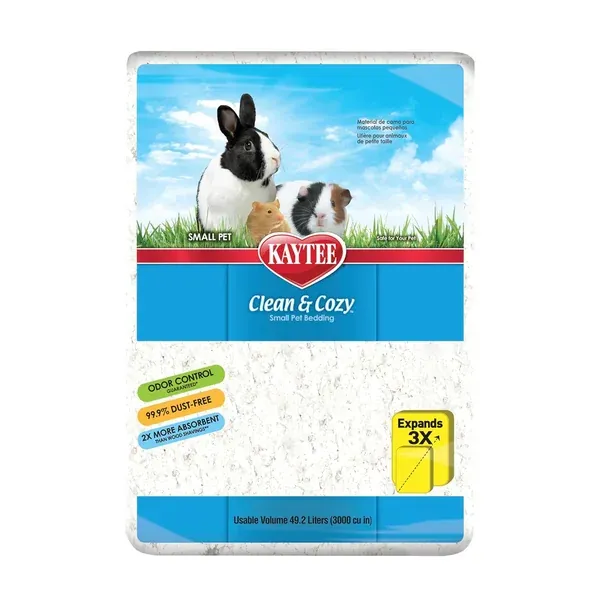
Kaytee Clean & Cozy White is a soft paper-based small animal bedding sold in a 49.2-liter volume — a size suited to owners who want to stock up or maintain a larger habitat. According to the manufacturer's listing and the brand's own product page at
kaytee.com, the bedding is:
- Fragrance-free and 99% dust-free
- Rated to absorb up to 6x its weight in liquid
- Compatible with any type of small animal habitat
- Intended for rabbits, guinea pigs, mice, rats, hamsters, gerbils, chinchillas, and similar pets
The white colorway is the standard variant; the neutral color can make it easier to spot soiled areas or health-related changes in waste, a practical consideration for attentive owners.
Build Quality and Safety
Kaytee positions Clean & Cozy as free of harmful chemicals or by-products, and the manufacturer states the material meets FDA standards — a meaningful benchmark for products that come into sustained contact with small animals. The bedding is described as soft on paws and gentle on noses, which matters for species like rats and mice that spend much of their lives burrowing and pressing their faces into substrate.
Kaytee notes the brand has been trusted by experts for over 150 years, lending a degree of institutional credibility to its formulation and quality-control claims, though prospective buyers should weigh that history alongside current independent testing where available.
Odor Control and Absorbency
The manufacturer claims Clean & Cozy controls odor for long-lasting freshness and absorbs up to 6x its weight in liquid — described as more absorbent than "other types of bedding." That last comparative is worth reading carefully: paper bedding as a category is generally considered more absorbent than wood shavings or hay-based substrates, but the specific 6x figure applies to this product's own weight and is a manufacturer claim rather than third-party verified data. Owners with high-output animals or larger colonies should factor cage size and change frequency into their expectations regardless of advertised absorbency.
Real-World Fit: Who It Suits and Who Should Skip
Good fit for:- Owners of rabbits, guinea pigs, hamsters, gerbils, rats, mice, or chinchillas seeking a fragrance-free, low-dust option
- Households with family members sensitive to airborne particulates — the 99% dust-free claim directly addresses this concern
- Pet owners who prefer a chemical-free substrate near animals that forage or burrow at substrate level
Consider alternatives if:- Your animal requires a specific substrate for humidity regulation (e.g., certain reptile setups), as this product is marketed specifically for small mammals
- You prefer colored or scented bedding for aesthetic reasons — this variant is white and unscented by design
- Budget is the primary driver: paper bedding across this tier typically carries a higher per-liter cost than basic wood-shaving options, though the 49.2L volume offers reasonable economy of scale
Honest Limitations
No product is without trade-offs. A few worth noting from the listing and category context:
- Absorbency claims are self-reported. The 6x figure comes from Kaytee's own marketing materials; no independent lab citation is provided in the available sources.
- White color shows soiling quickly. While this aids monitoring, it also means the bedding can look dirty before it is fully saturated, potentially prompting more frequent — and more costly — changes.
- Not a one-size-fits-all odor solution. Odor control in any bedding depends heavily on cage size, animal species, diet, and change frequency. The product supports freshness; it does not eliminate the need for regular cleaning.
Reader Reception
Across nearly 20,000 Amazon ratings, readers give Clean & Cozy White a 4.7 out of 5 aggregate — a notably high volume of feedback for a bedding product, suggesting consistent repeat purchasing and broad satisfaction across a wide range of small animal owners. This review synthesizes the manufacturer listing, brand product page, and published coverage; individual experience will vary by animal, habitat, and husbandry habits.