What It Is and Key Specs
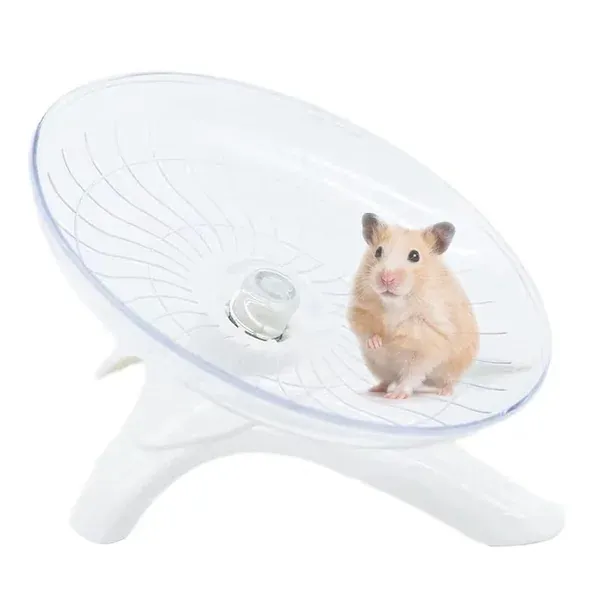
The LuvemPets Hamster Flying Saucer is a tilted, disc-style exercise wheel built for small animals including hamsters, gerbils, mice, chinchillas, rats, chipmunks, squirrels, and guinea pigs, according to the manufacturer's listing. It weighs 110 g (3.88 oz) and measures 18 × 12 × 14 cm (approximately 7.08 × 4.72 × 1.57 inches), putting it on the smaller end of the saucer-wheel category. The white colorway is the available option reviewed here.
The defining design choice is the angled saucer platform — a flat, tilted disc rather than a traditional upright drum. As noted by DodoWell / The Dodo in their veterinary-consulted hamster wheel roundup, some hamsters gravitate toward this format because the shape offers a wider running surface compared with a standard enclosed wheel.
The manufacturer emphasizes two surface attributes: an ultra-quiet running mechanism and smooth, "intimated" (finished) edges on the running platform. The silent-running claim is a central selling point — the listing states owners "will not be disturbed by any noise," positioning it directly against squeaky traditional wheels.
The smooth edge finish matters for safety: rough or sharp plastic edges on small-pet exercise equipment can cause foot and leg injuries, so a finished rim is a meaningful design detail rather than a cosmetic one.
Real-World Fit: Who It Suits and Who Should Skip It
This wheel is a reasonable choice for owners of multiple small-species households — the manufacturer lists compatibility with a notably wide range of animals. Its lightweight build (110 g) and compact footprint make it easy to reposition within an enclosure or move between cages.
However, prospective buyers should weigh guidance from Small Pet Expert, whose exercise coverage cautions that flying saucer wheels are best used as a supplement, not a replacement, for a vertical wheel. The saucer format encourages a lateral, side-on galloping gait rather than the natural spine-aligned running posture a vertical wheel promotes. For hamsters in particular — which can run several miles per night — relying solely on a saucer may not fully support their exercise needs.
DodoWell similarly notes that not all hamsters take to saucer-style wheels, so individual preference plays a role. Owners with a hamster that ignores or avoids the saucer may find limited value without a secondary wheel option available.
Honest Limitations
This review synthesizes the product listing and published small-pet coverage; several practical considerations are worth flagging:
- Cleaning: Small Pet Expert flags that flying saucer wheels are generally more difficult to clean than enclosed vertical wheels, since bedding, droppings, and food debris collect across the open disc surface.
- Gait concerns: The saucer's flat, angled run encourages an arched-back posture in some animals, which veterinary sources suggest is less ergonomically ideal than the posture promoted by a correctly sized vertical wheel.
- Size ceiling: At roughly 18 cm in diameter, larger dwarf-breed hamsters or adult rats may find the running surface limiting over time.
- No stated warranty term: The manufacturer's satisfaction guarantee is open-ended ("we'll do our best to make it right"), but no specific return window or warranty duration is detailed in the listing.
Verdict
The LuvemPets Flying Saucer Wheel offers a quiet, lightweight, multi-species-compatible option for small-pet owners who want to supplement their animal's exercise setup. Its silent mechanism and smooth-edge construction address two of the most common complaints about budget exercise wheels. That said, published expert guidance is consistent: a saucer wheel earns its place alongside a traditional vertical wheel, not instead of one. Buyers expecting a single all-in-one exercise solution may want to pair this with an upright wheel appropriate to their pet's species and size.
Darrell Steward
1 Feb, 2021Brilliant
This is the best product that has ever been made. It is also one of the best items in the world right now. Definitely go for it.
Albert Flores
17 Oct, 2020Just WOW
It's good to use this product for development as it has very good performance, display quality and all other features.