What It Is and Key Specs
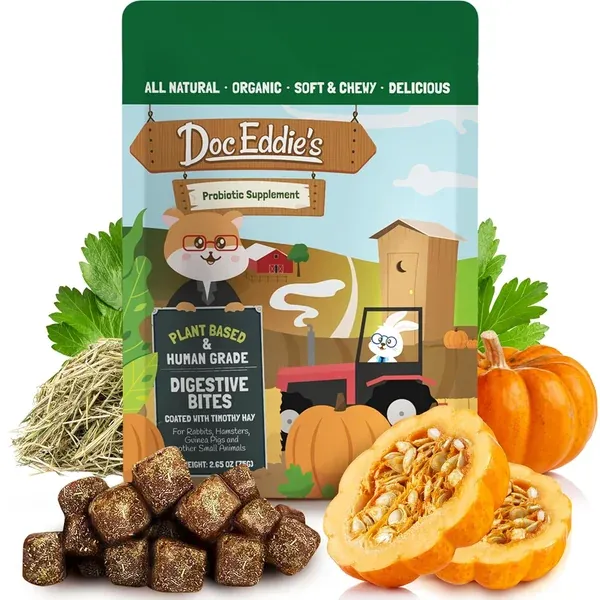
DOC EDDIE'S Digestive Bites are plant-based chews designed to support gut health in small animals, including rabbits, guinea pigs, hamsters, gerbils, chinchillas, and rats. According to the manufacturer, each bite is coated in timothy hay — a dietary staple for many small herbivores — and formulated with probiotics to support the delicate digestive systems common to this category of pets. Key ingredients called out in the listing include real apple juice and pumpkin, which serve as natural flavoring agents. The product is positioned as a supplement treat: pets receive a functional probiotic benefit while perceiving it as a snack.
Ingredients and "What's Not Inside"
The manufacturer places notable emphasis on what the formula excludes. Per the listing, DOC EDDIE'S Digestive Bites contain no fillers, byproducts, corn, soy, or wheat. The ingredients used are described as human-grade, meaning they meet the same sourcing standards one would expect in food intended for people. This is a meaningful claim for pet owners who scrutinize labels, though shoppers should review the full ingredient panel on the current packaging to verify specifics, as listings can be updated.
The plant-based formulation aligns with the natural dietary preferences of rabbits and guinea pigs, which are obligate herbivores. Hamsters and gerbils are omnivores by nature, but plant-based treats are widely considered appropriate for them as well.
Build Quality and Manufacturing
According to the manufacturer, these bites are produced in small batches at an FDA-registered human food facility located in the United States. Small-batch production is cited as a means of maintaining strict quality control and ensuring freshness. FDA registration of a human food facility is a verifiable regulatory status — it does not constitute FDA approval of the product itself, but it does indicate the facility operates under federal food safety oversight. For small-animal treat products, this level of manufacturing transparency is worth noting.
Real-World Fit: Who It Suits, Who Should Skip
These treats appear well-suited for owners of rabbits, guinea pigs, hamsters, chinchillas, or similar small pets who are actively looking to support digestive health — particularly those whose animals have sensitive stomachs or have recently experienced dietary disruption. The inclusion of timothy hay as a coating ingredient makes the format familiar and appealing to hay-based feeders like rabbits and guinea pigs.
Pet owners who prefer to source all supplements from a veterinary brand or who require a product with a published probiotic CFU count and strain identification may find the listing's level of detail insufficient for their needs before purchasing. The listing does not specify probiotic strains or colony-forming unit counts, which is information some owners and veterinarians consider when selecting a probiotic supplement.
Those with animals that have existing gastrointestinal conditions should consult a veterinarian before introducing any new supplement, including probiotic treats.
Honest Limitations
- Probiotic strain and CFU transparency: The listing promotes probiotic content but does not specify strains or potency levels. Owners seeking that level of detail will need to contact the manufacturer or consult the physical packaging.
- No independent third-party reviews or coverage: This review is based solely on manufacturer-provided listing information. No independent lab analyses or published editorial coverage of this specific product were available to draw from, which limits the depth of verification possible here.
- Treat-as-supplement format: Because these are positioned as treats, portion control matters. Overfeeding — even with clean-ingredient products — can displace the hay and leafy greens that should form the bulk of a small herbivore's diet.
- Species-specific suitability: While the listing covers a broad range of small animals, nutritional needs vary meaningfully across species. What is appropriate for a rabbit may differ from what suits a hamster or gerbil; owners should cross-reference with species-specific dietary guidance.