What It Is and Key Specs
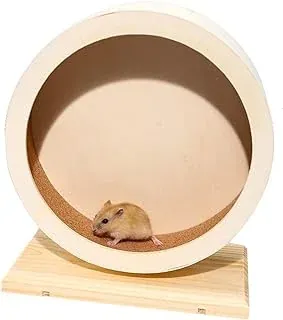
The antiai Silent Wheel is a freestanding wooden exercise wheel designed for small animals. According to the manufacturer listing, the medium size measures approximately 9.2 × 4.8 × 8.1 inches (23.4 × 12.3 × 20.5 cm). The wheel mounts on a widened, thickened wood base rather than attaching to cage bars, making it a standalone unit suitable for tanks, bin cages, and wire enclosures alike. The listing targets dwarf hamsters, small gerbils, mice, and other comparably sized small pets.
Build Quality and Materials
The wheel is constructed from wood and uses dual ball bearings to support smooth, low-friction spinning. The manufacturer states the material is non-toxic and described as safe for chewing, positioning the wheel as both an exercise accessory and a teeth-grinding outlet — a meaningful dual function for rodents whose teeth grow continuously. The base design is described as non-tipping, with the widened footprint intended to prevent the unit from toppling during active use.
It is worth noting that no specific third-party safety certification is cited in the available product information for this item. Buyers who prioritize independently verified material safety may want to contact the seller directly for documentation.
One of the wheel's headline claims is low noise output. The manufacturer attributes this to both the wood construction and the dual ball bearing system, stating that the wheel can spin quietly enough that owners can sleep undisturbed while their hamster runs at night — a practical consideration given that hamsters are crepuscular and most active in evening and overnight hours. Bearing quality is the critical variable in any silent-wheel claim; the dual ball bearing design is a positive indicator, though real-world quietness can vary with use and wear over time.
Real-World Fit: Who It Suits and Who Should Skip It
The manufacturer recommends this wheel specifically for dwarf hamsters, small gerbils, and mice. As noted by hamster care resource Rachel Got Hamsters (
rachelgothamsters.com/wheels-1), the exercise wheel is one of the most consequential items an owner can choose — selecting the wrong size or design can cause back and spinal problems that affect a hamster's quality of life. The manufacturer addresses this directly, stating the medium dimensions allow small pets to run without bending their backs, which aligns with the spine-straight running posture recommended by small animal welfare guides.
Syrian hamsters and larger dwarf breeds that need a wheel of 10 inches or more are not the intended audience here. Owners of those animals should size up rather than adapt this model.
Reader Aggregate
Across 1,145 Amazon ratings, readers give this wheel an aggregate score of 4 out of 5, suggesting broad satisfaction among buyers who have purchased and used it with their own pets.
Honest Limitations
- No third-party safety certification cited. While the manufacturer describes the wood as non-toxic, independent verification (such as a CPSC or EN71 reference) is not provided in the available product information.
- Size ceiling is real. The wheel is explicitly medium-sized and suited to smaller species and breeds. Larger hamsters — particularly adult Syrians — are not appropriate matches.
- Wood durability with moisture. Wood wheels are generally more susceptible to warping and odor retention over time compared to solid-plastic or metal alternatives, particularly in humid environments or with pets that urinate on the wheel. This is a common characteristic of wood-based wheels in this category and should factor into long-term maintenance expectations.
- Chew toy secondary use has limits. While the manufacturer markets chewability as a feature, active chewing could shorten the wheel's structural lifespan — a trade-off owners should keep in mind.