What It Is and Key Specs
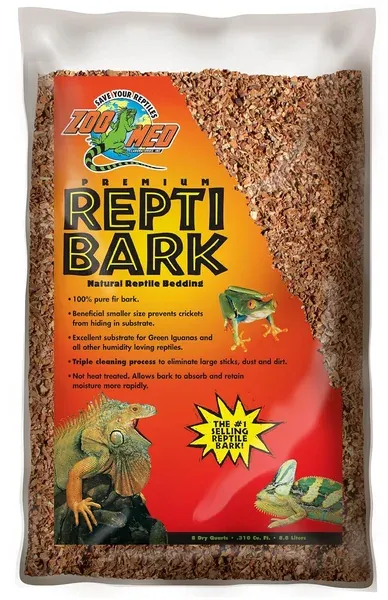
Zoo Med Reptile Bark Fir Bedding is a fir tree bark substrate sold in an 8-quart single pack. According to the manufacturer, it is made from fir tree bark and is sized with smaller chips intended to improve moisture retention and reduce the chance of live feeder insects finding cover beneath the substrate. The listing presents it as suitable for tropical and rainforest-style terrarium setups where sustained high humidity is a priority.
Moisture Control and Reusability Claims
The manufacturer states that this substrate effectively holds and maintains high humidity levels essential for reptile habitat environments — a meaningful spec for keepers of species like red-eyed tree frogs, ball pythons, or crested geckos that require elevated ambient moisture. The smaller chip sizing is specifically called out as a design choice to improve that moisture retention performance relative to larger bark formats.
Zoo Med also highlights reusability: the substrate can reportedly be washed and reused multiple times. For keepers managing several enclosures or replacing substrate on a regular schedule, washable bedding can offset cost over time, though longevity will naturally depend on how the enclosure is maintained and how heavily the substrate is soiled between cleanings.
Aesthetic Appeal
According to the listing, the bark creates an authentic tropical rainforest appearance in the terrarium. Naturalistic setups have become increasingly popular in the hobby, and a bark-based substrate does visually align with bioactive or display-focused enclosures. Forum discussion at Dendroboard notes community members experimenting with Zoo Med Repti Bark as a background cover material in vivarium builds, suggesting the product has found uses beyond simple ground cover — though users there noted that achieving good adhesion for vertical applications required careful drying time and generous silicone use (source: https://www.dendroboard.com/threads/zoo-med-repti-bark-as-background-cover.36078/).
Safety Considerations — Read Before Buying
This is the section that warrants the most careful attention. Community discussion on Tegu Talk raises a concern that prospective buyers should investigate independently: forum members report reading that fir bark can cause neurological issues in tegus and other reptiles due to the natural oils present in fir wood (source: https://tegutalk.com/threads/substrate-question.21077/). This concern is attributed to the oils inherent in fir as a tree species, not to Zoo Med's manufacturing process specifically.
It is important to be clear about what the sources do and do not establish. The forum posts reflect community-level research and anecdotal reading rather than peer-reviewed toxicology. However, the concern is specific and recurring enough in reptile-keeping communities that it should not be dismissed. Keepers considering this substrate — particularly for tegus or other large lizards — are strongly encouraged to consult a reptile-specialist veterinarian or review current herpetological husbandry literature before committing to fir bark as a long-term substrate choice. The manufacturer's listing does not address this question directly.
Real-World Fit: Who It Suits, Who Should Skip
Potentially a good fit for:- Keepers of humidity-dependent species (certain frogs, snakes, and lizards) in tropical or rainforest-style setups
- Hobbyists building naturalistic or bioactive vivariums who want a bark substrate with aesthetic value
- Budget-conscious keepers who want a washable, reusable substrate to reduce long-term costs
Consider skipping if:- You keep tegus or species for which fir bark oil sensitivity has been flagged in the community — the safety question warrants caution until more definitive guidance is available
- Your reptile species requires a dry or arid environment; this substrate is optimized for humidity retention, which would be counterproductive in a desert setup
Honest Limitations
- The neurological-risk concern tied to fir bark oils, while not definitively proven in the available sources, is a documented community concern that the product listing does not address
- Reusability depends entirely on keeper maintenance habits; no specific lifespan or wash-cycle count is provided by the manufacturer
- Vivarium background use, while attempted by some hobbyists, appears to require significant effort to achieve reliable adhesion, per forum accounts