What It Is and Key Specs
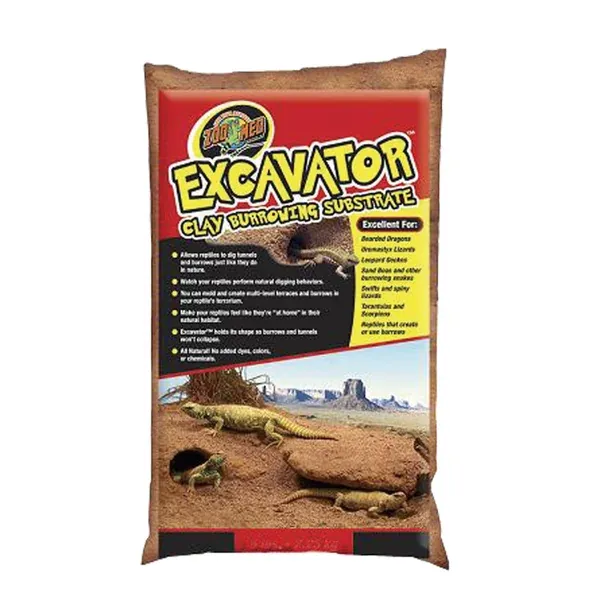
Zoo Med's Excavator Clay Burrowing Substrate is a clay-based terrarium floor covering built around a single central promise: tunnels and burrows you sculpt stay standing rather than collapsing the way loose sand or soil typically would. According to Zoo Med's product page, the substrate can be formed into multi-level terraces, caverns, and burrows directly inside a reptile enclosure, mimicking the kind of digging environment many arid and semi-arid species encounter in nature. The 10-pound bag is one of two sizes in the line (a 25-pound option also exists). The manufacturer states the formula is all-natural with no dyes or chemicals added.
Build Quality and Material Safety
Zoo Med markets Excavator as an all-natural clay with no added dyes or chemicals — a claim repeated across both its own product page and third-party retail listings such as CountryMax. No CPSC recall or safety notice against this product appears in the sources reviewed for this article.
That said, community discussions on
beardeddragon.org raise two recurring concerns worth flagging. First, the substrate is described by some keepers as carrying impaction risk if ingested — a consideration that applies broadly to particulate substrates and is not unique to this product, though it is specifically called out in forum threads about Excavator. Second, an older Dendroboard thread from a hobbyist who received an early trial bag reported pigment leaching during initial use, though Zoo Med's current listing explicitly states no dyes or chemicals are present; buyers who notice any color transfer after wetting should document and contact the manufacturer.
Real-World Fit: Who It Suits, Who Should Skip
This substrate is best suited to keepers who want to enrich a burrowing species' enclosure with stable, sculpted terrain — think bearded dragons, leopard geckos, blue-tongued skinks, or similarly inclined reptiles that naturally dig in compacted earth or clay. Reader enthusiasm on Influenster backs this up: one reviewer described purchasing it for a bearded dragon's enclosure specifically to build hides and noted the animal took to it readily.
Keepers who should approach with caution include those housing juveniles or animals with known tendencies to ingest substrate, given the impaction concerns raised in community forums. Dart frog and vivarium hobbyists looking for a background-building clay may also want to look elsewhere: the Dendroboard source noted that after roughly a year the material cracked and fell apart in a vertical application, suggesting it performs better as a floor substrate than as a structural wall element.
Durability and Maintenance Limitations
The manufacturer's claim that tunnels "hold their shape" is the product's primary selling point, but this has been the most contested aspect in keeper communities. Forum contributors on
beardeddragon.org described the substrate as not holding firm "like they say it does for very long," suggesting structural integrity may degrade over time — particularly with repeated moisture cycling from misting or a reptile's water dish. The same source described the product as "quite messy," and the Influenster review corroborated initial dustiness straight out of the bag.
In practical terms, buyers should anticipate a setup process that involves wetting, shaping, and allowing the clay to dry before introducing an animal — and should plan for periodic re-sculpting as tunnels are disturbed through normal use.
How Readers Rate It
Across 1,785 Amazon ratings, readers give Excavator Clay a 4.6 out of 5 — a strong aggregate that suggests the majority of buyers find it delivers on its core enrichment premise. The gap between that broad satisfaction and the more critical voices in dedicated reptile-keeping forums likely reflects differences in expectations: casual keepers building a simple enriched floor tend to report positive experiences, while hobbyists expecting permanent, maintenance-free structure may be disappointed.
Bottom Line
Zoo Med Excavator Clay Burrowing Substrate occupies a genuine niche: it is one of the few commercially available options that allows keepers to create stable burrowing environments without engineering a custom substrate mix. Its all-natural, dye-free composition is a reasonable choice for species that naturally inhabit clay-heavy soils. The trade-offs — dust at setup, ongoing maintenance to preserve tunnel integrity, and impaction risk for animals prone to substrate ingestion — are real and documented in keeper communities. Understanding those limitations before purchase will lead to a much better experience than the listing alone might suggest.
This review synthesizes the manufacturer's product listing, Zoo Med's official website, third-party retail descriptions, and published keeper community discussions. No hands-on testing was conducted by this publication.