What It Is and Key Specs
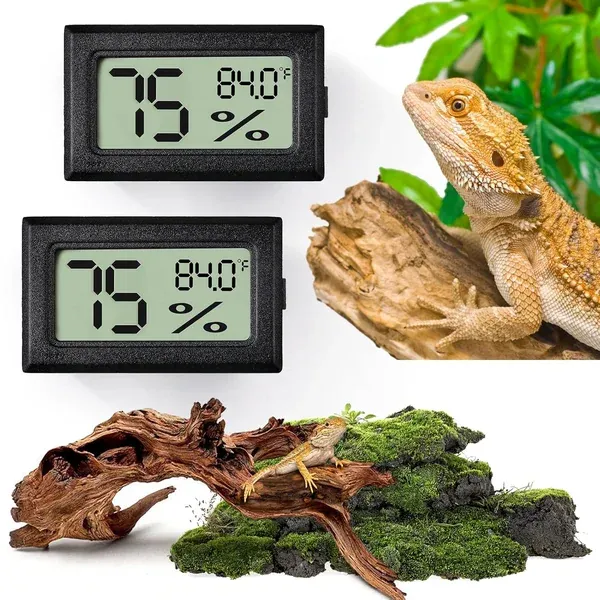
The LuvemPets Reptile Thermometer and Humidity Gauge is a rectangular, cordless combo unit sold as a two-pack. According to the manufacturer's listing, each unit houses a built-in high-precision measurement chip rated to 0.9°F accuracy for temperature. The display is an LED screen designed to remain legible in low-light conditions, and a quick-toggle function switches readings between Fahrenheit and Celsius. Installation relies on included double-sided adhesive rather than tools or wiring, and the units run on replaceable batteries. The two-pack format is the primary differentiator pitched by the brand — both units ship together, allowing simultaneous coverage of multiple enclosure zones or separate tanks.
Build Quality and Design
The listing describes a "durable construction" and emphasizes the cordless, adhesive-mount profile as a deliberate design choice to keep tank environments tidy. The replaceable battery system is positioned as an eco- and budget-conscious alternative to single-use devices. Beyond those manufacturer claims, independent build assessments of this specific unit are not available in the sources consulted for this review. What the listing does not specify: sensor probe configuration, display size, or rated humidity measurement range — details that are standard disclosures among competing combo meters reviewed on sites such as FrogPets and The Vet Desk.
Real-World Fit: Who It Suits, Who Should Skip
The two-pack format is genuinely practical for keepers managing enclosures that benefit from monitoring a warm side and a cool side simultaneously — a common requirement for bearded dragons, leopard geckos, crested geckos, snakes, and lizards, all cited by the manufacturer. The adhesive-mount, cordless design suits keepers who want minimal setup friction and a clean-looking tank interior.
However, published reptile-care guidance is worth noting here. According to Krawlo's reptile humidity roundup, digital hygrometers with probes are considered the only reliable choice for reptile enclosures, because a separate sensor allows measurement at the precise microclimate where the animal actually lives — inside a hide or at substrate level — rather than at the glass wall where a stuck-on unit sits. The Bio Dude's care resource (authored by Mariah Healey of ReptiFiles.com) reinforces this point, explaining that probe placement directly affects the accuracy of environmental readings for ectotherms. Keepers maintaining species with strict humidity requirements or bioactive setups where microclimate variation matters most may find a probe-equipped device a better match for their needs.
Category Context
The reptile monitoring category spans a wide range of price and feature tiers. Published roundups from FrogPets, The Vet Desk, and Krawlo consistently highlight probe-based units — such as those from Zoo Med, Exo Terra, Vivarium Electronics, AcuRite, and InkBird — as top recommendations for accuracy and placement flexibility. The Vet Desk notes that some humidity-sensitive units in the broader category can perform intermittently at very high humidity levels, a known category-wide consideration rather than a finding specific to this product. The LuvemPets set's direct-mount, no-probe design places it in the entry-level adhesive segment rather than among probe-based options, which is a meaningful distinction for buyers choosing based on enclosure type and species requirements.
Honest Limitations
Several limitations are worth flagging based on available information:
- No external probe. The unit mounts directly to the enclosure wall. For species requiring precise spot measurements, wall-mounted sensors typically reflect ambient air rather than the animal's actual microhabitat.
- Humidity range and accuracy not disclosed. The manufacturer specifies temperature accuracy (0.9°F) but does not publish a humidity accuracy figure or operating range in the listing — information that competing products typically include.
- LED display power draw. While battery replacement is supported, the always-on LED screen may consume batteries more quickly than simpler LCD alternatives; the listing does not specify expected battery life.
- Limited independent coverage. This review synthesizes the manufacturer listing and published category guidance. No third-party hands-on assessments of this specific unit were available in the sources consulted.
Customer Sentiment
Reader-aggregated ratings are visible on the product page and reflect direct buyer experience — the most relevant signal available for real-world performance once category context has been established.