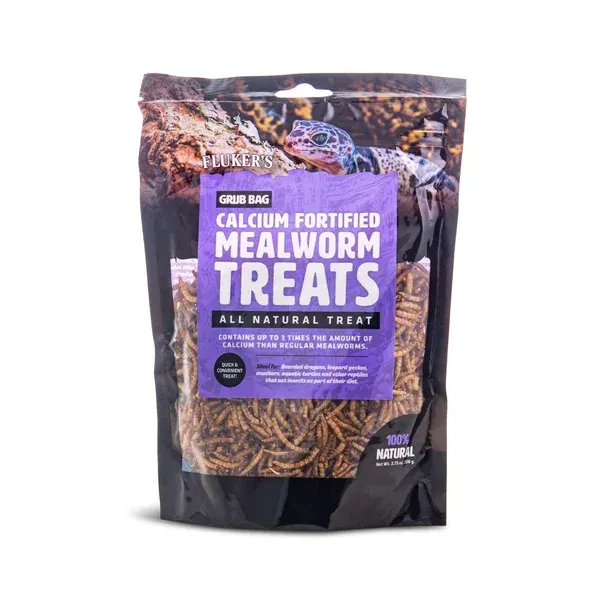
What It Is and Key Specs
Fluker's Grub Bag is a 3 oz resealable pouch of dried mealworms marketed as an all-natural, preservative-free treat. According to the manufacturer's listing, the mealworms are gut-loaded — a process in which feeder insects are fed a nutrient-dense diet before being harvested, raising their nutritional value for the animals that eat them. As noted on
flukerfarms.com, the product is described as a high-protein, calcium-enriched treat made from 100% dried mealworms.
The manufacturer claims the gut-loading process results in three times the calcium content compared to mealworms that are not gut-loaded — a meaningful distinction for reptile keepers who frequently supplement calcium to support bone health and prevent metabolic bone disease. The pouch requires no refrigeration, which sets it apart from live or fresh feeder insect options.
Build Quality and Ingredients
The product is positioned as 100% all-natural and preservative-free, according to the listing. There are no added artificial ingredients claimed. The resealable pouch design is intended for repeat use, helping to maintain freshness between feedings without requiring a separate storage container.
Fluker's broader product line, as reflected on
flukerfarms.com/live-insects/, acknowledges that proper gut-loading of feeder insects — including mealworms — can meaningfully enhance their nutritional profile. The Grub Bag appears to be the dried, shelf-stable extension of that same gut-loading philosophy applied to their live insect offerings.
Real-World Fit: Who It Suits
The manufacturer lists compatibility with a notably wide range of animals: all insectivore reptiles, aquatic turtles, small animals, birds, and tropical fish. This makes the Grub Bag a versatile pantry staple for multi-pet households that keep any combination of these species.
Reptile keepers — particularly those with bearded dragons, leopard geckos, blue-tongued skinks, or aquatic turtles — are likely the core audience, given the emphasis on calcium fortification. Bird owners feeding insect-eating species, as well as tropical fish hobbyists looking for a protein-rich supplement, may also find it useful as an occasional treat rather than a dietary staple.
Pet owners who prefer live feeders for the enrichment and feeding-response benefits they provide may find dried mealworms a secondary option rather than a primary one. However, the no-refrigeration requirement and resealable pouch make dried mealworms a practical convenience option, particularly for travel or when live insects are unavailable.
Honest Limitations
A few practical limitations are worth noting. At 3 oz, the pouch is a relatively small quantity, which may mean frequent repurchasing for owners with larger animals or multiple pets. Dried mealworms, while convenient, lack the hydration content of live feeders — common across this format category — so fresh water access remains important when feeding dried insects exclusively. The product is presented as a treat or supplement rather than a complete diet, meaning it should be offered alongside a balanced primary feeding regimen appropriate to the species.
Additionally, while the calcium fortification claim is specific and attributed to the gut-loading process, pet owners managing animals with precise calcium-to-phosphorus ratio requirements (a common concern in reptile husbandry) should consult a veterinarian or herpetologist for guidance on appropriate supplementation levels beyond what a treat product provides.
Reader Reception
Readers on Amazon rate the Fluker's Grub Bag 4.7 out of 5 from 565 ratings — a strong aggregate that suggests consistent satisfaction across a broad buyer base. This review synthesizes the manufacturer's listing, published product information, and Fluker's own website coverage rather than hands-on feeding trials.
For a no-fuss, shelf-stable calcium-boosted mealworm treat, the Fluker's Grub Bag occupies a practical niche. Its value lies primarily in convenience and the gut-loaded calcium claim — both meaningful advantages over plain, unfortified dried mealworms.