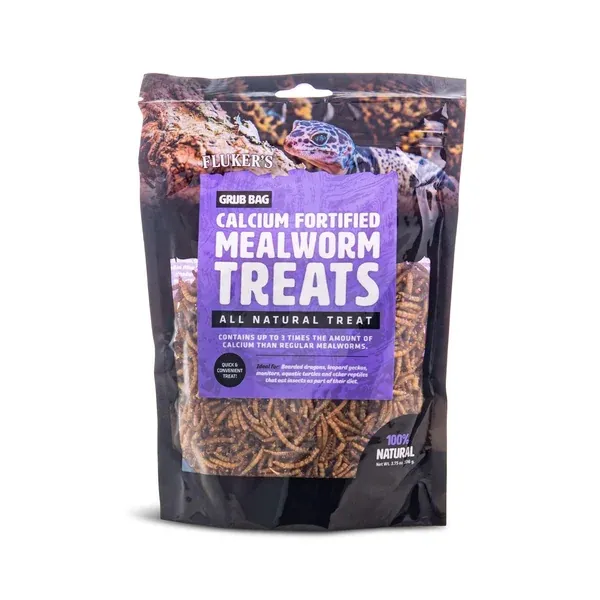
What It Is and Key Specs
Fluker's Grub Bag Mealworm Treats are dried, whole mealworms sold in a 3 oz resealable pouch. According to the manufacturer's listing, the mealworms are 100% all-natural and preservative-free, and they are gut-loaded to deliver three times the calcium found in mealworms that have not undergone that process. The treat is positioned as a multi-species option, with the listing citing suitability for insectivore reptiles, aquatic turtles, small animals, birds, and tropical fish. Fluker Farms, the manufacturer, describes the product on their website as a "high-protein, calcium-enriched treat" — consistent with the listing's emphasis on both macronutrient and mineral content (
https://flukerfarms.com/Grub-Bag-Dried-Mealworms-Fortified-with-Calcium).
Build Quality and Ingredient Integrity
The mealworms are dried rather than freeze-dried or live, which matters for texture and palatability depending on the species being fed. The manufacturer states no refrigeration is required, which sets this product apart from fresh or frozen feeder insects for ease of storage. The resealable pouch is designed to preserve freshness between feedings without requiring a separate airtight container. The all-natural, preservative-free claim suggests a minimal-ingredient formula, though buyers should review the full ingredient panel on the received package to confirm suitability for their specific pet's dietary needs.
Nutritional Profile and the Calcium Claim
The headline nutritional claim — three times the calcium versus non-gut-loaded mealworms — is a meaningful differentiator for reptile keepers who understand that standard dried mealworms carry an unfavorable calcium-to-phosphorus ratio. Gut-loading (feeding the insects a calcium-rich diet before processing) is a recognized method for improving the mineral profile of feeder insects. Fluker's claim aligns with this established practice, though the listing does not publish a specific guaranteed analysis or third-party verification data, so the precise ratio remains manufacturer-reported.
Real-World Fit: Who It Suits and Who Should Skip It
This product is a practical choice for keepers of bearded dragons, leopard geckos, aquatic turtles, or insectivore birds who want a shelf-stable, easy-to-portion treat without managing live or refrigerated feeders. The resealable bag and no-refrigeration requirement make it travel-friendly and convenient for occasional supplemental feeding.
It is less suited as a dietary staple. Dried mealworms — gut-loaded or not — are calorie-dense and high in fat, making them better used as an intermittent treat or enrichment food rather than a primary protein source. Owners of animals that require live prey stimulation for feeding response (some chameleons, for example) may find dried insects are refused outright. The 3 oz size is modest, which suits infrequent treat use but may feel small for multi-animal households with high insect consumption.
Honest Limitations
- The calcium enrichment claim is manufacturer-reported; no third-party nutritional verification is cited in available sources.
- Dried mealworms have a higher fat content relative to other feeder insects such as crickets or black soldier fly larvae, which may be a concern for obesity-prone species.
- Palatability will vary by individual animal; some reptiles and fish may show less interest in dried versus live or rehydrated insects.
- At 3 oz, the package volume may not suit bulk feeders or larger collections without frequent reordering.