What It Is and Key Specs
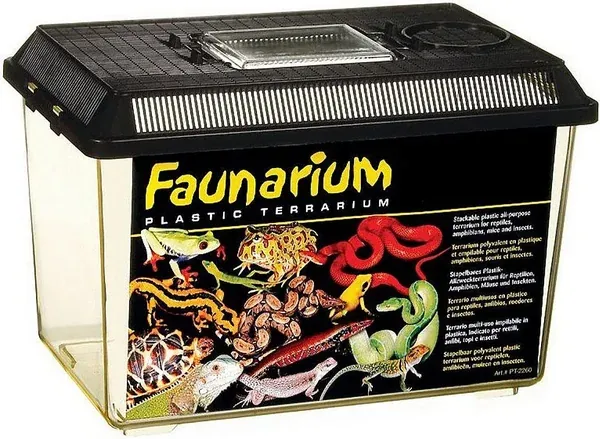
The Exo Terra Faunarium PT2260 is a medium clear-plastic enclosure marketed by Exo Terra for temporary housing, quarantine, and transport of terrarium animals or live feeder insects. According to the manufacturer's listing, it measures 12 inches × 7.5 inches × 8 inches and features a transparent plastic front door for access. Exo Terra also produces the line in other sizes — a flat XL variant (PT2310) runs 18 × 12 × 6.5 inches, as noted in a review on Caudata.org — so buyers should confirm the dimensions before ordering.
The enclosure is described by the manufacturer as easy to clean and disinfect, which aligns with its intended role as a short-term or transitional housing solution rather than a permanent setup.
Build Quality and Design Considerations
Community sources paint a mixed picture of the Faunarium's construction. On the positive side, the all-plastic build is lightweight, transparent for easy observation, and straightforward to wipe down. The front-opening door is a practical touch for access without disturbing animals from above.
However, forum discussions across multiple hobbyist communities flag recurring structural concerns:
- Ventilation gaps: Users on Tarantula Forum note that the ventilation design allows smaller crickets to escape, meaning feeder insects must be appropriately sized to the enclosure. This is a notable limitation when the product is marketed specifically for transporting live foods.
- Lid security: The same Tarantula Forum thread flags concerns about the lid, with users advising awareness of how it latches — an important consideration for escape-prone animals.
- Styrofoam decorative wall: Mantid Forum contributors point out that a rock-shaped styrofoam interior feature runs up toward the top of the enclosure, which effectively gives terrestrial and climbing species a pathway toward the lid and any gaps near it — a design quirk that works against containment (mantidforum.net/threads/stupid-exo-terras.21608/).
- Mantis keeper concerns: A separate Mantid Forum thread documents keeper experiences with injuries to mantises linked to enclosure features, with one contributor recommending skipping the Faunarium unless owners are prepared to make modifications (mantidforum.net/threads/exo-terra-horror-stories.41172/).
Real-World Fit: Who It Suits and Who Should Skip It
Based on the manufacturer's own framing and community usage patterns, this enclosure is best suited as:
- A quarantine or holding unit for newly acquired reptiles before transferring to a permanent vivarium
- A transport container for moving animals short distances
- A temporary feeder-insect enclosure, with the caveat that feeder size must be managed carefully to prevent escapes through the ventilation
It is less appropriate as a long-term home. A Reptile Forums thread about housing a baby corn snake in a Faunarium reflects a common entry-level use case — beginner keepers drawn to it by its lower price point — but the forum community there generally treats it as a stepping stone rather than a destination enclosure.
Keepers of mantises, small invertebrates, or any animal capable of squeezing through ventilation slots or using interior surfaces to reach the lid should approach with caution or look for alternatives. As one Mantid Forum contributor summarized, modifications may be necessary for those species.
Honest Limitations
No product is without trade-offs, and the Faunarium PT2260 has several worth stating plainly:
- The ventilation openings, while necessary for airflow, are large enough for small feeder insects to escape (Tarantula Forum)
- The decorative interior styrofoam ramp creates an unintended climbing route toward the lid (Mantid Forum)
- Lid security has been flagged as inconsistent enough to warrant caution with active or escape-prone animals (Tarantula Forum)
- The enclosure is explicitly designed for temporary use; it is not engineered for humidity control, heating integration, or the enrichment needs of a long-term habitat
This review synthesizes the manufacturer's product listing and published hobbyist forum coverage — no hands-on evaluation was conducted by this editorial team.