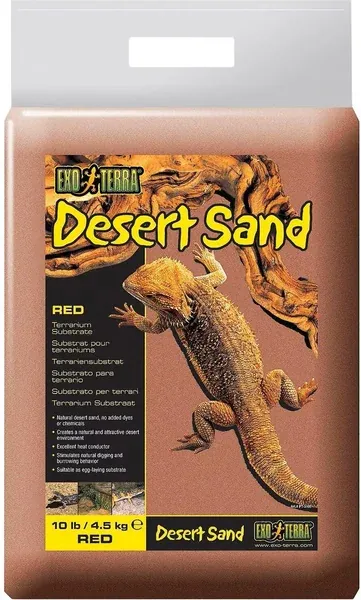
What It Is and Key Specs
Exo Terra Desert Sand (Red) is a 10-pound bag of natural desert sand intended as a loose terrarium substrate for arid and savannah-style reptile enclosures. According to the manufacturer, the sand contains no added dyes or chemicals — the red coloration is the sand's natural hue — and it has been sifted to remove impurities and deliver a homogenous grain size. Exo Terra's product pages describe the line as designed to mimic the natural sands found in arid desert or savannah regions, and the specific weight of the sand is cited as a factor that supports a realistic feel underfoot for desert-dwelling reptiles. The 10-pound plastic bag format is the only size noted in this listing.
Build Quality and Substrate Composition
The manufacturer's core claim — no added dyes or chemicals — is supported by independent coverage from Reptile Craze, which reported that when the red sand was tested with water, the runoff appeared normally brownish rather than visibly colored red, consistent with a product that is not artificially dyed. The same source noted little dust generation, which is a meaningful quality marker for a loose sand substrate, as excessive fine particulate can contribute to respiratory irritation in reptiles. The sifting process described by Exo Terra appears to deliver a reasonably consistent grain, which matters both aesthetically and functionally when the substrate is used for burrowing or egg deposition.
Functional Benefits
Per the manufacturer and Exo Terra's own Desert Substrates product pages, the sand serves three stated functional purposes beyond aesthetics:
- Heat conduction — sand retains and transfers warmth from undertank or overhead heat sources.
- Behavioral enrichment — the substrate stimulates natural digging and burrowing, which is documented as important for the physical and psychological wellbeing of many desert reptile species.
- Egg-laying substrate — gravid females of compatible species can use the loose sand to deposit clutches in a naturalistic way.
For display terrariums housing appropriate species, the red coloration also creates a visually distinctive Sonoran or Australian outback aesthetic that many hobbyists find appealing.
Real-World Fit: Who It Suits, Who Should Skip
Based on community coverage, the suitability of this substrate is strongly species- and age-dependent.
Better fits: Adult desert reptiles that are established, healthy feeders and have a lower likelihood of accidentally ingesting substrate — larger lizard species, arid-region tortoises, and snakes housed on sand for behavioral or humidity reasons — are more commonly cited as reasonable candidates. Exo Terra positions the product for all desert terrarium setups without restriction.
Proceed with caution or skip: Multiple threads on Reptile Forums raise impaction as a meaningful concern, particularly for smaller reptiles and juveniles. Forum contributors noted that animals lunging at live feeders frequently ingest sand alongside prey, and that even supervised feeding does not eliminate the risk. One contributor stated plainly that small reptiles can accumulate sand in the digestive tract over time in ways that can prove fatal. Reptile forums also reflect the broader hobbyist debate that many desert reptiles — including commonly kept species like bearded dragons — do not actually live on loose sand in the wild, making the "naturalistic" framing a point of contention. Buyers keeping juvenile or small-bodied reptiles, or species prone to opportunistic substrate ingestion, should weigh this community feedback carefully before purchasing.
Honest Limitations
No loose particulate substrate is without trade-offs, and this product is no exception. The key limitations grounded in available sources include:
- Impaction risk for susceptible animals — the reptile-keeping community has documented this concern across multiple independent forums and should not be dismissed.
- Species-appropriateness debate — the claim that desert sand is a naturalistic substrate for all desert reptiles is contested; many keepers argue that rocky, compacted, or mixed substrates more accurately represent the native habitat of common pet species.
- Single size offering — at 10 pounds, larger enclosures or keepers maintaining multiple tanks may find the format inconvenient or costly compared to bulk alternatives.
- Loose substrate management — sand in any terrarium requires regular spot-cleaning and periodic full replacement to prevent waste buildup and bacterial growth; this is an inherent characteristic of the substrate type, not a defect specific to this product.