What It Is and Key Specs
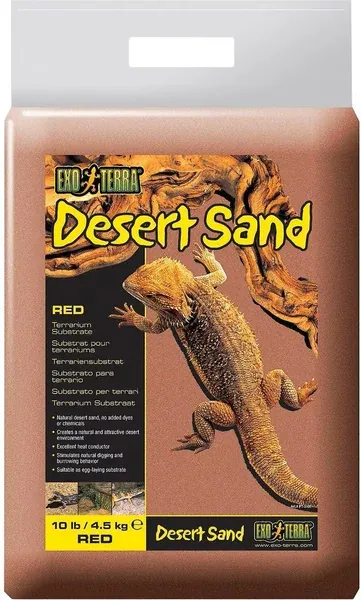
The Exo Terra Desert Sand in Red is a 10-pound bag of natural, real desert sand intended as a terrarium substrate for arid and desert reptile setups. According to Exo Terra's product page, the sand contains no added dyes or chemicals, and has been sifted to remove impurities and achieve a homogenous grain size. The manufacturer describes the Desert Substrates line as mimicking the natural sands found in arid desert or savannah regions (exo-terra.com). It comes in a single 10-pound plastic bag and is also available in other colorways, including Black.
Stated functional benefits from the manufacturer include:
- Heat conduction: The specific weight and density of the sand support effective heat transfer from under-tank or surface heat sources.
- Behavioral enrichment: The substrate is said to stimulate natural digging and burrowing behaviors.
- Egg-laying suitability: Exo Terra positions it as appropriate for use as an egg-laying substrate.
Build Quality and Composition
This review synthesizes the manufacturer listing and published third-party coverage rather than hands-on testing. The manufacturer's claim of no added dyes is notable — a wash test documented by Reptile Craze found the water ran "just about brown, which looks completely normal," with no red coloration bleeding out, which is consistent with the product's natural-sand claim (
reptilecraze.com). The same source noted little dust, which is a relevant point for respiratory health in enclosed terrariums.
The red coloration, then, appears to derive from the natural iron-oxide mineral content of the sand rather than artificial pigment — a meaningful distinction for keepers concerned about chemical exposure.
Real-World Fit: Who It Suits, Who Should Skip
Based on available sources, this substrate is most appropriate for:
- Larger, robust desert species that have a lower relative risk of ingesting significant volumes of substrate per feeding event.
- Display and bioactive desert terrariums where the naturalistic aesthetic and behavioral enrichment matter.
- Egg-deposition setups, where a loose, deep substrate is functionally required.
Keepers should think carefully before using loose sand with:
- Juvenile reptiles and small species: Forum discussion on Reptile Forums flags a meaningful concern — smaller animals lunging at feeders often take in mouthfuls of substrate, and even incidental ingestion "over time can build up" into a potentially fatal impaction (reptileforums.co.uk). Multiple community voices echo this, specifically advising removing younger or smaller animals from loose sand setups (reptileforums.co.uk).
- Insectivores that strike at fast-moving prey: The mechanics of feeding strikes on loose substrate increase incidental sand ingestion regardless of keeper supervision.
Honest Limitations
No substrate is without tradeoffs, and loose sand carries specific, well-documented ones:
1. Impaction risk is real and contested, not resolved: The hobbyist community remains divided, but the concern is serious enough that many experienced keepers avoid loose particulate substrates entirely for certain species. Exo Terra does not address this directly in the listing's feature bullets.
2. Depth and volume: At 10 pounds, coverage depth will depend on enclosure footprint. Keepers with larger terrariums may find a single bag insufficient for meaningful burrowing depth, which is one of the product's primary behavioral selling points.
3. Cleanup and odor management: Loose sand makes spot-cleaning more labor-intensive than tile, mat, or paper-based alternatives. No published source reviewed here specifically addresses long-term odor in this product (that concern arose in coverage of a separate Exo Terra Sand Mat product, which is a different item entirely).
4. Not a universal desert-species solution: The claim that desert animals naturally live on sand is itself contested in the community — many wild desert reptile habitats are rocky, packed-earth, or mixed-substrate environments rather than loose fine sand.
Category Context
Loose natural sand substrates are a long-established category in reptile husbandry, and the impaction debate is not unique to this product — it applies broadly to particulate substrates at this grain size. What Exo Terra's offering does contribute relative to dyed competitors is a credibly natural composition, confirmed by independent observation of minimal color bleed in wash testing.