What It Is and Key Specs
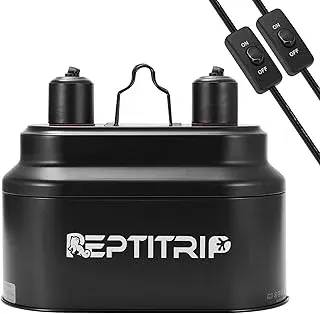
The LuvemPets Dual Reptile Light Fixture is a twin-socket terrarium lamp hood engineered to house both a heat lamp and a UVB bulb simultaneously. Each socket is rated for a maximum of 160W, making it compatible with ceramic heat emitters, UVB tubes, solar bulbs, and other standard reptile lighting formats. The fixture ships with a single power cord that branches into two independently switched outlets, so keepers can manage heat and UVB cycles on separate schedules without needing a secondary timer or power strip. One important note from the listing: reptile bulbs are not included and must be purchased separately.
Build Quality and Safety
According to the manufacturer, the lamp's interior surface is polished to maximize light and UVB reflection, directing output more evenly across the terrarium floor rather than losing energy through the fixture walls. The top of the housing incorporates multiple ventilation holes designed to dissipate heat away from the bulb socket — a practical detail intended to reduce overheating-related bulb failures and, by extension, replacement costs over time.
A standout safety feature is the heat-sensitive triangular warning label mounted on the lamp body. Per the manufacturer, the label turns red when the fixture's surface temperature exceeds 113°F, serving a dual purpose: alerting users to a hot surface and functioning as a passive indicator that the ceramic heat element is operating correctly. This kind of passive visual cue is a straightforward addition that requires no electronics and no user action to activate.
The listing also includes a practical troubleshooting note: if a bulb fails to illuminate, users are advised to disconnect power first, then use a screwdriver to gently lift the internal metal contact tabs to restore proper bulb-to-socket contact. A graphic instruction manual is included in the package to guide this process visually.
Real-World Fit — Who It Suits, Who Should Skip
This fixture is well-matched to keepers who run separate heat and UVB schedules — a common husbandry practice for species like bearded dragons, where basking and UV exposure windows often differ. The dual independent switches eliminate the need for a second power outlet or additional switching hardware for basic day/night cycle management.
Keepers already invested in programmable timers or smart-home reptile controllers may find the manual switches redundant. Similarly, those who need more than 160W per socket — rare in most home terrarium setups but relevant for very large enclosures or high-wattage mercury vapor bulbs — should verify their specific bulb's wattage before purchasing.
Because bulbs are sold separately, first-time reptile owners should budget accordingly. Ceramic heat emitters, UVB fluorescent tubes, and solar simulation bulbs vary considerably in price, and the fixture's 160W ceiling is a ceiling, not a recommendation — the appropriate wattage depends entirely on enclosure size and target basking temperature.
Honest Limitations
A few constraints are worth flagging based on the manufacturer's own listing. The fixture's contact-tab troubleshooting step — while useful — implies that poor socket-to-bulb contact is a scenario common enough to warrant dedicated documentation and inclusion in the manual. Buyers should be aware this may require minor mechanical intervention with some bulb types. Additionally, the heat-indicator label provides a surface temperature warning but is not a substitute for a proper in-tank thermometer; reptile husbandry still requires independent temperature verification inside the enclosure.
The polished reflector and ventilation holes are presented as efficiency and longevity features, but real-world bulb lifespan will still vary based on the wattage and type of bulb used — the fixture can reduce thermal stress, but cannot eliminate bulb wear entirely.
Reader Sentiment
Across 733 Amazon ratings, readers award this fixture a 4.5/5 aggregate — a strong signal of general satisfaction for a dual-socket reptile lamp at this tier. As always, individual experiences will vary based on the bulb types paired with the fixture and the specific enclosure setup.
Darrell Steward
1 Feb, 2021Brilliant
This is the best product that has ever been made. It is also one of the best items in the world right now. Definitely go for it.
Albert Flores
17 Oct, 2020Just WOW
It's good to use this product for development as it has very good performance, display quality and all other features.