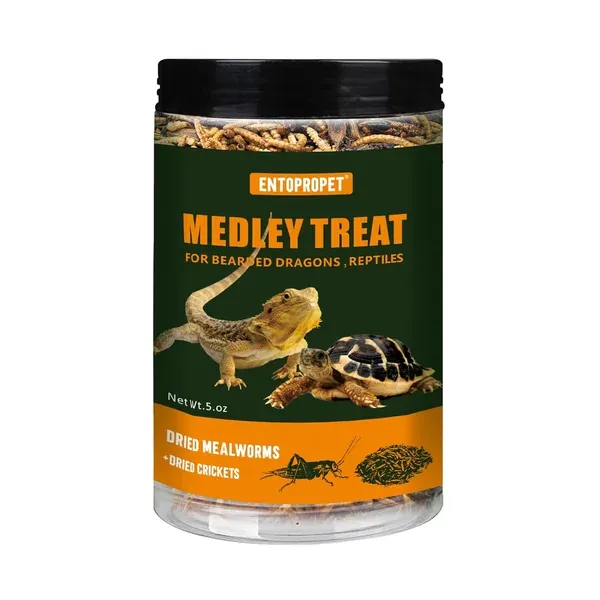
What It Is and Key Specs
The LuvemPets Dried Mealworms and Dried Crickets Medley comes in a 5 oz single-pack format combining two of the most commonly fed feeder insects in the reptile and small-animal hobby. According to the manufacturer's listing, the blend is positioned as "nutrient-rich," with an emphasis on calcium content and protein density — claims framed as addressing the dietary needs of reptiles, turtles (including aquatic species), birds, and tropical fish.
The product is described as made with 100% natural ingredients, free from added colors, flavors, and preservatives, and requires no refrigeration or preparation before serving. That shelf-stable, ready-to-feed format is a meaningful practical feature for keepers who want to avoid the logistics of live feeder insects.
Readers appear to agree with the general value proposition: the product holds a 4.6/5 aggregate rating from 181 Amazon ratings — a notably high consensus for this category.
Build Quality and Safety
The listing states the formula is "Pure & Natural" — 100% natural ingredients with no added colors, flavors, or preservatives. The manufacturer does not specify the drying method (roast-drying and freeze-drying are both common across this category, and different methods can affect final nutritional retention differently), so buyers seeking that granular detail may want to contact the brand directly.
No CPSC safety notices were identified in the sources reviewed for this product.
The broad multi-species claim — reptiles, turtles, birds, and tropical fish — is worth noting. The listing does support aquatic turtles specifically under its "Balanced Diet" bullet, which is a more precise inclusion than many competing products offer.
Real-World Fit: Who It Suits, Who Should Skip
This medley is well-matched for keepers of insect-eating pets who prioritize convenience. The no-prep, no-refrigeration format makes it practical for travel, backup feeding, or supplemental treat use alongside a varied diet. Bearded dragons, leopard geckos, and turtles are called out explicitly in the manufacturer's feature bullets, giving buyers a reasonable species-fit confirmation from the label itself.
However, keepers relying on dried insects as a
primary diet should be aware of a category-wide consideration flagged by industry sources: dried insects, by their nature, contain significantly less moisture than live or canned alternatives. As noted by Dubia.com's published guidance, reptiles typically rely on their diet to supply some to most of their water intake, meaning a diet based predominantly on dried insects can contribute to dehydration and secondary issues like impaction (
dubiaroaches.com). This is a category-level concern, not a specific indictment of this product, but it is relevant context for any dried feeder insect purchase.
Used as a treat or supplement alongside fresh produce, live feeders, or a complete diet, the format is far less of a concern.
How It Compares in the Category
The dried feeder insect space is crowded, and combination mealworm-and-cricket blends are a common format. What differentiates this listing's claims is the dual emphasis on calcium and protein — mealworms alone are frequently noted to be higher in fat and phosphorus, while crickets tend to bring a better calcium-to-phosphorus ratio to the mix. The blended approach, if the proportions are appropriate, is a reasonable strategy for balancing those nutritional profiles across a single product. The manufacturer does not, however, publish a guaranteed analysis on the listing, so direct nutritional comparisons with competing products are not possible from available sources.
Honest Limitations
- No guaranteed analysis published: Buyers cannot verify exact protein, fat, calcium, or phosphorus percentages from the listing alone.
- Drying method unspecified: Whether mealworms are freeze-dried or roast-dried affects nutrient retention; the listing does not clarify.
- Moisture content: As with all dried insect products, this format is inherently low in moisture — a consideration for species with high hydration needs.
- Treat positioning: The product is best used as a supplement, not a complete diet staple, particularly for reptiles.