What It Is and Key Specs
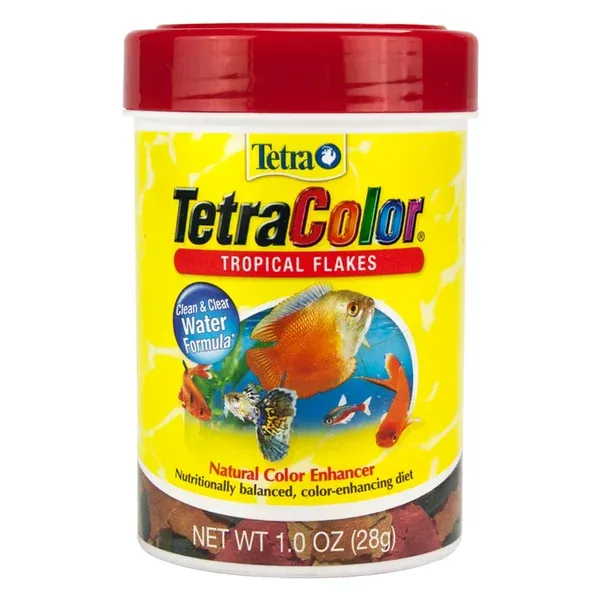
Tetra TetraColor Tropical Flakes (model 77160) is a color-enhancing flake food sold in a 1-ounce (185 ml) container. According to the manufacturer's listing, the formula is built around two functional additions: vitamin C for general immune and health support, and ProCare — Tetra's patented health-enhancing blend borrowed from its flagship TetraMin line. The stated nutritional focus is on promoting the development of natural pink-to-orange-red pigmentation in tropical fish, making it distinct from an all-purpose staple flake.
Per the manufacturer, the product is intended for daily feeding but is best used in rotation with spirulina-based foods and treats rather than as the sole diet. This positions TetraColor as one component of a varied feeding regimen rather than a complete, standalone nutrition solution.
Tetra describes the flakes as formulated to not cloud water — a practical claim repeated in the listing that matters for aquarium clarity and water chemistry stability. The inclusion of ProCare, the same proprietary complex featured in TetraMin, suggests the formula draws on Tetra's longer-standing flake technology rather than being an entirely separate development. Vitamin C fortification is a common addition in quality fish foods to support immune function, particularly relevant for fish susceptible to stress in home aquarium conditions.
As noted by Pet Supplies Reviews (http://www.petsupplies.reviews/pet-supplies/reptiles-amphibians/tetra-77160-tetracolor-tropical-flakes-1ounce-185-ml-com/), this food is characterized editorially as "a wonderful supplement to the diet of any tropical fish," reinforcing the manufacturer's own framing that it works best alongside other food types.
Real-World Fit: Who It Suits, Who Should Skip
TetraColor Flakes are a reasonable choice for hobbyists keeping tropical community fish — particularly species known for vibrant red, orange, or pink coloration, such as tetras, guppies, platies, and similar. The color-enhancing angle is most relevant for fish that already carry these pigments genetically; no flake food will produce color that genetics don't support.
Hobbyists looking for a single, complete daily diet may find the rotation requirement inconvenient. The manufacturer explicitly recommends alternating with spirulina foods and treats, meaning buyers should expect to purchase at least one complementary food alongside this product. Fish with specialized dietary needs — such as carnivorous or herbivore-dominant species — are better served by food formulated specifically for their biology.
The 1-ounce size is modest and best suited to small tanks or as a secondary food in larger setups. Owners of multiple tanks or larger fish populations will likely find the container depletes quickly.
Honest Limitations
- Rotation required: The manufacturer does not position this as a complete diet. Relying on it exclusively goes against the product's own feeding guidelines.
- Color enhancement is conditional: The formula targets pink-to-orange-red tones specifically. Fish outside that color spectrum are unlikely to see notable benefit from the color-enhancing ingredients.
- Small package size: At 1 ounce, cost-per-feeding may be higher than bulk alternatives for multi-tank households.
- No cloud claim is self-reported: The "does not cloud water" statement comes from the manufacturer and is not independently verified in the sources reviewed for this article, which synthesizes the product listing and published coverage rather than hands-on aquarium trials.