What It Is and Key Specs
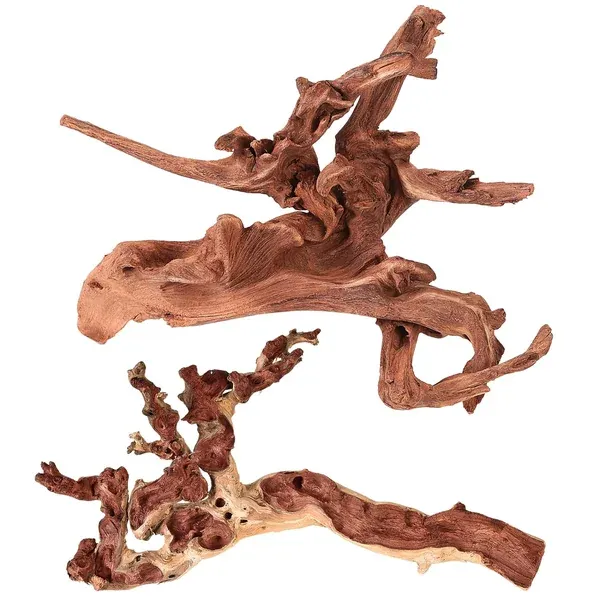
The Majoywoo Natural Large Driftwood is a two-piece set of Mopani driftwood branches, each measuring between 9 and 14 inches in length — though the listing notes pieces may run even larger. The product is positioned as a dual-purpose decoration, compatible with both freshwater aquariums and reptile terrariums. According to the manufacturer, the size range makes it best suited for tanks above 20 gallons.
Because each piece is sourced from natural material, no two are identical. The listing is explicit on this point: the photos shown are representative samples only, and what arrives may differ in shape and character from what is pictured. Buyers should treat this variability as an inherent feature of the product rather than a quality-control inconsistency.
Build Quality and Durability
The manufacturer describes the wood as high-quality, sturdy, and durable, designed to hold up both submerged in water and in dry terrarium environments over extended periods. The listing positions the pieces as structurally sound enough to serve as climbing surfaces for reptiles — a claim that points to meaningful density and load-bearing capability relative to lighter decorative woods.
Published coverage from Whale Rescue Team includes the Majoywoo driftwood among its best large driftwood picks for aquariums, describing it as "a reliable and visually appealing enhancement for fish tanks and reptile habitats." ReviewAqua similarly characterizes it as a solid choice for aquarium and reptile decor.
Readers on Amazon back this up to a meaningful degree: the aggregate rating sits at 4.3/5 across 2,051 ratings — a notably large sample for a niche product category.
Versatility and Real-World Fit
The manufacturer highlights several use cases: simple-style aquascaping, moss-tree builds (where aquatic moss is attached directly to branches), reptile climbing decor, and general terrarium decoration. That breadth of application is a genuine differentiator for hobbyists who keep mixed setups or who want a single décor element that can migrate between tanks.
The 9-to-14-inch size range means this wood is best matched with mid- to large-sized enclosures. The manufacturer explicitly recommends tanks of 20 gallons and above, so buyers with nano tanks or smaller terrariums should look elsewhere.
### Who It Suits
- Freshwater aquarists building natural or biotope-style tanks in 20-gallon-plus setups
- Reptile keepers looking for functional climbing branches with organic aesthetics
- Aquascapers interested in creating moss-tree features
### Who Should Skip It
- Nano tank owners (under 20 gallons) — the size range is likely too large
- Buyers who need a precise, predictable shape — natural variability means you get what you get
Honest Limitations
A few limitations are worth flagging before purchasing.
Appearance is not guaranteed. The listing is upfront that received pieces will differ from product photos. For hobbyists who are particular about branching structure or silhouette, this unpredictability is a real drawback.
Preparation is required before use. Coverage from Whale Rescue Team notes that the wood "needs several days of soaking before use to sink and reduce tannins." This is a common characteristic of natural driftwood across this category, but it does add lead time to any setup. Tannins leached into the water will temporarily tint it amber — generally harmless to fish, but visually notable in tanks with light substrate or bright lighting.
No certification or safety testing data is provided in the listing or available sources. Buyers with sensitive livestock or specific water-chemistry concerns may want to research Mopani wood compatibility with their particular species independently.
Bottom Line
Based on the product listing, manufacturer specifications, and published coverage, the Majoywoo Natural Large Driftwood is a practical, multi-use option for aquarists and reptile keepers who want organic-looking décor without a heavy price commitment. The 4.3/5 readers' aggregate from 2,051 Amazon ratings suggests consistent satisfaction at scale. The main trade-offs — natural shape variability and the need for pre-soaking — are inherent to the material type and not unique to this product, but they are worth weighing before purchase.